
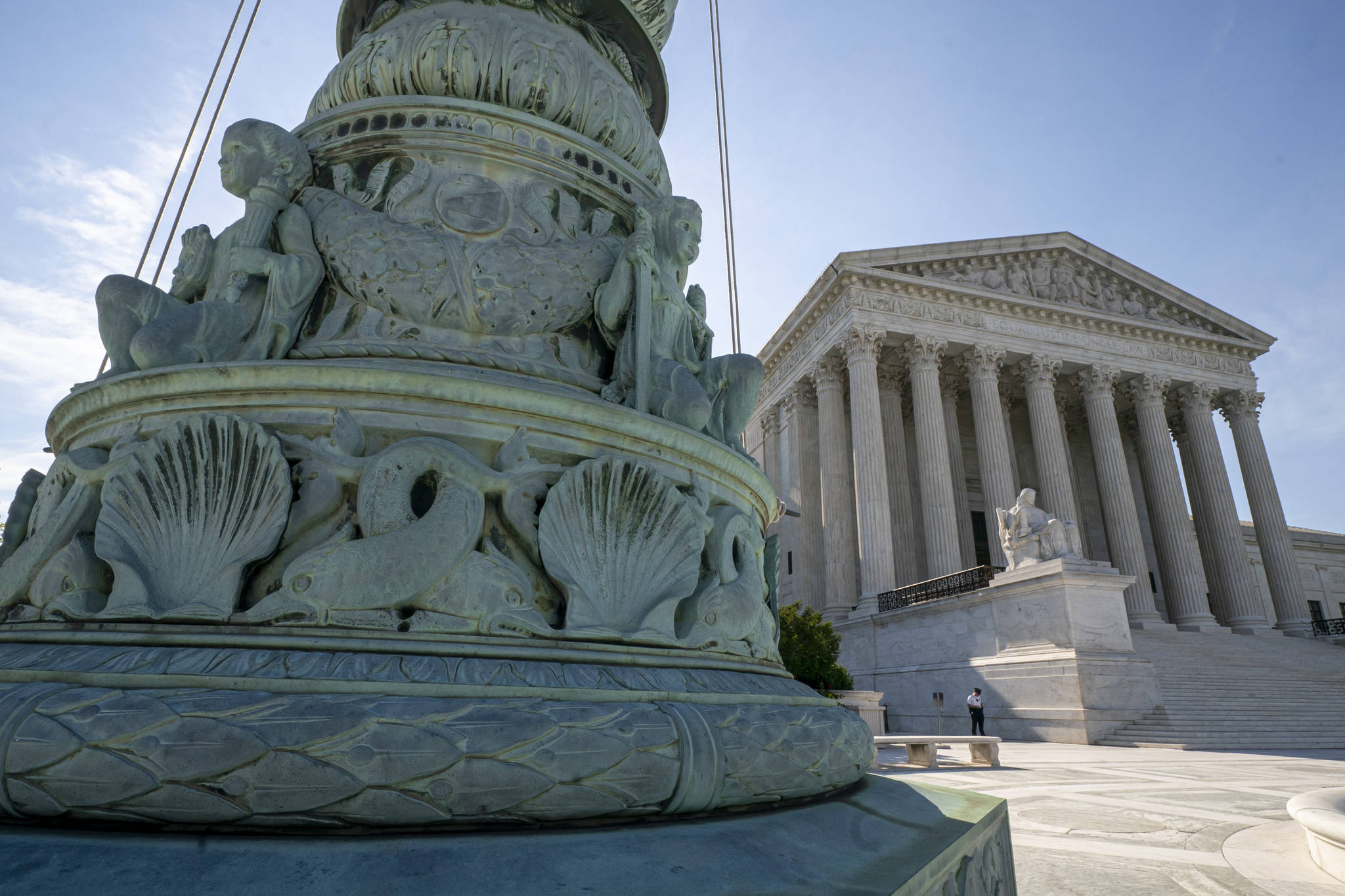
Ten years ago on this day, the U.S. Supreme Court issued its decision in the controversial Citizens United case. In the 5-4 decision, five Supreme Court justices decided spending to elect our representatives was a form of protected “free speech” that could not be restricted.
This decision, by a bare majority of the court, meant that corporations, individuals, political action groups and entities such as industry trade groups and labor unions could give money to influence elections without restraint or restriction. Corporations and entities, incapable of “speech” in the normal human meaning of the term but loaded with cash, could spend without limits and skew elections toward their institutional desires.
This decision deviated from long-standing precedent, and trampled the campaign finance restrictions that states across the country, including Alaska, had settled on to impose limitations on campaign donations. Before the Citizens United decision, Alaska had a long-standing and well-founded set of laws that had carefully limited campaign donations for decades, until it was blasted into oblivion by five unelected justices sitting in Washington, D.C.
Alaskans’ agreement to conduct our elections with sensible limitations on campaign financing no longer mattered. The court substituted a new one-size-fits-all standard for political donations, ignoring local laws and replacing sound standards with rules that allowed unfettered donations by anyone at any time.
The results of the Citizens United decision were immediate, spectacular and damaging. Citizens United unleashed a torrent of spending by special interest groups. Political campaigns were flooded with money from elite individuals and special interest organizations with a vested interest in political outcomes.
A weird sort of Wild West for campaign financing sprang up. An entire new set of murky political action committees (PACs) came into being that enabled unknown individuals and entities to donate so-called “dark money” to candidates without any disclosure of who was providing the funds.
The massive unrestricted infusion of money into our political system by individuals, corporations and PACs that resulted from the Citizens United case has had an obvious corrosive impact on our politics. Money now dominates political campaigns. Your individual vote and the votes of other Americans are diluted in a sea of cash provided to campaigns by billionaires and corporations.
The old state-by-state restrictions on campaign donations resulted in a political system where the votes of individuals mattered. Campaigns in the past required candidates to gather facts and address voter concerns with a strategy to achieve results. After Citizens United, facts went to the wayside as dark-money donors flooded media markets with emotionally charged advertisements appealing to narrow political identities, often based in fear and anger.
Ten years of unfettered campaign spending in America is long enough to conclude that our political system, where money now dominates, is broken. We are, as a nation and as a people, worn out from negative political campaigns in which cash trumps votes, facts and honest civil discourse.
The task at hand is what to do about the unprecedented Citizens United decision foisted off on the nation by five unelected justices. How can we reclaim our nation from the clutches of corporations and billionaires with cash to burn and return campaign spending regulation to the individual states where it belongs?
Citizens United could be overturned by the Supreme Court, an event not likely to occur anytime soon. Or we the people can amend our country’s constitution by redefining what every average American knows — that cash isn’t speech in the political context.
Citizens around the country are coming together to amend the United States Constitution and overturn Citizens United. So far 20 states have formally called on Congress to pass the proposed 28th amendment that would return election financing control to each state, a sure sign the public wants local control of their elections, instead of control by corporations.
Amending our constitution requires a cross-partisan effort. Individuals from both major political parties and others unaffiliated with any political party have joined to put a stop to elections overwhelmed by money. Alaskans, act now by asking your elected officials to adopt a resolution calling on Congress to enact the 28th Amendment and return sensible local control of our elections to the people.
• Joe Geldhof is a registered Republican, attorney and American Promise member in Juneau. Columns, My Turns and Letters to the Editor represent the view of the author, not the view of the Juneau Empire.
