
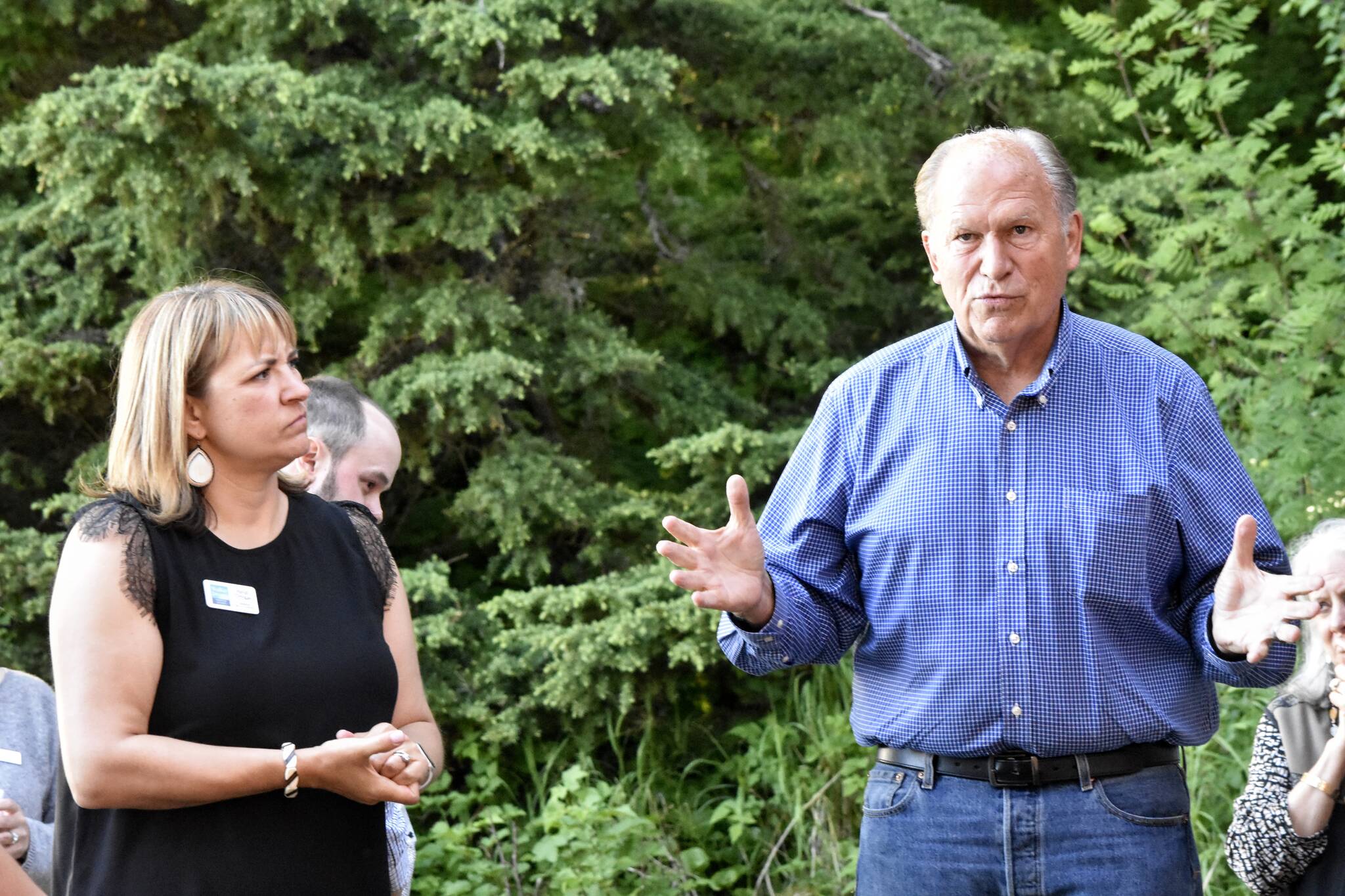
For registered Democrats and left-leaning independents like me, Les Gara appears to be the only viable choice for governor. He’s the only Democrat among the 11 candidates on the Aug. 16 primary ballot. But former Gov. Bill Walker is the only candidate with the potential to govern effectively for all Alaskans.
It shouldn’t surprise anyone that I’m supporting Walker. I did four years ago. The Democrat in that race, former U.S. Sen. Mark Begich, only got my vote after Walker withdrew.
Even with ranked choice, the odds of a Democrat winning statewide office in Alaska aren’t good. Only two have been elected since 1986 — Begich and two-term Gov. Tony Knowles. And they both deserve asterisks next to their names.
In 1994, Knowles won a three-way race by a mere 536 votes. He was reelected in a landslide four years later. But in that race, the Republican party withdrew its support for their nominee after serious campaign finance violations were exposed.
In 2008, Begich benefited from a corruption scandal that plagued longtime Republican Sen. Ted Stevens. He was indicted that summer and a jury convicted him just days before the election.
Stevens probably would have won if voters knew that verdict would be overturned due to prosecutorial misconduct. But his conviction wouldn’t have even mattered in today’s tribalist political climate. And although I think Gara is a stronger gubernatorial candidate than Begich was, that tribalism will make it difficult for Republican legislators to support his agenda.
Walker has more potential to work with legislators on both sides of the aisle. During his one term in office, he consistently made that effort. Not being bound by party ideology helped. That was especially true with the severe budget crisis he inherited upon taking office.
Conveniently, Gara leaves that context out of his argument that his “main opponents in this race have records cutting public education funds.”
Both Walker and Gov. Mike Dunleavy faced massive budget shortfalls. Gara’s attack on Dunleavy is justified because the only tool on his surgical table was a blunt axe. Walker, however, proposed spending cuts, various raising increases, and capping the PFD.
If Gara wins in November he won’t face that problem, so making promises to increase education funding is easy. As is claiming he’ll fight to raise Alaska’s minimum wage to at least $15/hour. The difficult part will be getting bipartisan support in a legislature likely to be dominated by uncompromising Republicans.
President Joe Biden boasted of his ability to bring the parties together to get important legislation through Congress. On that front, he scored a major win with the passage of the bipartisan Infrastructure Investment and Jobs Act.
But not a single Republican bought into his $1.9 trillion COVID-19 relief package. Or the bigger Build Back Better plan that he couldn’t get through the Senate. Both bills exacerbated partisan animosity.
On the other side, a lot of Republican resistance to anything Biden does stems from a desire to see him fail.
That’s what Gara will face if he wins. Telling voters that he’s “a Democrat who believes in representing everyone, regardless of party” is easy. Convincing Republicans in the House and Senate to give him any legislative victories won’t be.
Indeed, during much of his term, Walker was subjected to such an un-American style of governance. Republicans were bitter because he switched his voter registration from Republican to non-affiliated, joined forces with the Democrat party nominee as his running mate, and then beat the incumbent Republican governor.
Walker went on to staff his cabinet with commissioners from both parties. And the legislature’s eventual embrace of funding government with earnings from the Permanent Fund displayed his ability to move many Republicans off their ideological platforms. It was budget progress that most Alaskans appreciated.
After leaving office, Walker was chosen to be a fellow at the Institute of Politics at Harvard Kennedy School. There, he led an eight-week study group on ‘Bridging the Partisan Divide.’ Now he wants to “rebuild Alaska by focusing on things that bring us together as Alaskans instead of continuing to obsess over the things that drive us apart.”
Of course, that too is easier said than done. But there’s nobody better prepared to lead Alaskans out of the partisan jungle. That’s why I’m voting for Bill Walker for governor.
• Rich Moniak is a Juneau resident and retired civil engineer with more than 25 years of experience working in the public sector. Columns, My Turns and Letters to the Editor represent the view of the author, not the view of the Juneau Empire. Have something to say? Here’s how to submit a My Turn or letter.
