
A government shutdown is not an abstraction in Alaska, and neither is silence from those elected to represent the state. As federal operations stall and uncertainty spreads, the absence of public leadership from Senator Dan Sullivan and Representative Nick Begich has become part of the crisis itself. In moments like this, silence is not neutral. It signals consent.
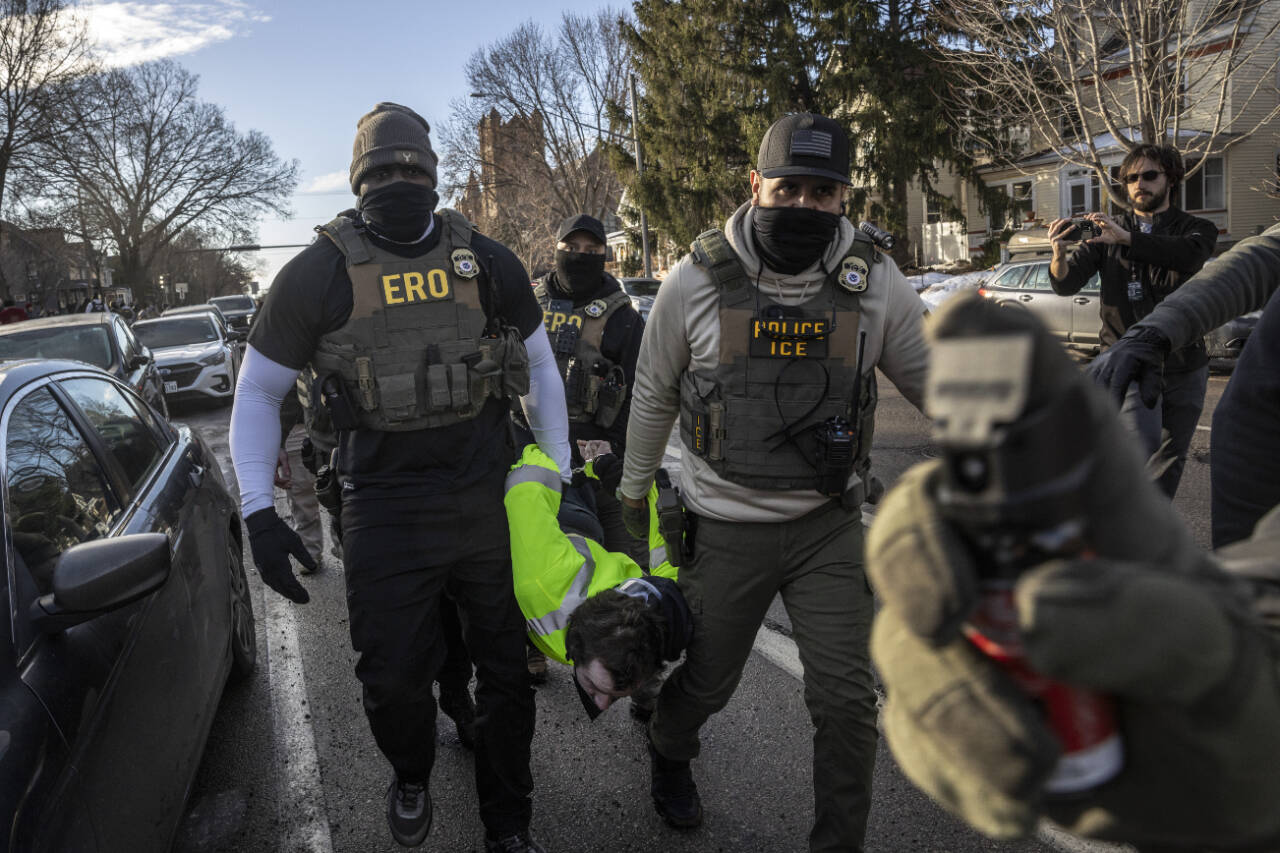
The current partial shutdown affects Alaskans unevenly. Workers tied to unfunded agencies, safety-net programs, and nonprofit partners face growing stress as paychecks stall and services shrink as shutdown progresses. At the same time, another issue central to the broader funding fight remains largely unaddressed: the visible expansion of masked federal immigration enforcement on American streets.
In multiple U.S. cities, Immigration and Customs Enforcement agents have detained individuals while concealing their faces and, at times, without clearly displayed identification. These practices are publicly defended as necessary for officer safety and justified by claims that ICE is targeting violent criminals.
Most Alaskans understand that compromise will be required to end the shutdown, and many are willing to tolerate concessions simply to restore basic government services. But compromise does not require abandoning democratic norms. If reopening the government entails concessions on immigration enforcement, voters are entitled to ask whether the tactics now being tolerated are proportionate and justified.
Internal Department of Homeland Security arrest statistics reported by CBS News in February tell a revealing story. Fewer than 14 percent of the nearly 400,000 immigrants arrested by ICE during Donald Trump’s first year back in office had charges or convictions for violent offenses such as homicide, robbery, sexual assault, or arson. A clear majority of those arrests involved people whose most serious offenses were nonviolent, and more than 150,000 of those taken into custody had no criminal record beyond immigration violations or administrative infractions. When fewer than one in seven arrests involve people accused of the kinds of violence politicians routinely invoke to justify crackdowns, tactics designed for extreme danger begin to look less like targeted necessity and more like a default approach applied to everyone.
Alaskans understand proportionality. Force should match threat. Authority should be visible. Accountability should never be optional. The data show extreme measures applied broadly to a population where most arrests do not involve violent offenses. This is intimidation presented as necessity.
There is also a historical resonance many Americans recognize instinctively. Democratic societies after World War II treated secret-police tactics, including unmarked agents, concealed identities, and fear-based control, as hallmarks of regimes they vowed never to imitate. History’s lesson is unambiguous: intimidation erodes legitimacy long before it produces security.
Supporters of masked enforcement argue that anonymity protects agents from retaliation. Yet most law enforcement officers across America face serious risk every day without concealing their identities as a routine practice. If hidden identities were truly essential to officer safety, masking would be standard across policing, rather than an exception concentrated in specific federal immigration operations.
These facts intersect directly with Alaska’s political reality. A majority of registered Alaska voters are classified as nonpartisan or undeclared, making them the state’s largest voting bloc. They tend to prize both public safety and civil liberties, supporting law enforcement while expecting it to operate openly and with visible accountability.
That expectation brings the focus back to Alaska’s congressional delegation. Sullivan and Begich have generally backed recent appropriations bills that increased funding for the Department of Homeland Security and ICE. Those votes are not inherently controversial. What is striking is the absence of any sustained public effort from either office to rein in masked tactics, require clear identification, or insist that heightened secrecy be limited to operations involving genuinely dangerous offenders.
In politics, silence is rarely accidental. It is often read as consent.
The shutdown sharpens the choice. Alaskans may accept a compromise to reopen the government, but only one that can be rationalized. A narrowly defined ICE unit tasked exclusively with apprehending the most dangerous violent criminals could be authorized to use heightened protective measures, including masks, under strict oversight. Everyone else should operate like every other law enforcement officer in America, identifiable and accountable. It is not the ideal outcome or compromise, but one many Alaskans could accept to restore order without normalizing anonymous policing.
Senator Sullivan, as a senior member of the Senate, is positioned to help broker exactly that kind of compromise.
Alaska’s nonpartisan and independent voters did not send their leaders to Washington to look away as democratic norms erode. They sent them to govern, to set boundaries, and to speak when silence becomes consent for the indefensible. The message is clear: no masks.
Van Abbott is a long time resident of Alaska and regular opinion writer for the Juneau Empire. He has held management positions in government organizations in Ketchikan, Fairbanks, and Anchorage. He served in the Peace Corps in the late sixties as a teacher.
