
By Win Gruening
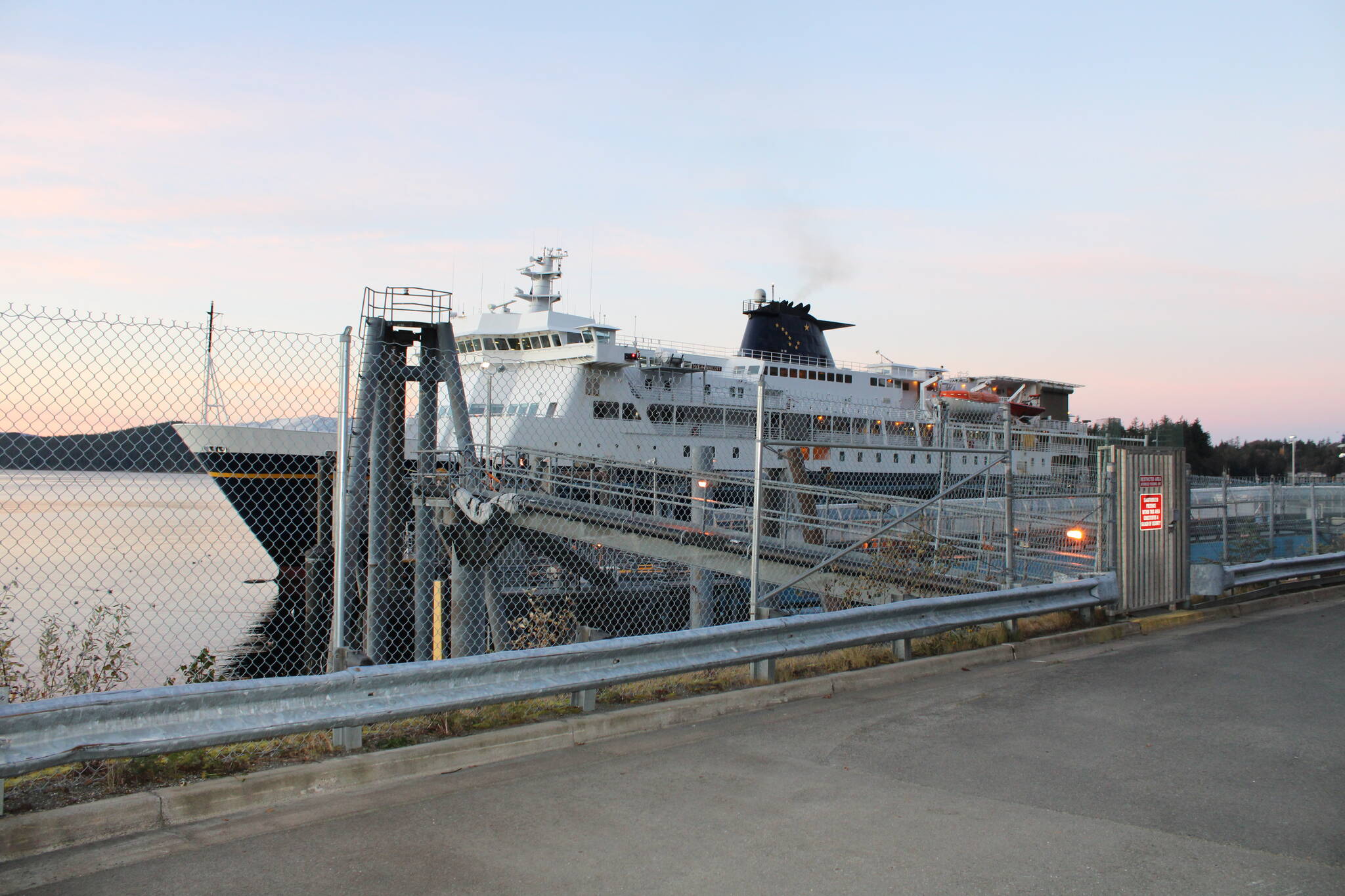
The Alaska Marine Highway System continues to struggle with declining ridership, reliability and reduced funding. There is no shortage of opinions about what should be done.
For years, coastal communities became accustomed to regular ferry service to any port that wanted it — whether the traffic supported it or not. Unions continued to extract more benefits and higher wages — whether warranted or not. When Southeast population began slipping and ridership declined, state subsidies continued to balloon, and fares had to increase.
It was a vicious cycle and it had to end. It finally did when Gov. Dunleavy was elected. His proposed cuts to the ferry system were not popular and arguably not implemented very well, but they were necessary. Today, while the system is currently operating with less than half the fleet it once had, communities are still getting service, albeit with less frequency.
In 2019, a study commissioned by Gov. Dunleavy concerning future operations of AMHS suggested folding AMHS into a public corporation. But without systemic changes, re-creating AMHS as a public corporation is akin to re-arranging the deck chairs on the Titanic.
Ferry advocates’ insistence that Alaska’s “roads don’t make a profit” and reduced ferry service is like “shutting down the Parks Highway” is a faulty comparison. 99.5% of Alaska’s vehicular traffic occurs on roads and over 80% of the highway operations/maintenance budget is offset by users through gas taxes and other fees.
Those choosing to live in coastal communities must face the facts: ferries historically have moved less than 1% of vehicular traffic with only 30% of the operational costs paid by users and 70% subsidized by state general funds.
Throwing more operating money at the problem will only help perpetuate the current inefficiencies and expense drivers that threaten to sink the system today.
AMHS’s biggest cost drivers are labor and fuel. If the system is ever going to operate at acceptable service and subsidy levels, then these costs must be addressed.
Ironically, these issues were tackled over 40 years ago when AMHS was still in its infancy. In 1977, as part of recommendations for the Southeast Alaska Transportation Plan, the Southeast Conference unanimously endorsed a plan that eliminated double crews on most vessels by operating mostly shuttle ferries. A mainline vessel would run north to Ketchikan then on to Juneau and return south. Shuttle ferries would then run from Juneau and Ketchikan to outlying communities. This “hub and spoke” system, combined with extending roads where possible, promised to improve flexibility, reduce labor costs, and fuel costs by operating smaller more efficient day ferries.
Unfortunately, the plan was never implemented except in a limited way with the Alaska Class Ferries, the Tazlina and the Hubbard. Yet, plans are now underway to add crew quarters to these vessels, totally reversing their efficiency advantage.
Meanwhile, environmental activists and ferry unions have deliberately stalled meaningful road projects that would have made AMHS more efficient and sustainable.
This is why AMHS is in the predicament it is today.
There’s no reason the state cannot update, finalize, and implement a shuttle ferry plan similar to the SATP in Southeast Alaska and Prince William Sound.
There is also no reason our state should not build roads where they make sense.
The Environmental Impact Study for the proposed Juneau Access project connecting Juneau and Haines incorporating these concepts estimated a fare of $21 each way for vehicle and driver.
That’s the kind of public transportation improvement that can be realized with a day-shuttle ferry operation coupled with a road extension.
Another proposed plan involves building a new ferry terminal north of Juneau at Cascade Point, shortening the Northern Lynn Canal ferry route 30 miles and reducing one-way sailing times by approximately 2.1 hours.
Contrary to claims by road opponents, these initiatives have not suffered from a lack of transparency or public input. The most recent two-decade effort to implement day ferries and a road extension in Northern Lynn Canal is evidence of that.
If we want a reliable, efficient ferry system, it’s time to try something different. What we are doing now isn’t working and hasn’t worked for a long time.
• After retiring as the senior vice president in charge of business banking for Key Bank in Alaska, Win Gruening became a regular Opinion Page columnist for the Juneau Empire. He was born and raised in Juneau and graduated from the U.S. Air Force Academy in 1970. He is involved in various local and statewide organizations and currently serves on the board of the Alaska Policy Forum.
