
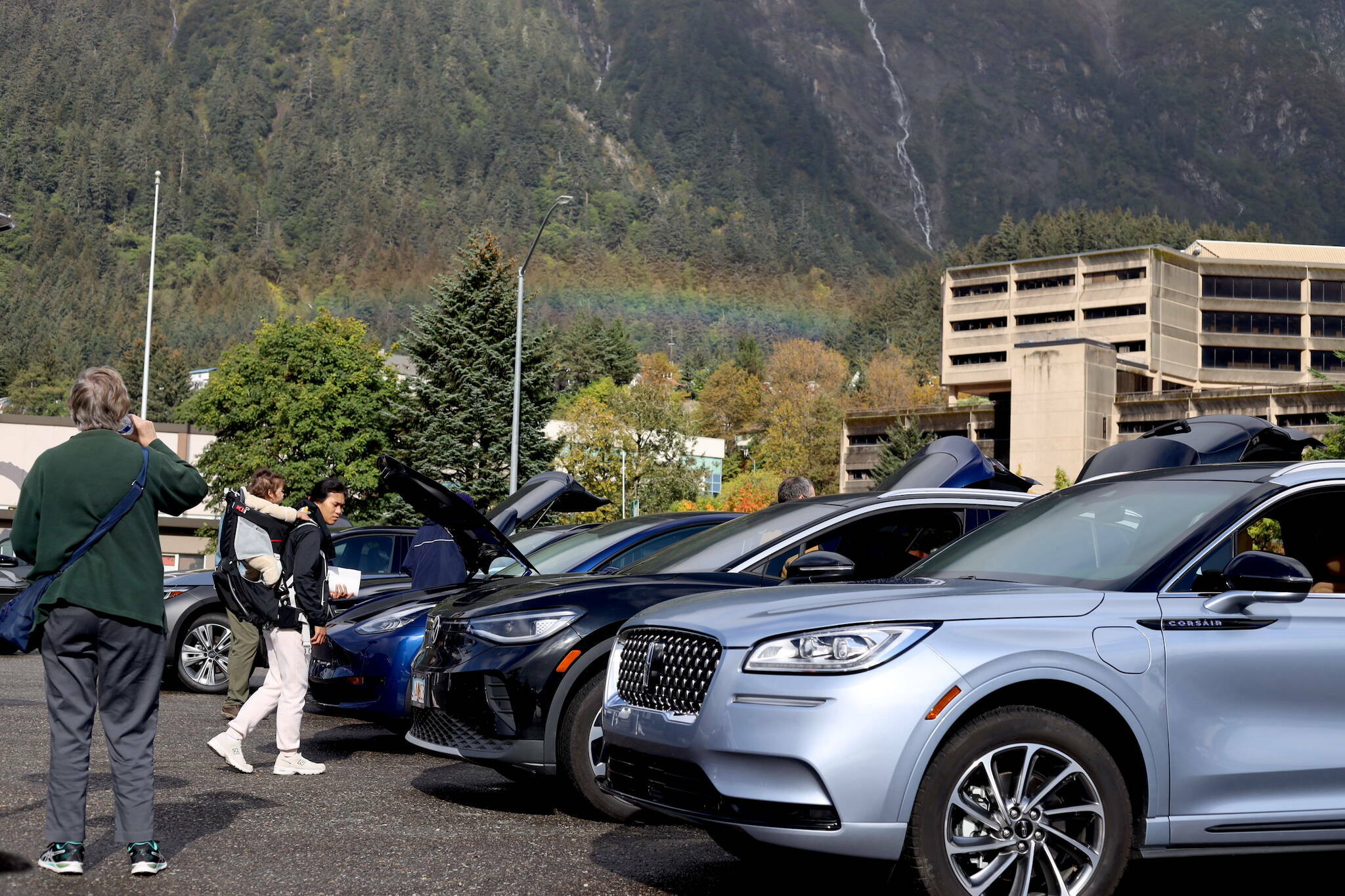
Last month a law charging an annual $200 fee on electric vehicles (EV) went into effect in Texas. The Alaska Legislature needs to enact a similar law and include a lesser fee on hybrid vehicles. And while they’re at it they should rename the motor fuel tax to a highway use tax. And increase it to at least the amount that Texans have been paying since 1991.
Let’s start with the current tax Alaskans pay at the gas pump. It’s been fixed at 8 cents per gallon (c/gal) since 1970. Revenue from that goes into the state’s Designated General Fund, and can be used for construction and maintenance of roads and ferries. We also pay a 0.95c/gal surcharge that’s deposited into the state’s Oil and Hazardous Substance Release Prevention Fund.
Adjusted for inflation, the 8c/gal tax would balloon to 63c/gal.
From a consumer perspective, inflation significantly erodes purchasing power. That’s why the nonpartisan Tax Foundation strongly advises against raising taxes during periods of high inflation like we experienced the prior two years.
The annual rate is now a little above what was during the latter part of the past decade. But because it’s never been percentage-based, the main justification for increasing the gas tax is inflation over the past 43 years has significantly devalued the revenue collected by the state.
Alaska has the lowest gas tax in the country. The second lowest is Missouri, which at 17c/gal is a penny more than double what Alaskans pay. Texas is slightly higher at 20c/gal. The national average is 33c/gal.
Those figures show why the 2016 proposal by then-Governor Bill Walker to raise it to 28.25c/gal was so reasonable.
But regardless of how high the taxes at the pump are, the real cost is the fuel itself. At today’s prices the current tax is less than 2%. At the amount Walker proposed it would only be 6%.
A better way to understand that is to look at monthly gas bills in real dollars.
Consider that the average Alaskan drives about 950 miles each month. If the price of gas is $4.50/gal., the monthly cost to fill the tank of a pickup getting 15 miles per gallon would be about $285. The current tax on that would only be $5.67.
That’s why the gas tax holiday proposed by Gov. Mike Dunleavy 18 months ago is properly called a “stunt” or “gimmick.” I chose those words because Sen. Lisa Murkowski and Sen. Dan Sullivan used them when President Joe Biden made a similar proposal.
Of course a gas tax holiday would be worth even less for people driving more fuel-efficient vehicles. For instance, I own a hybrid that’s averaging 60 miles per gallon. If I drove 950 each month I’d spend $214 less at the pump than the pickup driver in the above example. And my monthly tax would only be $1.42.
The more important point is I’m not paying my fair share for maintenance of the state’s roads and bridges.
Neither are EV owners who drive on the same roads, but contribute nothing toward their upkeep. And the words to describe opposition to EV fees coming from some on the liberal side of the spectrum are self-serving and frivolous.
A sustainability analyst at Consumer Reports said the “added layers of cost,” like the fee in Texas, could make some consumers “shy away” from purchasing an EV. And the policy director for an environmental nonprofit in Utah argued new laws adding fees to EVs “produces fear and causes people to wonder what the next financial burden” might be.
It really comes down to simple economics. Anybody seeking to eliminate carbon emissions while driving won’t be turned off by a $200 annual fee. Especially when they’d no longer be spending $1,000 to $2,000 every year to keep the gas tank full.
Collecting fees from EV and hybrid owners won’t put a lot of money in the state treasury. But it’s easily justifiable. And to taxpayers it’s peanuts compared to all the other real costs of driving.
Legislators can make the same case for increasing the gas tax. And if they do it right it might vault them past the fear that voters will throw them out of office for raising taxes on anything.
• Rich Moniak is a Juneau resident and retired civil engineer with more than 25 years of experience working in the public sector. Columns, My Turns and Letters to the Editor represent the view of the author, not the view of the Juneau Empire. Have something to say? Here’s how to submit a My Turn or letter.
