
By Frank Richards
Russia’s invasion of Ukraine and halting Russia’s Nord Stream 2 natural gas pipeline illustrate the world’s long-term reliance on natural gas for energy, light and heat. Due to its proximity to Russia, Europe draws 40% of its natural gas from Putin, Inc. But even here in the U.S., New England has also been repeatedly forced to rely on Russia’s natural gas because environmental chokeholds prevent the expansion of new domestic transmission to the Northeast.
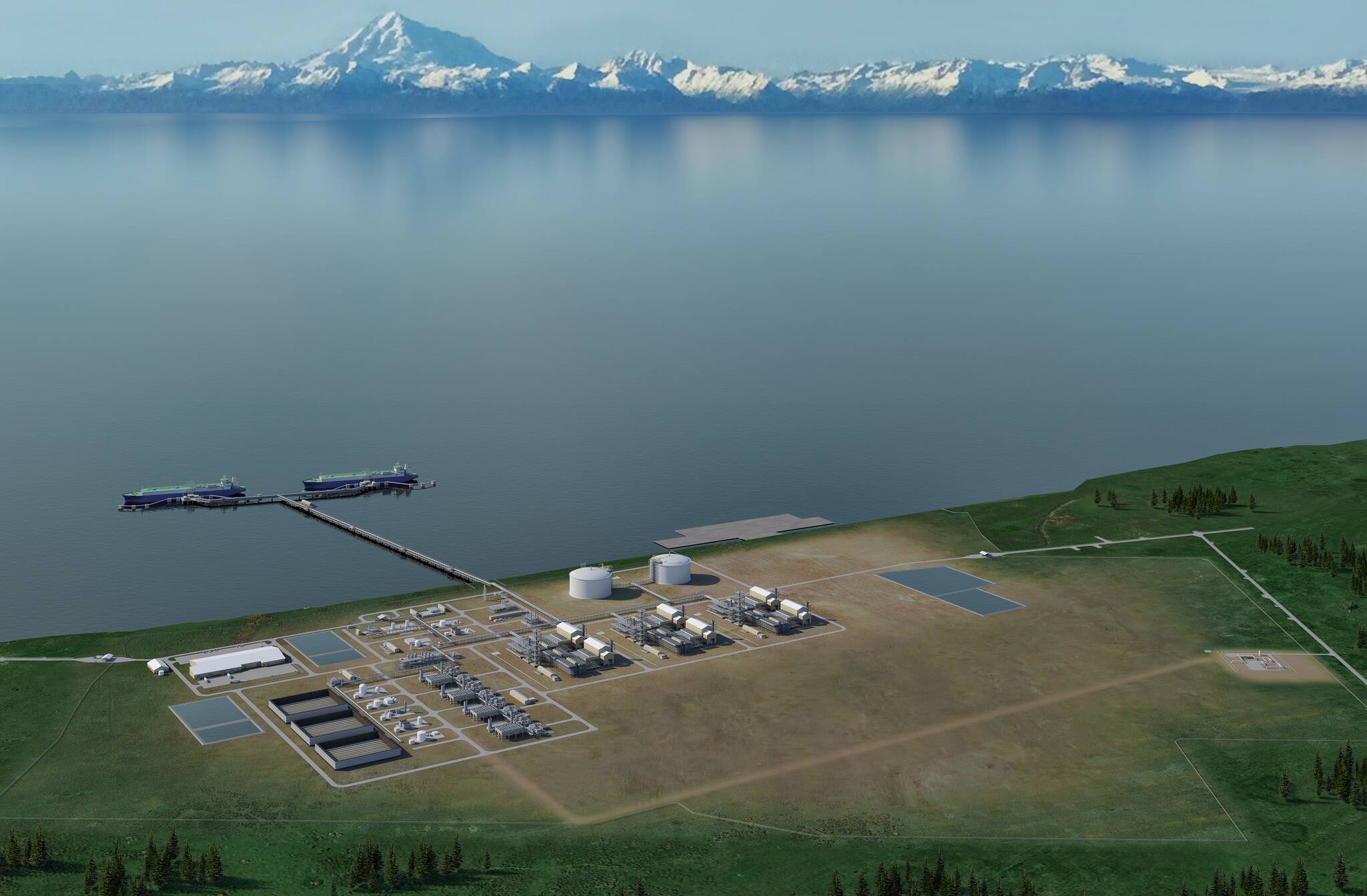
What does any of this have to do with Alaska? Alaska is sitting on one of the world’s largest reservoirs of natural gas but lacks the infrastructure to deliver it to energy-starved residents in Interior Alaska and to U.S. allies around the world. Every day on the North Slope, enough natural gas is produced to meet the needs of California, Oregon and Washington combined, but it is reinjected into the ground because there is no way to get it to market.
Adding Alaska’s natural gas to overall U.S. export capacity strengthens our ability to provide energy and economic security to our allies around the world. Bringing Alaska LNG to Japan, Korea, and other allied Asian markets along the Pacific Rim frees U.S. Gulf Coast LNG providers to better serve European allies.
Fortunately, there is a lot of recent progress on the Alaska LNG Project to report. A just-completed analysis by the respected global analytics firm Wood Mackenzie concludes that, for the first time, Alaska LNG can deliver LNG to Asia at more competitive prices than Gulf Coast-based LNG projects.
Wood Mackenzie studied improvements made to Alaska LNG over the past five years, including revising the economic model for the project and reducing project expenses, and determined that Alaska LNG has been able to reduce our cost of supply to Asia by 43%. Wood Mackenzie forecasts that global LNG demand will continue to accelerate through 2050, strengthening the need for new projects like Alaska LNG.
The recent federal infrastructure legislation, backed by our Congressional delegation and signed by President Biden, includes more than $26 billion in federal loan guarantees for Alaska LNG. Utilizing these loan guarantees will further reduce the project’s development costs and improve its cost effectiveness.
Alaska LNG has enjoyed bipartisan support in the Alaska legislature and a member of the senate and house each sit as non-voting oversight members of AGDC’s board, reflecting the importance of this project to the State of Alaska. I appreciate our lawmakers engaging with us to develop our natural resources for strategic, economic, and climate reasons.
Natural gas burns cleanly, making it a preferred energy source, particularly in rapidly growing Asian markets confronting air pollution created by other energy sources. Here at home, we see the same air quality problems in parts of Alaska winter after winter. Because of these problems, the American Lung Association identified Fairbanks as “The Most Polluted City in the Nation.”
China alone emits 28% of the world’s carbon dioxide, about the same as the United States, the European Union, and India combined. Asian energy needs are massive and growing. Just last year China built “more than three times more new coal power capacity than all other countries in the world combined,” according to the New York Times, the equivalent of adding more than one large coal plant each week.
Because energy projects compete on environmental and economic measures, AGDC, the state corporation currently leading Alaska LNG, commissioned a study to understand the project’s climate impacts. Third-party experts determined that replacing a portion of China’s regional coal use with equivalent energy from Alaska LNG will eliminate 77 million metric tons of annual carbon dioxide equivalent emissions, a 50% reduction.
According to the EPA’s Greenhouse Gas Equivalencies Calculator, 77 million metric tons of carbon emissions is the annual equivalent of taking 19 coal-fired power plants offline, removing 16.8 million passenger cars from the road for a year, eliminating the emissions generated by powering 9.3 million homes or the emissions from burning 8.7 billion gallons of gasoline.
Alaska has some of the most stringent environmental regulations in the world, assuring that natural gas will be produced with minimal impacts on wildlife, air, and water versus other parts of the world with looser standards and limited enforcement. Each LNG tanker round trip from Alaska will be about a month shorter than from Gulf Coast ports, further contributing to Alaska LNG’s emissions and economic savings.
AGDC is in the process of identifying new private sector leadership to take over the development of Alaska LNG because this project is simply too complex to be managed by the State of Alaska alone. The recent favorable economic and climate studies about Alaska LNG have added momentum to these discussions.
Because natural gas is a key ingredient for hydrogen production, the increasing global demand for zero-carbon hydrogen is also fueling progress for Alaska LNG. U.S. policymakers and the private sector are investing tens of billions of dollars over the next few years to drive the creation of new U.S. hydrogen production hubs and carbon capture hubs, and Alaska is well situated to compete.
With Alaska LNG under development, Alaska is well positioned to remain a reliable provider of strategic clean energy for the next hundred years. To learn more about the recent reports examining the economic enhancements and climate benefits of Alaska LNG, visit AGDC.us.
• Frank Richards is president of The Alaska Gasline Development Corporation. AGDC is an independent, public corporation of the state of Alaska charged with maximizing the benefit of Alaska’s North Slope natural gas though the development of infrastructure to deliver gas to local and international markets.Columns, My Turns and Letters to the Editor represent the view of the author, not the view of the Juneau Empire. Have something to say? Here’s how to submit a My Turn or letter.
