
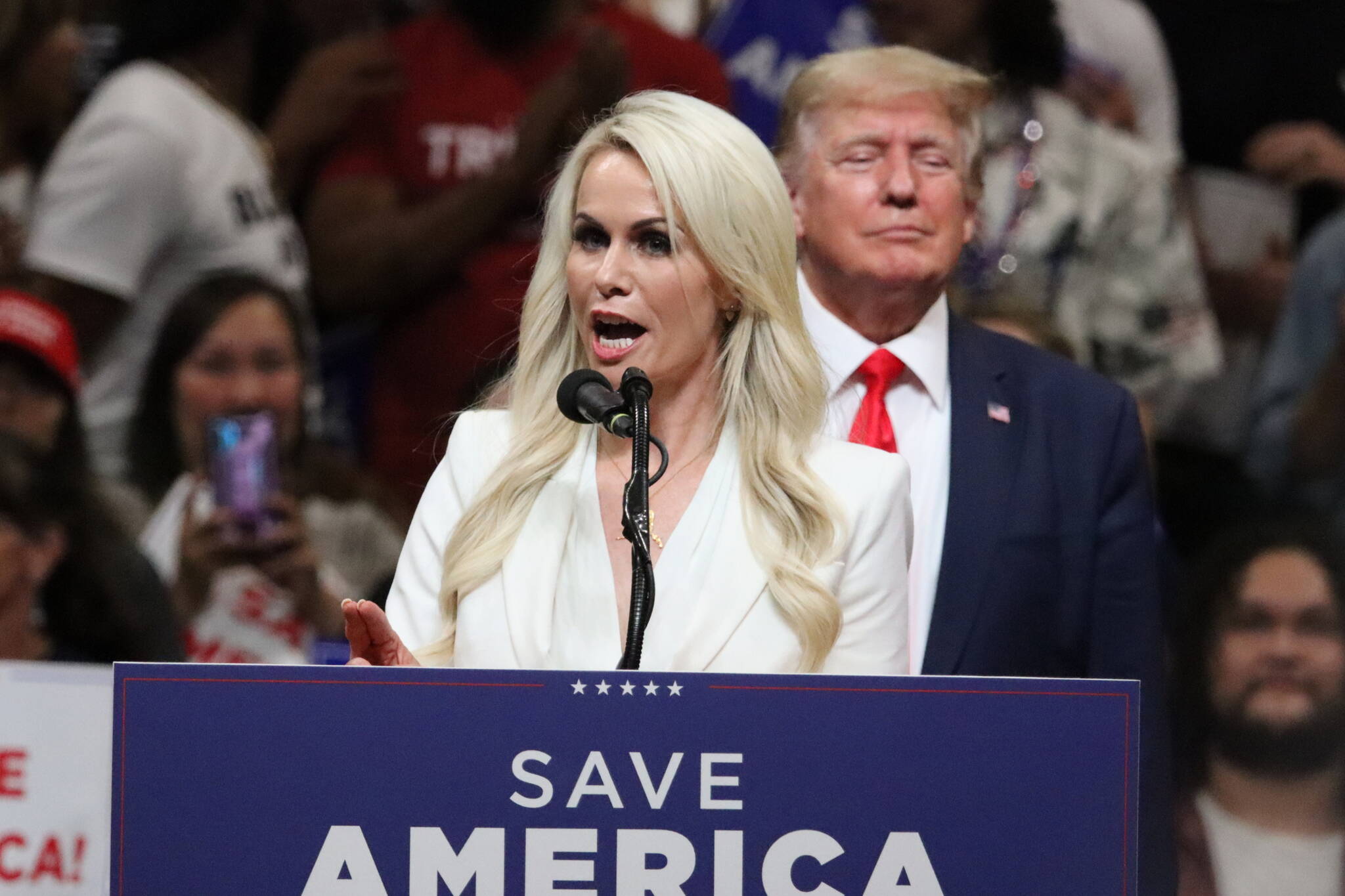
Kelly Tshibaka claims to understand why voter turnout for the 2022 general election was the lowest in the state’s history. According to Preserve Democracy, a new organization that describes itself as non-partisan, which she launched this week, “Ranked Choice Voting (RCV) is a political weapon and emerging threat to our democracy. It is a complex, multi-step process that confuses voters, escalates negativity, increases costs and results in voter suppression.”
There are a lot of possible explanations why fewer votes were cast last November. But voter suppression is certainly not one of them. And if Tshibaka’s agenda was really about preserving democracy, she’d hire non-partisan election analysts to study the turnout rather than scour the country for opinions that confirm her predetermined intent to condemn RCV.
It’s important not to compare 2022 with elections when presidential candidates weren’t on the ballot because turnout is much higher in those years. So, I’ve examined data compiled by Alaska’s Division of Elections for the past three midterms.
In 2018 and 2014, the respective voter totals and turnout were about 286,000 (46%) and 287,000 (56%). Last November, only 268,000 people voted, and turnout was down to 40%. That’s despite having 92,000 more registered voters than in 2014.
The base population hasn’t changed. But based on data from Department of Labor and Workforce Development, during the eight years since 2014, about 80,000 young people who were born in Alaska may have turned 18 here. However, that potential voter increase is offset by the 38,000 Alaskans who died and the 45,000 lost to due to net migration out of the state during those eight years. In both cases, it’s safe to assume most were adults eligible to vote.
The voting numbers of Alaskans aged 18 to 21 may still be informative. Many of them could have been automatically registered to vote when applying for their first PFD as independent adults. That program was implemented in 2017. In 2018 and 2022 respectively, the turnout of that age group was only 33 and 25 percent, compared with 48 percent in 2014.
Also, a total of about 85,000 Alaskans were automatically registered to vote when they applied for their PFD. And only 24 percent of them voted. The program effectively registered a lot of people with little interest in voting.
A much more thorough analysis is needed to understand how much impact these factors had on the depressed voter turnout. But without even looking at them, Tshibaka jumped to the conclusion that ranked choice “results in voter suppression.” As proof, she linked those words to a 2021 article written by Hazel N. Dukes, President of the NAACP New York State Conference. It’s titled as a question: “Ranked Choice voting: Is it voter suppression?”
Dukes was concerned that RCV “will disproportionately discourage Black and Latino voters from full participation.” That appears to be based on one poll taken in 2021. It found “46% of Black voters, and 36% of Latino voters, had not heard anything about Ranked Choice voting, compared to 20% for white voters.” And some studies she doesn’t cite “have shown that a disproportionate number of Black Democrats, particularly older voters, vote for only one candidate, so a Black candidate that finishes ahead with first place votes can ultimately lose if white voters fully avail themselves of the RCV option.”
None of that meets the definition of suppressing voters, which means “to put down by authority or force.”
The real problem in New York was the local board of elections “did a poor job of explaining the new process.” And although RCV seems confusing to some voters, Dukes concluded “it doesn’t have to be if there had been a proper educational process for the public.”
Education rarely succeeds though if people aren’t interested in learning. Or when they’re told not to trust the institutions providing it. Cue in Donald Trump. Voters will “never know who won in ranked choice” he said during a packed house rally in Anchorage for Tshibaka’s U.S. Senate campaign. “It’s a total rigged deal just like a lot of other things in this country.”
Tshibaka doesn’t like RCV because she had to compete with and lost to Sen. Lisa Murkowski in November’s general election. And standing on the same stage with the first and only U.S. President who refused to accept losing an election is the best evidence that she doesn’t sincerely respect democracy.
• Rich Moniak is a Juneau resident and retired civil engineer with more than 25 years of experience working in the public sector. Columns, My Turns and Letters to the Editor represent the view of the author, not the view of the Juneau Empire. Have something to say? Here’s how to submit a My Turn or letter.
