
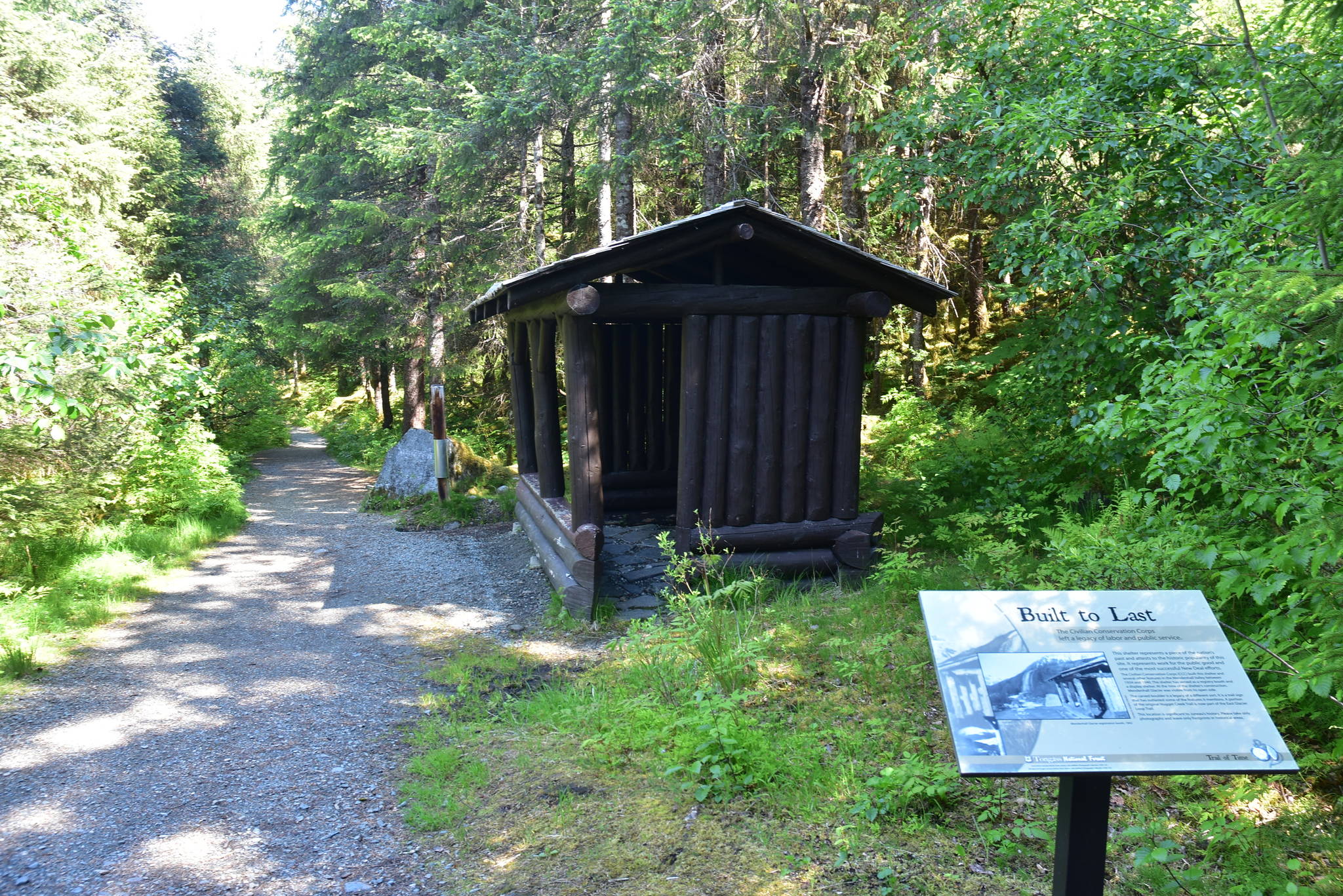
Juneau’s new COVID-19 Conservation Corps is aimed at creating temporary jobs for people “furloughed, unemployed, or underemployed” due to the pandemic. They’ll be assigned work on maintenance projects in parks and trails throughout the community. If that sounds familiar, it’s because Civilian Conservation Corps crews did similar work during the Great Depression.
But that’s where the similarity ends. Because the CCC was really about lifting the spirits of a few hundred thousand young men so that they could believe there was a place for them in America’s future.
And on that front, there’s still a lot of work to be done.
To really understand the CCC, it’s necessary to recognize America was three years into the Great Depression when President Franklin Roosevelt created the program. And it needs to be put its proper place alongside the rest of the New Deal. Because even though the CCC was the first to be implemented, in the grand scheme of it all, its economic impact was very small.
Here in Juneau, the CCC was responsible for building Skater’s Cabin and the original picnic shelters at Auke Rec. Although there were some larger structures built elsewhere, none were remotely comparable to the major roads, buildings, bridges and dams constructed under the new Public Works Administration.
As the middle part of its name implies, Roosevelt’s forward-looking vision for the CCC included care of America’s vast holdings of public lands. He tied that objective to a kind of work ethic that couldn’t be nurtured on an assembly line.
As Frances Perkins, his Secretary of Labor, wrote a decade later in the “The Roosevelt I Knew,” he believed “any man or boy would rejoice to leave the city and work in the woods.”
And work they did! CCC crews fought forest fires, erected fire lookout towers and constructed thousands of miles of fire access roads through forested lands. They turned 53,000 acres into public campgrounds, built 13,000 miles of trails, planted some three billion trees, performed erosion control on 40 million acres and revegetated 800,000 acres of rangeland.
“I call your attention to the fact that this type of work is of definite practical value, not only through the prevention of great present financial loss but also a means of creating future national wealth” Roosevelt said when he proposed the program. “More important, however, than the material gains will be the moral and spiritual value of such work.”
In an era when most young men were expected to begin work as soon as they left high school, or even sooner if they needed to support their families, many of the 18 to 25 year-olds who worked on the first CCC crews had been unemployed for three years. On top of that, their families were all receiving government relief payments.
The sense of despair among them must have been pretty high. Which is why they volunteered to work for little more than the joy of manual labor. They received food, clothing, shelter and $30 per month, $25 of which they were required to send back home. The bigger reward, they’d discover, was the dignity that came from the sense of shared, concrete accomplishments. And a renewed belief in an experiment called democracy.
Aside from sending people to work in the woods, the COVID-19 Conservation Corps isn’t trying to recreate that story. It’s not necessary. The hardships in Juneau today pale in comparison to those experienced by people three years into the Great Depression.
[Opinion: Why we need a Civilian Conservation Corps inspired effort]
But what the legacy of the CCC tells us is we need to do a lot more than revive the economy, if we want to ensure democracy has a healthy home in America. The wellbeing and dignity of every citizen matters.
It’s easy to lose sight of that when jobs are plentiful, and the system seems to be running smoothly. But there’s always some left behind by circumstances beyond their control. And as the weeks-long Black Lives Matter protests remind us, there are others who have never been granted the sense of security, equality and freedom that are supposed to differentiate this country from the much of the world.
“We’re all in this together” has been a common refrain throughout the pandemic. It’s time we made that a true American sentiment.
