
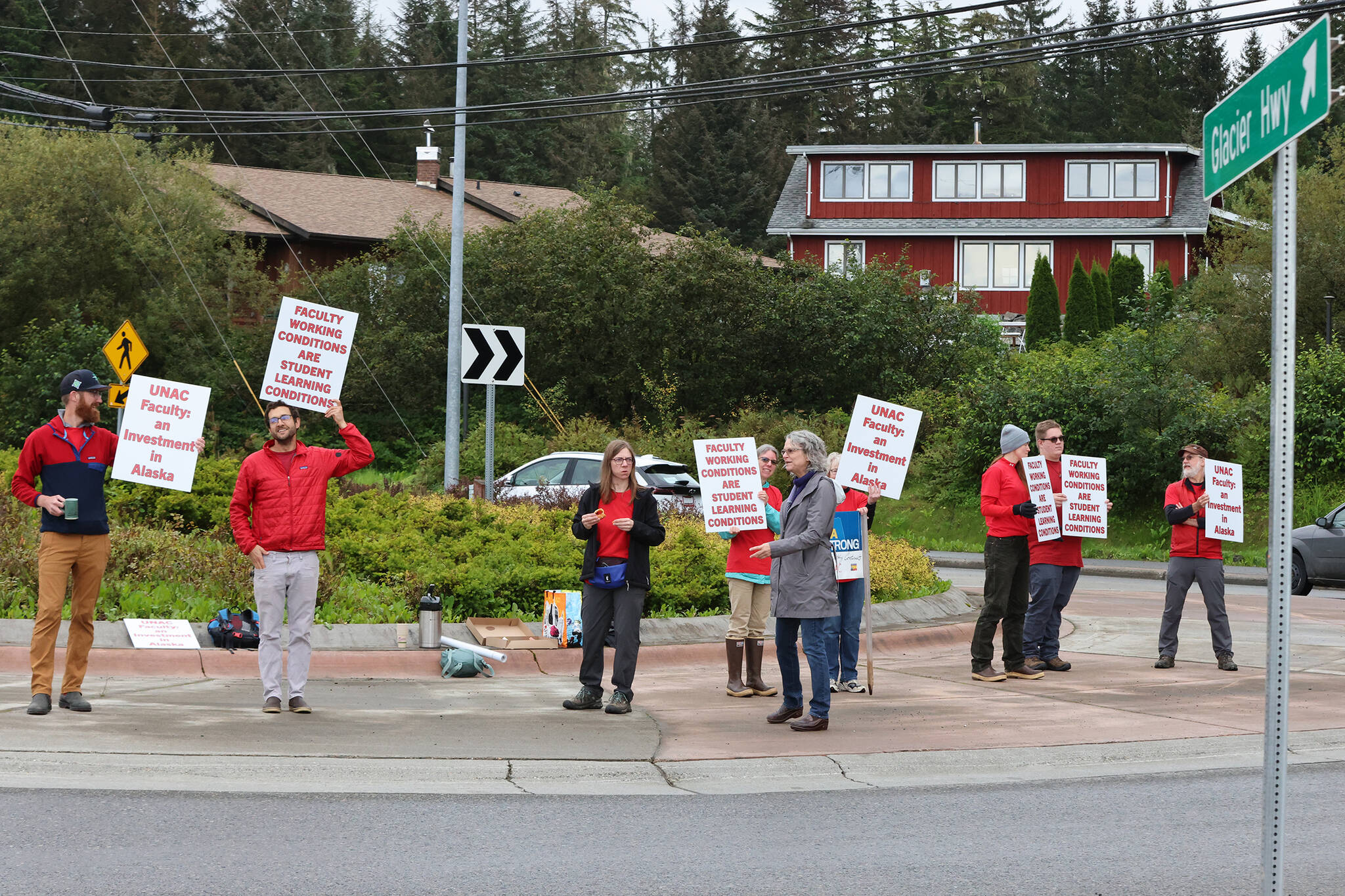
It’s been a year since contract negotiations began between the University of Alaska and United Academics, the union that represents full-time faculty members. Now, UNAC has filed an unfair labor practice complaint against UA. And based on public remarks made by UA President Pat Pitney, it appears she and her team haven’t been bargaining in good faith.
Unions can serve as a vital check on the power management holds over its workforce. That said, I’m generally not a supporter of public employee unions. As a federal employee for two decades in Alaska, I never belonged to one. Before that, I helped end the requirement that every professional engineer be a dues-paying union member in the division where I worked at the Washington State Department of Transportation.
Until May, I had little interest in the negotiations between UA and UNAC. Then, only hours after the parties had wrapped up their second mediation session on May 12, UA unilaterally claimed negotiations were at an impasse. And on May 16, UA announced it was implementing its April 25 best and final offer which UNAC had rejected.
The chief negotiator for UNAC, called the move “a tactic to strong-arm our membership into believing that it’s either the University’s ‘last, best offer’ or nothing.”
President Pat Pitney admitted it was unprecedented but defended it as necessary to secure legislative funding for faculty raises.
But on May 18, the parties learned the Legislature didn’t approve the funding. Mediation sessions resumed. UA offered slightly higher raises than contained in their best and final offer. And although they were still well below levels sought by UNAC, the union accepted them. Several other items remain unresolved, including some provisions related to faculty tenure.
In late August, UA rejected UNAC’s latest contract proposal. And even though four more mediation sessions were scheduled through September, UNAC filed the unfair labor practice complaint.
The whole affair is too complicated to be summarized in a short column. But it seems obvious that UA hasn’t abided by its legal obligation “to bargain collectively in good faith.” They’ve violated the Alaska statute and wasted everybody’s time and money.
UNAC’s complaint centers entirely around the supposed impasse in May and the subsequent implementation of UA’s best and final offer. Additionally, it alleges Pitney directly advocated against UNAC’s position to its members, which is also a violation of the law.
In a May 16 letter addressed to employees in the “University of Alaska community,” Pitney explained that they implemented the best and final offer because of “deadlocked negotiations and an unsuccessful effort to reach agreement in federal mediation.” And “with the legislative session rapidly coming to an end, there was no other way to get monetary terms in front of the legislature before the end of the session without this action.”
Further, her response to media inquiries was that she believed faculty members would “appreciate a modest increase versus waiting a whole other year” to get any raise at all.
If UA was acting in good faith, they would have asked UNAC to canvass faculty members to determine whether they preferred small raises in the coming fiscal year over continuing to negotiate for more. Instead, by claiming to be on the faculty’s side, Pitney undermined UNAC’s role and authority.
Furthermore, Pitney misled the UA community on issues unrelated to compensation. She told them management made concessions on “furloughs in-lieu of program reductions and eliminations, and automatic consequences for a second unsatisfactory post-tenure review.” She let it be known management refused to accept proposed UNAC changes to UA’s research programs. And without addressing any other areas of disagreement, she added “continuing to negotiate under these circumstances was not a good option.”
The first problem is she wrongly implied the parties settled all matters related to tenure. But it remains one of the most serious disagreements they have. Secondly, once they declared continued negotiations weren’t a good option, they set the stage for dismissing counter offers from UNAC without seriously considering the need to compromise their own position.
Meanwhile, a UA public affairs official is telling the public that “there is a genuine sentiment that an agreement is close.”
Sadly, we’ve become accustomed to partisan politicians acting in bad faith. But public servants charged with ensuring student success in our educational institutions must be held a higher standard.
• Rich Moniak is a Juneau resident and retired civil engineer with more than 25 years of experience working in the public sector. Columns, My Turns and Letters to the Editor represent the view of the author, not the view of the Juneau Empire. Have something to say? Here’s how to submit a My Turn or letter.
