
Alaska Director of Law and Policy for Trout Unlimited-Alaska Austin Williams’ Nov. 21 My Turn favoring the Roadless Rule is mostly one-sided unsupported opinion. (Thanks to Denny DeWitt for his factual editorial in response, published Nov. 22.)
Calling clearcutting “industrial” has the connotation that if it’s that it must be bad. Tourism is not an industry? Maybe it would be best called recreational logging?
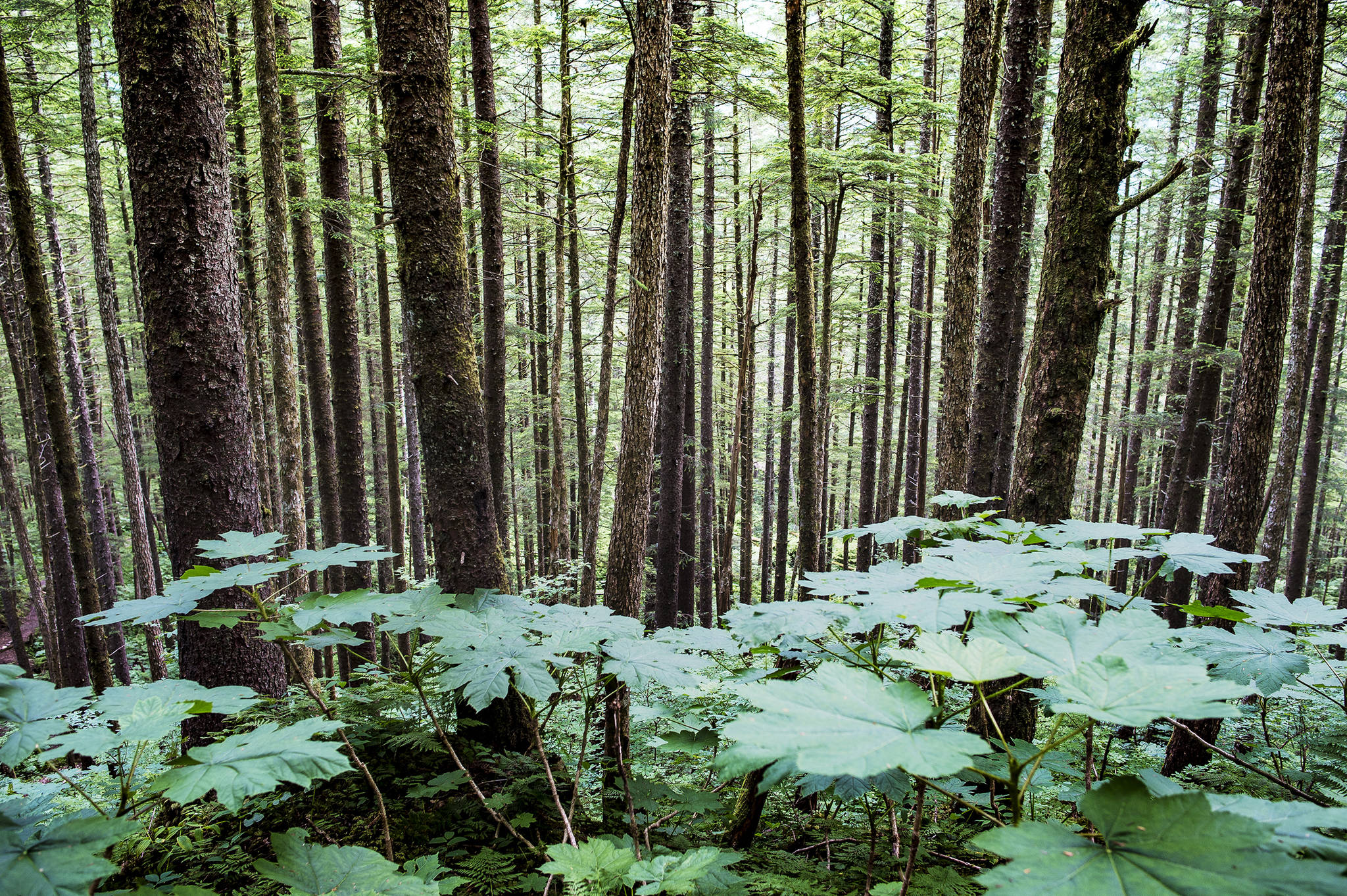
I acknowledge there have been abuses of clearcut management, mostly in size and shape, but it’s still the most viable technique, properly applied, to realize desired results. There are both biological and economic reasons for clearcutting: most old-growth, while beautiful, is fraught with defect, decaying as fast or faster than they are growing. If you are to manage a given area for wood production, one of the legitimate things management is supposed to do, you need young healthy trees. To regenerate with the highest value trees, you need to create the conditions they need.
Biological: Spruce, the more valuable, therefor most desirable species is shade intolerant, needing direct light; accomplished only when all the trees are cut.
Economic: Costs a lot to remove logs (roads, culverts, bridges, etc.). But they are there to facilitate subsequent management and use of the new forest including wildlife habitat improvement, recreation, hunting, fishing, access for other management activities, fire management, etc. The Roadless Rule does not “save” anything. It is a politically motivated impediment to good forest management and use.
Old-growth has limited value as habitat. It provides cover, very little forage, but it is wonderful to look at until it falls down, which it eventually will do. Under current standards, there is no fish habitat damage. If habitat improvement is an objective, it requires more than just viewing scenery. No longer is all wood removed from streams as fish favored people once advocated until the more enlightened folks found out that some wood in the streams provided good fish habitat.
Many people don’t even recognize a clearcut after it is five years old. Not many people will argue that a new clearcut is attractive, but what it is going to be is something else. And, to realize what it can be requires subsequent management, not just looking at it.
In eight years guiding land tours in the Juneau area, all my tours included a short course in plant succession following glaciation for which many people expressed appreciation. No advocacy, no political message, just ecology. Some shipboard “interpreters” have been known to claim that muskegs were clearcuts that failed to have trees grow back!
People are welcome to their opinions, but they should feel some obligation to learn something about their subject before they “get on a stump” to sell them. I was a Trout Unlimited member, but I wearied of single minded members who failed to really learn about their subject.
When I attended forestry school, we were required to take classes in both fisheries and wildlife, so we had at least a basic understanding of them and how our primary study related. I think it would be prudent for someone standing up for fish to obtain at least a passing knowledge of related resources.
• Wayne R. Nicolls is a retired certified forester who has resided in Juneau for 32 years. He’s associated with the Fellow Society of American Foresters, and worked for 37-plus years with the U.S. Forest Service. Columns, My Turns and Letters to the Editor represent the view of the author, not the view of the Juneau Empire.
