
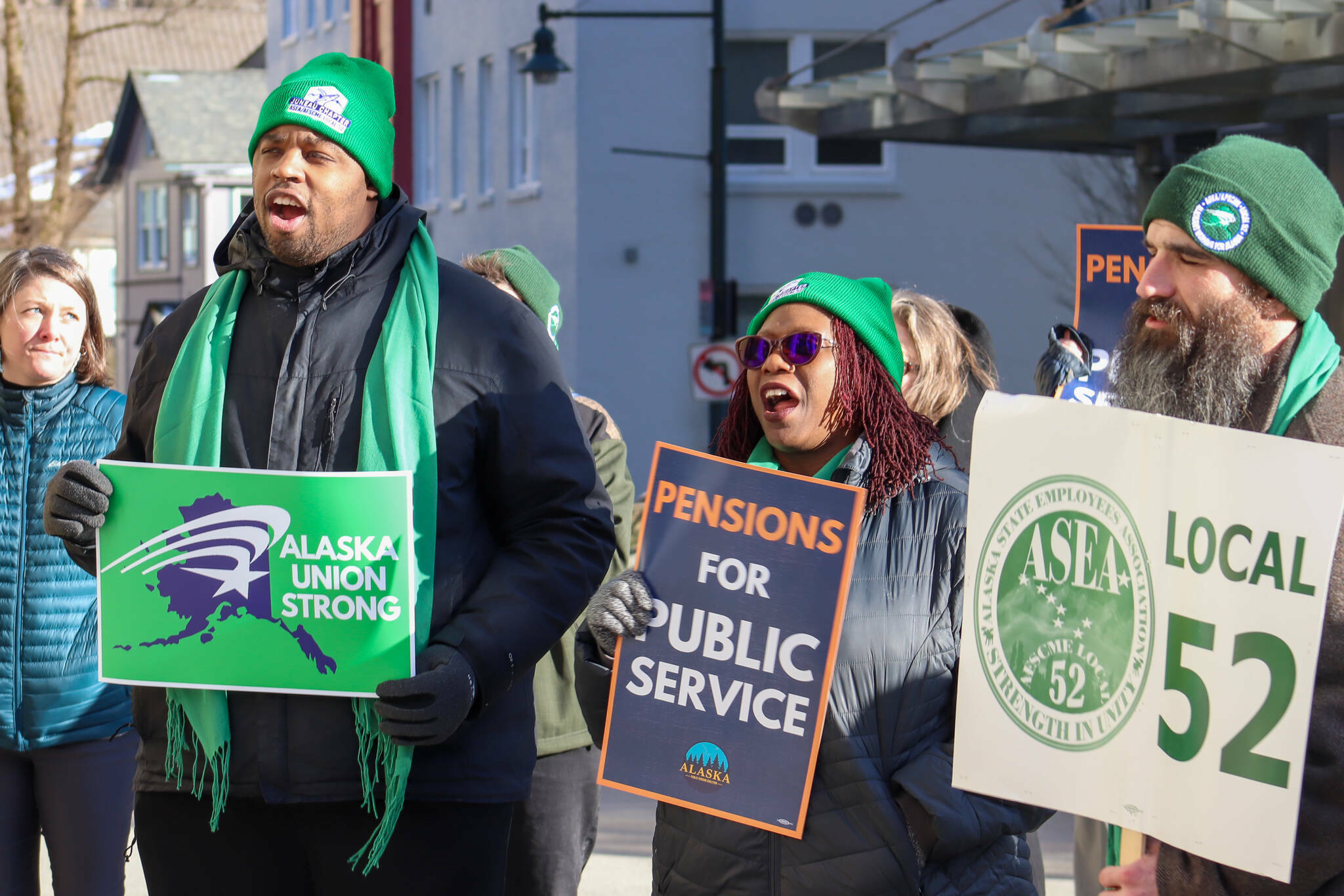
As Alaska faces one of its most difficult fiscal challenges in decades, a bill to radically expand Alaska’s retirement plan for government workers is winding its way through the Alaska State Legislature.
House Bill 78 would reinstitute an option for a defined benefit retirement system similar to one the state discontinued almost 20 years ago. Current employees could convert to the new system and new employees would automatically be enrolled.
Proponents of the bill claim that a defined benefit plan will reduce employee turnover and would cost no more than the defined contribution plan currently in place.
Opponents argue that there are still billions in unfunded liabilities from the previous plan, and many government employees prioritize other factors over a pension plan.
This ongoing debate reflects differences in how this change would potentially impact employee retention, retirement security, and state finances.
Alaska’s history in wrestling with this issue indicates that there is a huge financial risk in returning to a defined benefit plan. Furthermore, there is no guarantee that it would improve employee retention.
In 2006, the State of Alaska moved from a defined benefits pension retirement plan (DB) for state and municipal employees to a 401(k)-style defined contribution plan (DC). The two plans affected were the Public Employees Retirement System (PERS) and the Teachers Retirement System (TRS).
It became obvious then that the plans were unsustainable over the long term after chronic underfunding and inaccurate actuarial estimates led to a massive deficit.
Today, even after the cancellation of the 2006 DB pension program, over 65,000 state and municipal employees still receive benefits under the program (75% of whom are retired). With payments peaking in 2037 at $2.2 billion, significant financial obligations will remain for at least another 50 years.
Despite the state’s best efforts, the deficit in the retirement trust funds has been remarkably stubborn and difficult to resolve. Since 2015, the state has pumped an additional $5 billion into PERS and TRS, but the unfunded liability has risen from $6 billion to $7.5 billion today. (This doesn’t include healthcare benefit plans which are accounted for under a different trust arrangement and are now well-funded).
The Alaska Division of Retirement and Benefits projects that another $3.8 billion will need to be injected into TRS/PERS over the next 14 years to cover future liability.
What HB78 proponents cannot answer is how the state can reactivate a similar retirement system (albeit with some risk mitigation measures), without additional cost if we are struggling to maintain a system that ended decades ago. Legislative leaders are waiting for an actuarial analysis reflecting plan affordability before moving the bill out of committee.
Cost aside, HB78 boosters insist this is the only way to improve employee morale, stem employee turnover, and meet employees’ needs for retirement security.
In fact, Alaska seems to be retaining public employees better than most other states. According to publicly available information, Alaska’s public employee turnover rate is 18%, typical and lower than that of several states offering defined benefit pensions, including Texas (23%), Utah (28%), and Kansas (23%).
Despite dire predictions, teacher retention remained largely flat after 2006 and has continued to remain below the national average.
A survey conducted for the Alaska Department of Education in 2021 clearly showed that teachers ranked compensation, workplace conditions, and personal connections with students higher than retirement benefits.
Employers now recognize that for a younger generation of workers, it isn’t uncommon to frequently change jobs and consider compensation a higher priority. Unfortunately, defined benefit plans do not provide portability, meaning employees may forfeit retirement benefits when changing employers or moving to a different state. Portability is often considered more valuable than a traditional plan that requires employees to work for the same employer for 30 years to get full benefits.
The state should be extremely cautious in returning to an outdated retirement model that has proven to be perilous in the past and once again may be unsustainable and burden Alaskans for generations to come.
• After retiring as the senior vice president in charge of business banking for KeyBank in Alaska, Win Gruening became a regular Opinion Page columnist for the Juneau Empire. He was born and raised in Juneau and graduated from the U.S. Air Force Academy in 1970. He is involved in various local and statewide organizations. Columns, My Turns and Letters to the Editor represent the view of the author, not the view of the Juneau Empire. Have something to say? Here’s how to submit a My Turn or letter.
