
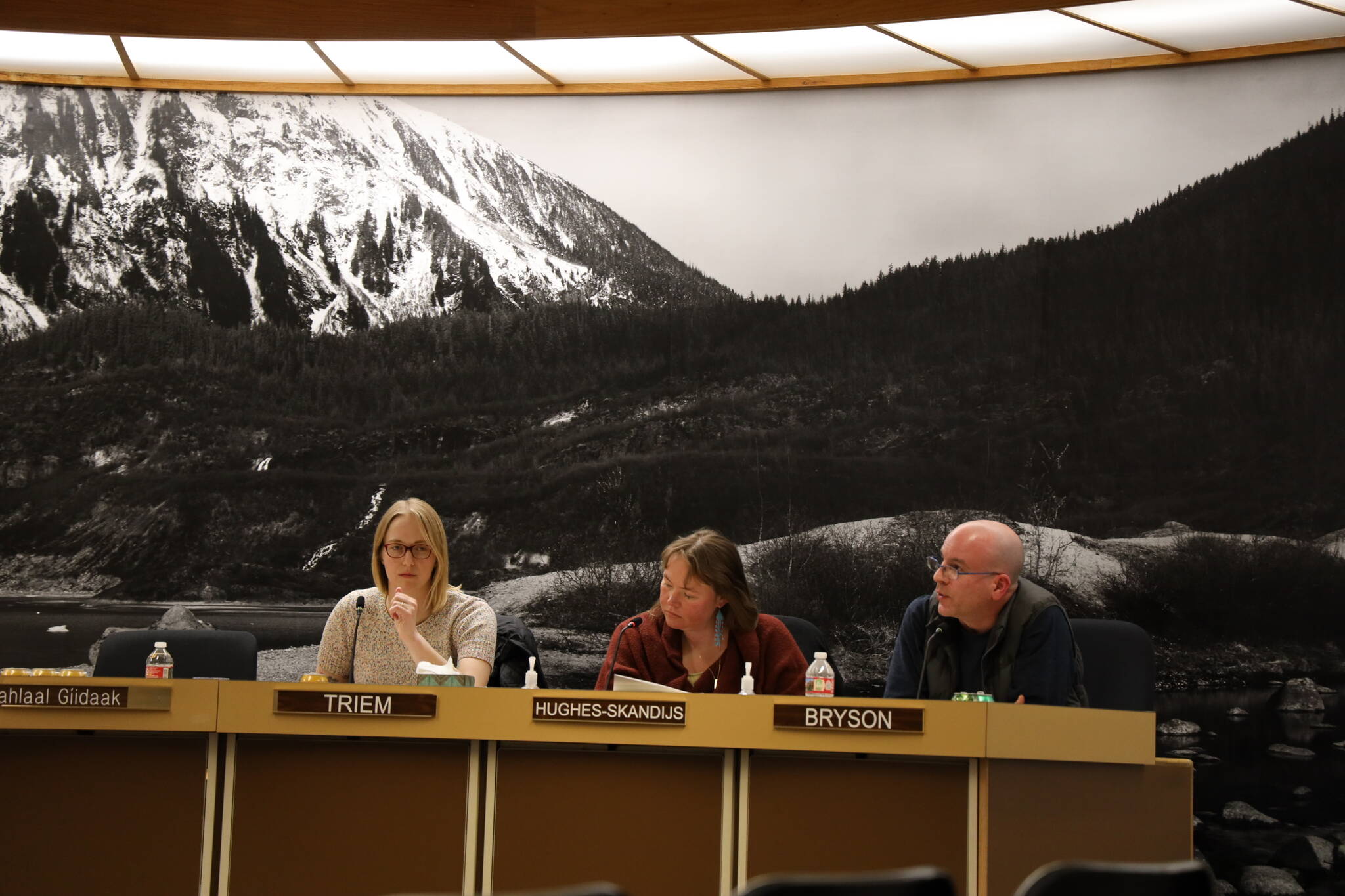
Last week, during a scheduled CBJ Assembly Finance Committee meeting, City and Borough of Juneau (CBJ) staff introduced the FY2024 draft budget for consideration. This was the first of many meetings examining the budget prior to final Finance Committee action on May 17 and adoption by the full Assembly on June 12. In conjunction with the budget, the FY2024 millage rate and CIP (Capital Improvement Plan) Budget will also be adopted.
According to the city manager’s budget message accompanying the presentation, the FY24 budget will break new ground with higher revenues and expenses than in any prior year in Juneau’s history.
Without question, impacts of continued inflation and lingering effects of the pandemic have contributed to a higher budget, but Assembly actions have also been a crucial factor.
Recurring FY24 expenditures are expected to grow by nearly $10.6 million over FY23. That increase is offset by revenues, but doesn’t include $16 million of one-time spending to be funded from the city’s unrestricted fund balance. That one-time expense includes $10 million for a proposed new city hall, bringing the total amount already appropriated for that project to $16.3 million.
The City Manager states a new city hall will substantially reduce CBJ’s long-term operating costs. He contends that current office space conditions are unacceptable and the city’s continued rental of space is an inefficient use of the public dollar.
Yet a bond issue for $35 million to partially pay for that project was turned down by voters last October. While that election wasn’t a yes/no vote on the city hall project, per se, it was a pretty good indication that voters either don’t want to pay for it or that they believe there are better, less expensive options than new construction.
The Assembly, however, has taken the position the electorate just doesn’t understand the benefits of a new city hall, so they are plowing ahead with the plan and intend to spend $50,000 on a public campaign to “educate” voters.
Regardless of the fiscal gymnastics, whether the city pays cash or borrows the money, the full costs (both capital and operating) will be borne by taxpayers. It seems like the Assembly should be listening more closely to them. It’s not as if voters don’t believe city employees should have decent working conditions. Or, in the case of the proposed $75 million Capital Civic Center project, that arts and culture doesn’t play an important part in the quality of life in our community. Most voters do believe that.
But Juneau’s cost of living is also an integral and vital component of quality of life. Public projects that have indeterminate recurring costs and one-time expenditures that have outsize impacts on the budget must be balanced against the need to keep basic living expenses low. Food and housing prices and taxes need to be within a range that encourages economic development and attracts new residents, thereby allowing the tax base to grow organically.
Unfortunately, Juneau’s demographic trends are working against us. With our school-age and working-age population dwindling, required taxes will continue to increase at the individual level making it even more expensive to live here.
A look at the latest increase in property tax assessments shows how this is beginning to play out. Assessments for 2023 increased nearly 16% for single-family homes. In response, the city manager has recommended a reduction in the property tax rate of .28 mills, from 10.56 to 10.28. I suppose any reduction is welcome, but that is trivial in comparison to the increase in city revenue. For example, if your property assessment went from $475,000 to $550,000, you will pay — and the city will gain — an additional $638 in taxes next year. That is $154 less than you would pay without the millage rate reduction – less than a quarter of what the city gains through increased valuation.
In other words, the proposed millage rate decrease is minor compared to what property owners will shell out and the city collects in increased taxes. That difference is what is primarily funding the 2023 budget increase.
But the city can claim it is “reducing taxes” and the budget is “balanced.”
You be the judge.
• After retiring as the senior vice president in charge of business banking for KeyBank in Alaska, Win Gruening became a regular Opinion Page columnist for the Juneau Empire. He was born and raised in Juneau and graduated from the U.S. Air Force Academy in 1970. He is involved in various local and statewide organizations. Columns, My Turns and Letters to the Editor represent the view of the author, not the view of the Juneau Empire. Have something to say? Here’s how to submit a My Turn or letter.
