
If war is how unworldly Americans learn geography, then getting sued by eco-terrorists is apparently how unsuspecting trollers learn Latin.
“Vacatur.” That’s Wild Fish Conservancy-speak for, “We’re fixin’ to steal your kings!”
Using the scientifically unsupportable premise that Southeast trollers are “starving” southern resident killer whales by depriving them of Chinook forage, the Wild Fish Conservancy sued seeking “vacatur,” meaning the immediate coerced closure of the Chinook fishery for SE trollers, summer and winter. A final decision rests in the hands of Judge Richard A. Jones in Seattle’s U.S. District Court.
The WFC lawsuit is a contagion of extremist judicial activism that must be stopped. Before it destroys SE trolling – and before this dangerous legal precedent spreads like a cancer to other fisheries.
How to tell the WFC legal fix is in?
SE trollers catch vanishingly small numbers of the Chinook stocks that SR killer whales depend upon in their homewaters. Whereas: Marine fishers in Puget Sound and the Salish Sea – where SRKWs spend the vast majority of the year – catch hundreds of times more of these same Chinook. You know, the very Chinook forage that the WFC pretends to care about?
But the WFC’s position is not just hypocritical. It’s scientifically wrong.
Chinook abundance is not the problem — for anyone; in fact, Chinook abundance is higher today than it was in the early 1980s. The Chinook fishery is managed coastwide since 1985 by the Pacific Salmon Treaty to provide sustainable Chinook harvests for all members, but also for marine predators — like killer whales.
Chinook harvest? Also not the problem; that’s what the PST was established to assess and address. The PST determined that all Chinook fisheries (commercial, sport, tribal) are justified and sustainable; SE trollers have seen reduced harvest share over the years — specifically so Chinook stocks could be rebuilt. Every troller I know is a strong advocate for the conservation of the Chinook resource. If science, not feelings, is your guide, no one should have their Chinook fisheries altered. Especially not SE trollers.
But somehow, the WFC reckons it knows better than fisheries scientists.
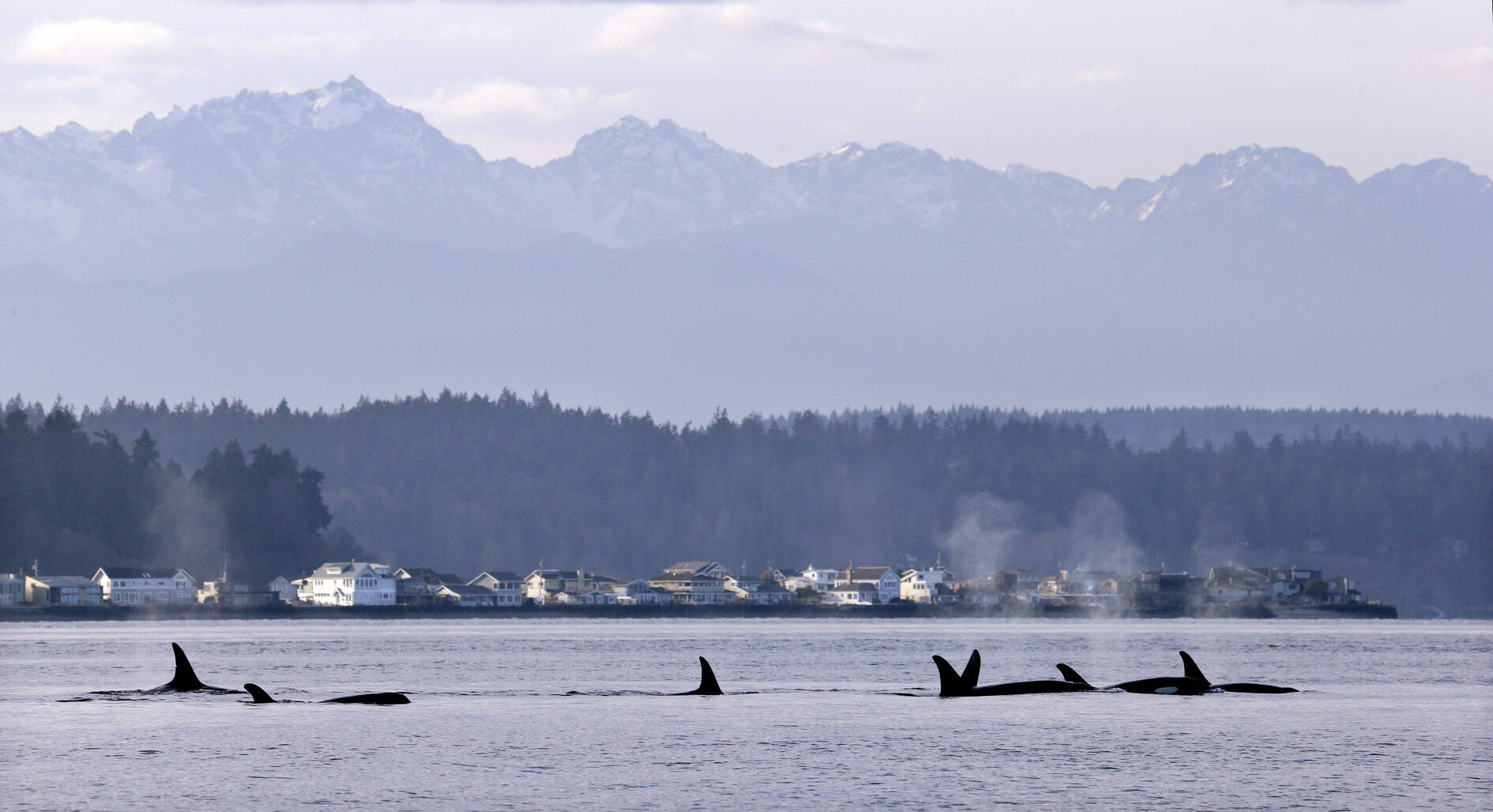
Southern resident killer whales are not “starving” for lack of Chinook forage; they are unduly stressed in their homewaters. Consider: All other orca populations in the North Pacific are thriving. In fact, the northern resident killer whales have nearly tripled in numbers over the last 40 years.
So what’s different with SRKWs? The gravest challenges for SRKWs are peculiar to the WFC’s Puget Sound homewaters. Things like:
In the 1970s, frenzied orca captures deprived Puget Sound of more than 40 SRKWs — suffering death in captivity or killed in capture; more than 20 SRKWs also were abducted from family pods in the Salish Sea. Would SRKW populations be faring much better if 60-plus southern resident orcas hadn’t been stolen from their families for the amusement of tourists? Undoubtedly.
Or how about the witches’ brew of toxins (DDT, PCBs) endemic to Puget Sound that cause miscarriage and birth defects in SRKWs? Or a whale-watching (harassment) industry that has quintipled in size since the 1980s? (Talk about orcas being loved to death.) Or how about the underwater acoustic torture from overwhelming vessel traffic in Puget Sound that interferes with orcas’ echolocation — used to prey and communicate — displacing orcas and keeping SRKWs ever on the move? Vessel strikes? (At least four SRKWs killed in the last 20 years.)
And the burgeoning sea lion and seal populations? Pinnipeds are at record-high numbers across most ranges, including Puget Sound. Consider: Orcas consume significantly more Chinook annually than all PST jurisdictions combined (orcas eat an estimated 2.5 million Chinook per year in a 2019 study). But: Pinnipeds eat significantly more Chinook than orcas. So if the WFC is serious about blaming the largest predator of Chinook forage in their Puget Sound homewaters, by a lot, they best get a certified letter out to Mr. Whiskers ASAP.
Habitat destruction, the damn dams, I could go on, point being:
None of the pitfalls of runaway urbanization in Puget Sound are SE trollers’ fault. Does the WFC own a mirror? Physician, heal thyself.
SE trollers are being scapegoated. Our livelihoods are being threatened based upon a scientifically demonstrable falsehood: We are being blamed for “starving” SRKWs when SE trollers are the least-impactful element affecting SRKWs’ Chinook forage in Puget Sound.
In real terms: Of the Chinook that SRKWs depend upon most in Puget Sound, SE trollers harvest, annually, enough to feed SRKWs for — perhaps a day? Maybe two. SE trollers are emphatically not the problem here. Everyone wants the SRKWs to thrive. I do. The issue is complex. But the WFC seeks to address it in a way that is hypocritical, unjust — and tellingly cruel.
So fight this infuriating WFC lawsuit we must. Thankfully, SE communities are galvanizing to confront the threat we face.
Commercial trollers are the second-largest fishing fleet in Alaska, and the Chinook harvest accounted for 44% of SE trollers’ income last year, with an ex-vessel value north of $12 million. The overall economic impact of trollers having our Chinook fishery stolen (including multiplier effects) is pegged at $85 million for SE coastwide. Despite their expressed “sympathy,” fairly sure WFC isn’t good for $85 million, nor do we have a spare $85 million hiding in our couch cushions here in SE Alaska, so I’d like to say:
Now is an excellent opportunity for Alaska Gov. Mike Dunleavy and Department of Fish and Game Commissioner Doug Vincent-Lang to show in word and deed that $85 million in lost revenue for SE Alaska is unacceptable and will be fought for with every resource available. We need you. Now is the time to show your true colors with vigorous support and focused action.
We’re all in this boat together, whether we like it or not.
• David Richey is a Seafood Producers Cooperative Board Member and a commercial troller based in Sitka since 2008. columns, my turns and letters to the editor represent the view of the author, not the view of the juneau empire. have something to say? here’s how to submit a my turn or letter.
