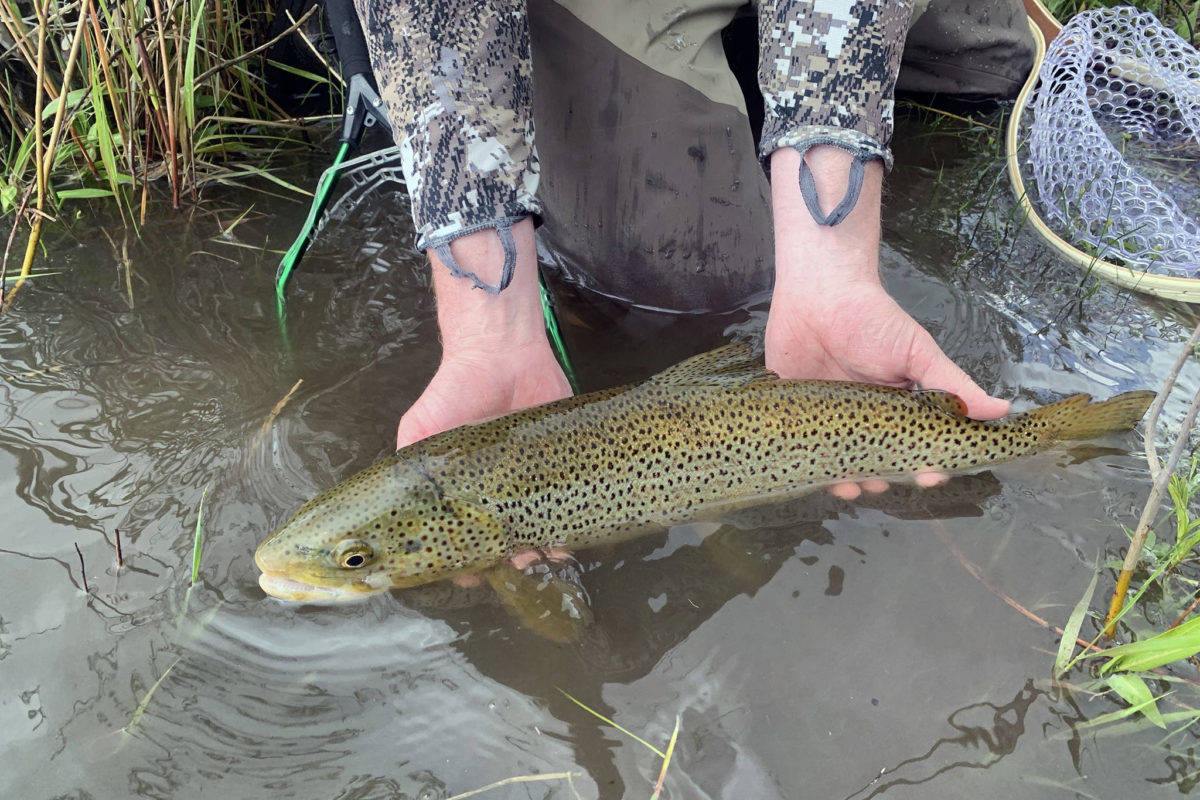
(Courtesy photo | Jeff Lund)

(Courtesy photo | Jeff Lund)

Opinion: Roadless Rule needed to protect salmon, trout

The rule was set up in a sensible way for Southeast.

  • By Mark Kaelke
  • Tuesday, October 29, 2019 7:00am
  • Opinion

There have been more misconceptions flying around about the Roadless Rule on the Tongass than Democrats trying to impeach the president lately. It’s time to clear some of them up.

Though federal rules may not be high on everyone’s list of entertainment, if you live in Southeast and are one of the 26% of residents who value a job based on fishing or tourism, or want to look out the window of your home, boat or plane and continue to see beautiful, old-growth trees and not massive clear-cuts, then please read on.

The national Roadless Rule has been in place in the Tongass for most of the past two decades. It has helped shape our tourism and fishing economy by maintaining strong salmon runs, lush old-growth forest, and clean air and water. How? By preventing new roads that would open the forest to clear-cut logging in undeveloped areas.

Roads cause erosion which impairs water quality and associated culverts often block fish migration. Logging can add more sediment to streams and impact water temperatures. All these factors can be harmful to salmon and trout. On top of that, the Forest Service has acknowledged they have a huge backlog of maintenance issues to address on our existing roads, making it extremely unwise to add new problems and expenses into the mix.

Moreover, the rule was set up in a sensible way for Southeast. For instance, communities around the region who plan development activities that would technically be off-limits under the rule are able to request exemptions. And they do, for things like transportation, habitat improvement and energy projects, and those exemptions are granted. In fact, the Forest Service has approved every single exception for projects like this within a matter of weeks.

Some have argued that there are other protections in place for the forest and so the rule isn’t needed. It’s true, there are protections, but they don’t go far enough to ensure that fish and resource-based jobs Southeast Alaskans depend on will be safe from industrial clear-cut logging. For instance, only 35% of key fish-producing areas are safeguarded if we took away the Roadless Rule. You wouldn’t allow your home security system to only watch 35% of your house, would you? If you were told the drinking water was 35% clean to drink, would you drink it? I wouldn’t either.

When it comes to conserving the resources upon which our salmon and jobs depend, we can’t rely on the bare-minimum to get the job done. Ecosystems are complicated things that need to be managed as a whole, not just in bits and pieces as other protections we have in place do.

Alaska’s salmon are core to our economy and way of life. If we take steps to protect that resource, we’re protecting who we are as a state and the industries that sustain our communities. In the case of the Roadless Rule, all we must do is leave the rule in place to reap those benefits.


• Mark Kaelke is Southeast Alaska Program Director for Trout Unlimited.


More in Opinion

Web
Have something to say?

Here’s how to add your voice to the conversation.

Photo by Nathaniel Herz/Northern Journal
Text messages between Alaska Gov. Mike Dunleavy and President Donald Trump.
Commentary: Alaska’s governor said he texts Trump. I asked for copies.

A couple of months ago, I was reporting on the typhoon that… Continue reading

Faith Myers stands at the doors of the Alaska Psychiatric Institute in Anchorage. (Photo courtesy Faith Myers, file)
Alaska’s system of protecting Trust beneficiaries is 40 years behind best practice

The lower 48 has a 3-century headstart on protecting people in locked psychiatric facilities.

veggies
File Photo 
Community organizations that serve food at their gatherings can do a lot by making menus of whole, nutritious offerings according to health and wellness coach Burl Sheldon.
Food served by “groups for good” can be health changemakers

Health and wellness coach thinks change can start on community event menus

Construction equipment operating at night at the White House. (photo by Peter W. Stevenson/The Washington Post)
Opinion: Gold at the center of power

What the White House’s golden ballroom reveals about Modern America

Win Gruening (courtesy)
Opinion: Affordability message delivered to Juneau Assembly; but will it matter?

On October 7, frustrated voters passed two ballot propositions aimed at making… Continue reading

Alaska Children’s Trust Photo
Natalie Hodges and Hailey Clark use the online safety conversation cards produced by the Alaska Children’s Trust.
My Turn: Staying connected starts with showing up

When our daughter was 11 and the COVID lockdown was in full… Continue reading

Telephone Hill as seen from above (Photo courtesy of City and Borough of Juneau)
Letter: For Telephone Hill, remember small is adaptable

Writer finds the finances don’t add up on planned development

Doug Mills/The New York Times 
President Donald Trump disembarks the USS Harry S. Truman before delivering remarks for the Navy’s 250th anniversary in Norfolk, Va., Oct. 5, 2025.
Opinion: Trump’s job is done

The ultra-rich have completed their takeover of America.

Google Maps screenshot
The star shows the approximate location of the proposed Cascade Point Ferry terminal by the Alaska Department of Transportation & Public Facilities in partnership with Goldbelt, Inc.
Opinion: An open letter to Cascade Point ferry terminal proponents

To: Governor Dunleavy, DOT Directors, and Cascade Point ferry terminal project consultants,… Continue reading

My Turn: Supreme Court decision treats Alaskans with mental illness worse than criminals

A criminal in Alaska who’s in custody must be presented with charges… Continue reading

Win Gruening (courtesy)
Gratitude for our libraries, museums and historians

The thanksgiving weekend is a chance to recognize those who preserve local history