
Most of us think Juneau is a pretty great place to live. Good community spirit, good public institutions, good arts and music. However, every person of conscience needs to take a step back and look at the recent past and consider how racism and injustice still exist among us.
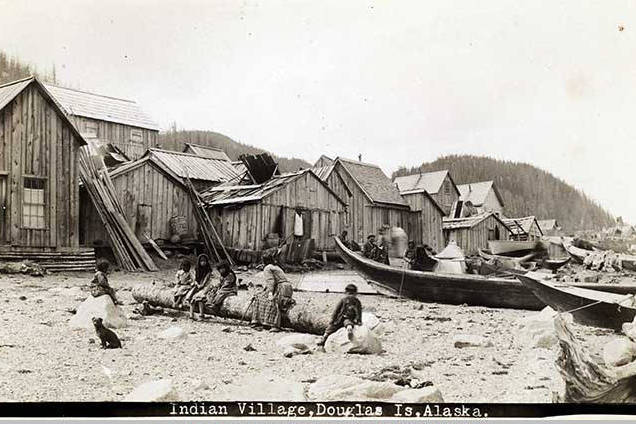
Within the memory of many in Juneau and Douglas, in July of 1962, the city government of Douglas burned the Douglas Indian Village, the home of generations of members of the Taku Kwaan. The homes were in the way of a city project for a new boat harbor. Some homes were destroyed with the owners’ possessions still in them. There was no legal process and no compensation for most of the homeowners. When we drive by the Douglas Boat Harbor, do we remember the harm our own government did to our Native citizens?
Do we remember and teach our children about when whites forced Alaska Natives to leave their communities and give up their culture so that they would conform to the ways of European Americans and be “civilized?” Do we acknowledge a debt owed to our Native neighbors? Do we work to correct these misdeeds? Do we remember when Juneau businesses were for “whites only?”
[Mending wounds through culture]
Do we remember the residents of Juneau who were given “blue tickets,” an order to leave Juneau and not return, in the early 1960s? The victims of this official persecution by our city were gays or others who the city leaders deemed “undesirable.” Do we care that they were driven from their homes so the rest of us could be more comfortable here?
We can look further back. Were there mass protests here when law-abiding citizens of Japanese descent, including children, were rounded up and shipped to prison camps, because some believed they were a threat to national security, with no proof other than their ancestry? Did we compensate them for the imprisonment, loss of work and businesses and the humiliation of being called enemies of America?
Did Juneau protest when the military set up a prison camp in the 1940s in nearby Funter Bay for American citizens from the Aleutian Islands, who were removed from their homes because the military commander feared they would somehow interfere in the event of an invasion by Japan? They received a congressional apology many years later, but did Juneau go to the aid of the many in the relocation camps who had inadequate healthcare and housing?
Do we care that those in our prisons are disproportionately people of color? Do we ask what we can do about it? Do we care that many people in Juneau do not trust the police, and do we ask why?
Most of us know that our community isn’t doing enough for social and legal justice. Too many of us are comfortable with the way things are now. Most of us tell ourselves we don’t have racial biases. But achieving genuine justice requires going beyond conscious discrimination to look for the unconscious biases that cause us to see those who are different from us as “other” because of race, religion, sexual orientation or some other reason. Just over a year ago, I attended a two-day intensive training on how to see and deal with unconscious biases. It was challenging and illuminating. So my suggestion is that we urge and perhaps require all public officials — from the manager to the police to the Assembly — to participate in such training. I’m sure there are other ways to address the problem, but this is a way with proven benefits. It would shake us out of our comfort zones and put us in a better and fairer place.
At least it would be a start.
• Douglas Mertz is a Juneau resident, a civil rights attorney and a member of the Juneau Friends Meeting (Quakers). Columns, My Turns and Letters to the Editor represent the view of the author, not the view of the Juneau Empire. Have something to say? Here’s how to submit a My Turn or letter.
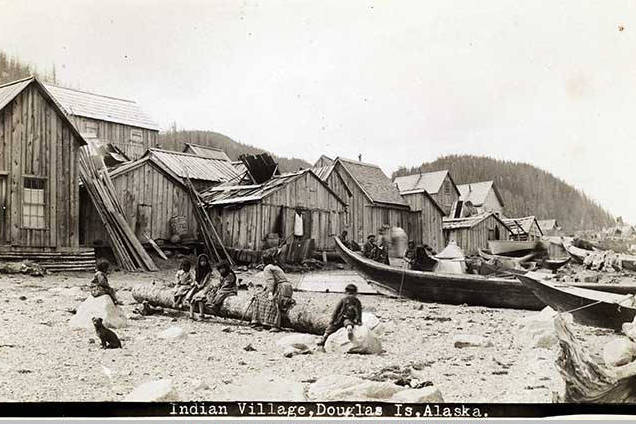
This undated photo from the Alaska State Library Historical Collections taken by Edward DeGroff shows the Douglas Indian Village. (Courtesy Photo | Fromthe Delbert E. Replogle Photograph Collection)
