
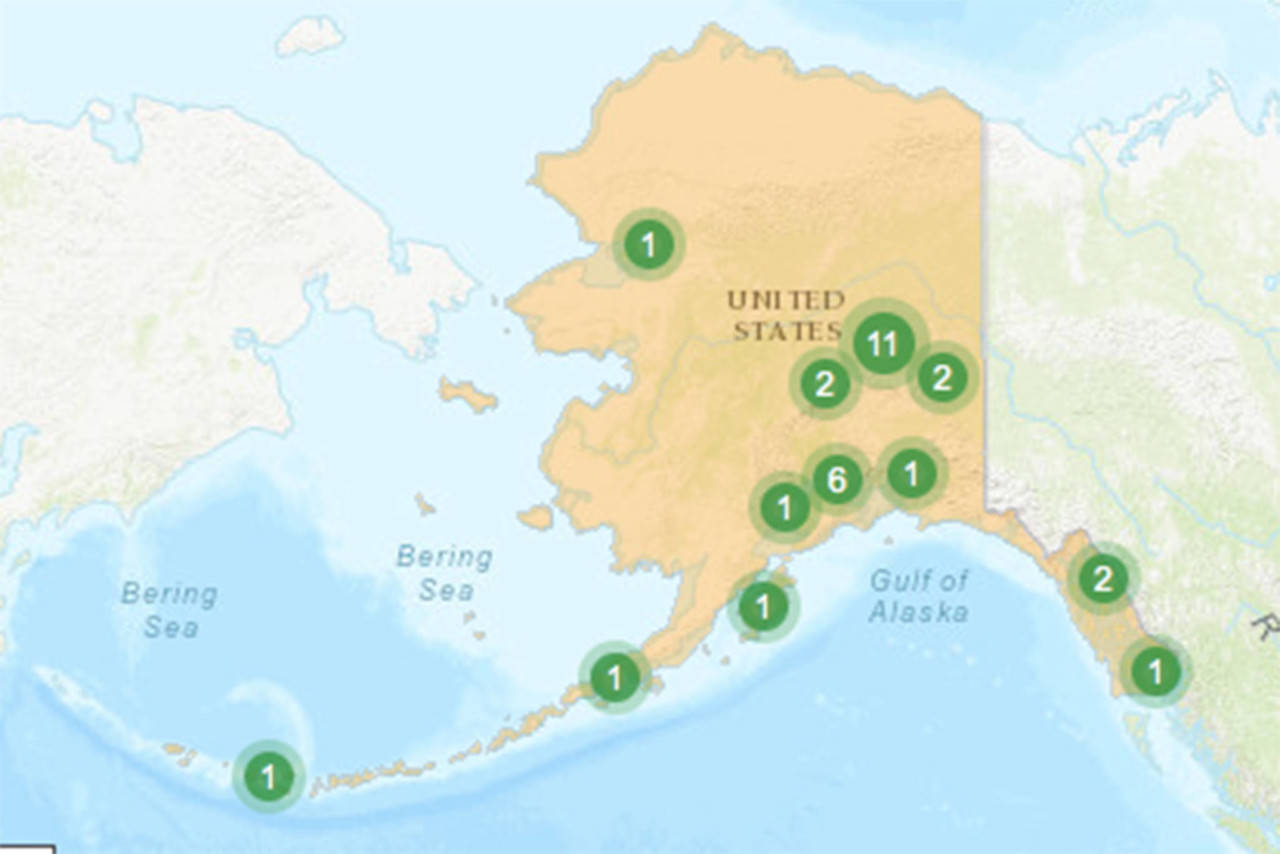
This Toxics Release Inventory map included in the Environmental Protection Agency’s annual TRI analysis shows facilities throughout the state that reported the release of toxic chemicals to the EPA. Releases include permitted releases and movement of waste rock. (Courtesy Photo | Environmental Protection Agency)

This Toxics Release Inventory map included in the Environmental Protection Agency’s annual TRI analysis shows facilities throughout the state that reported the release of toxic chemicals to the EPA. Releases include permitted releases and movement of waste rock. (Courtesy Photo | Environmental Protection Agency)

Opinion: Red Dog has strong environmental track record

Every year the EPA issues its annual Toxic Release (TRI) Inventory, and every year it creates confusion and misinformation regarding the Red Dog zinc mine in Alaska. Because the TRI was released again on Feb. 11, we wanted to share the facts about Red Dog and its inclusion on the list.

It is important to note that Red Dog is listed on the TRI entirely because of the volumes of rock and ore safely moved at the mine site each year. This is a normal part of the mining process and does not indicate any health or environmental effect. Red Dog is required to report the amount of materials moved at the mine site due to the grades of zinc and lead naturally occurring in the rocks in the ground. This does not relate to any releases of materials from Red Dog to the environment.

This naturally occurring rock material does not leave the facility and is moved to areas of the site that are managed under stringent state and federal permits to meet high environmental standards. In 2018, more than 99.97% of reported releases from Red Dog in the TRI actually remained at the mine site. The remaining 0.03% includes emissions that are also regulated under permits.

The Alaska Department of Environmental Conservation Commissioner Jason Brune has responded to the TRI, noting: “Big mines like Red Dog move a significant amount of material as part of their daily operations, but such actions do not adversely impact human health and the environment. Characterizing such releases as toxic is disingenuous at best.”

The Red Dog Mine was developed more than 30 years ago in partnership with the Iñupiat of Northwest Alaska and has been internationally recognized as a model for environmentally and socially responsible resource development. Red Dog is built around the strong partnership between Teck and NANA that has created quality jobs and supported local communities, all while practicing responsible environmental management under the guidance of the local Iñupiaq people. Since mining began, more than $1.3 billion has been provided to state and local government agencies in taxes and other payments, and more than $500 million in wages have been paid to employees living in the Northwest Arctic Borough and to NANA shareholders, who make up more than 50% of Red Dog’s workforce.

The real story of Red Dog Operations is the opportunities the mine has helped create in Northwest Alaska, and the strong environmental track record its employees have established together.

• Wayne Westlake is president and CEO of NANA Regional Corporation and Les Yesnik is general manager of Red Dog Operations.

More in Opinion

Web
Have something to say?

Here’s how to add your voice to the conversation.

A sign reading, "Help Save These Historic Homes" is posted in front of a residence on Telephone Hill on Friday Nov. 21, 2025. (Mari Kanagy / Juneau Empire)
OPINION: The Telephone Hill cost is staggering

The Assembly approved $5.5 million to raze Telephone Hill as part of… Continue reading

Win Gruening (courtesy)
OPINION: Eaglecrest’s opportunity to achieve financial independence, if the city allows it

It’s a well-known saying that “timing is everything.” Certainly, this applies to… Continue reading

Gov. Mike Dunleavy gestures during his State of the State address on Jan. 22, 2026. (Photo by Corinne Smith/Alaska Beacon)
OPINION: It’s time to end Alaska’s fiscal experiment

For decades, Alaska has operated under a fiscal and budgeting system unlike… Continue reading

Atticus Hempel stands in a row of his shared garden. (photo by Ari Romberg)
My Turn: What’s your burger worth?

Atticus Hempel reflects on gardening, fishing, hunting, and foraging for food for in Gustavus.

At the Elvey Building, home of UAF’s Geophysical Institute, Carl Benson, far right, and Val Scullion of the GI business office attend a 2014 retirement party with Glenn Shaw. Photo by Ned Rozell
Alaska Science Forum: Carl Benson embodied the far North

Carl Benson’s last winter on Earth featured 32 consecutive days during which… Continue reading

Van Abbott is a long-time resident of Alaska and California. He has held financial management positions in government and private organizations, and is now a full-time opinion writer. He served in the late nineteen-sixties in the Peace Corps as a teacher. (Contributed)
When lying becomes the only qualification

How truth lost its place in the Trump administration.

Jamie Kelter Davis/The New York Times
Masked federal agents arrive to help immigration agents detain immigrants and control protesters in Chicago, June 4, 2025. With the passage of President Trump’s domestic policy law, the Department of Homeland Security is poised to hire thousands of new Immigration and Customs Enforcement (ICE) agents, and double detention space.
OPINION: $85 billion and no answers

How ICE’s expansion threatens law, liberty, and accountability.

Yereth Rosen/Alaska Beacon
The entrance to the Alaska Gasline Development Corp.’s Anchorage office is seen on Aug. 11, 2023. The state-owned AGDC is pushing for a massive project that would ship natural gas south from the North Slope, liquefy it and send it on tankers from Cook Inlet to Asian markets. The AGDC proposal is among many that have been raised since the 1970s to try commercialize the North Slope’s stranded natural gas.
My Turn: Alaskans must proceed with caution on gasline legislation

Alaskans have watched a parade of natural gas pipeline proposals come and… Continue reading

Most Read