
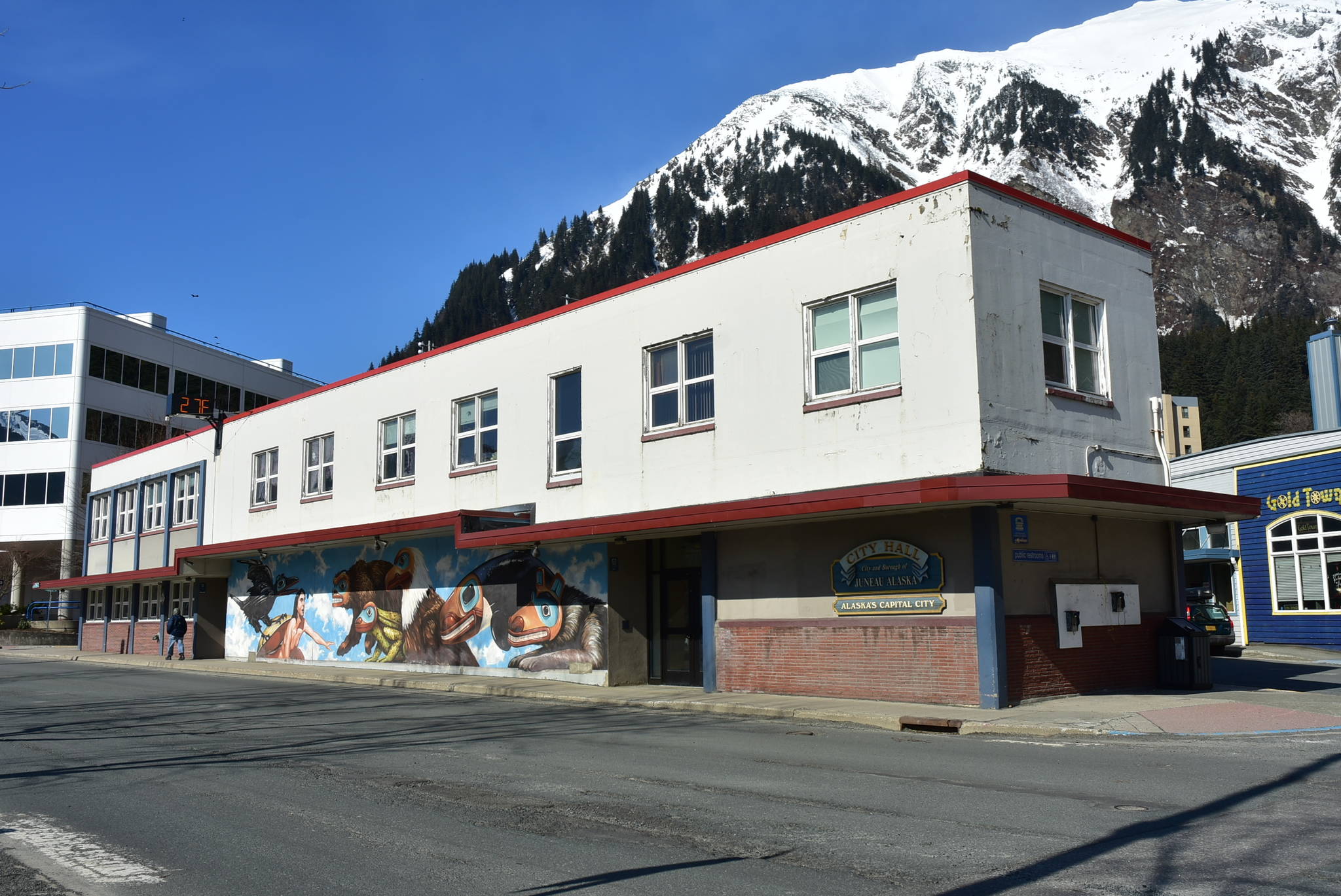
Alaskans are beginning to realize the true dimensions of the economic challenges we face in recovering from this pandemic. Initially, federal, state and community governments correctly focused on the health and life safety implications of the virus. Yet, it’s becoming increasingly clear that the economic impacts will extend years beyond the life of this virus and will far outweigh its short-term effects.
The collapse of the visitor industry means CBJ likely faces a $34.5 million budget shortfall over the next 30 months.
Some federal and state aid will be available, but only for a short time, and it cannot compensate businesses for the massive losses they will incur.
Business owners, homeowners, landlords and tenants will still owe property taxes or rent — even with no income or job. Some obligations can be deferred, eventually most must be paid.
[City officials wary of federal fund promise]
Our elected Assembly must grapple with very difficult choices when crafting our next several municipal budgets. No magic rescue package awaits from state government, now wrestling with its own unprecedented budget deficits.
The sooner our economy gets back on track, the better.
There’s growing recognition that a prolonged economic “lockdown” damages our community health as health care providers state-wide are unable to provide ongoing essential care to non-Covid patients. Recently announced easing of rules on elective surgeries are welcome as some hospitals, clinics and physicians are already perilously close to financial insolvency.
It’s within this context that continuing Covid-19 mandates must be weighed against a prudent relaxing of restrictions on commercial businesses to allow the economy to begin to recover.
Mayor Beth Weldon’s formation of an Economic Stabilization Task Force can help bridge the gap for cash-strapped business owners and displaced workers.
Our city government; however, can only do so much. Its financial resources are limited and must be balanced with essential needs of its citizens.
City staff recently presented the Assembly with a list of possible actions to balance the budget. Some ideas being considered are:
• Operating budget reductions. While not specifically mentioned, this should include consideration of personnel furloughs, hiring and pay freezes and delaying $1.5 million in scheduled pay raises, new hires and longevity pay for city employees. For perspective, tourism-dependent San Diego just furloughed 800 city employees due to shrinking tax revenue.
• Postpone or cancel all nonessential expenditures. Why is the Assembly considering over $6 million in new child care programs over the next five years?
• Divert some Capital Improvement Project funds into operations. For example, Augustus Brown Pool is currently slated for $3.3 million in repairs/upgrades.
• Use CBJ reserves/fund balances to ease transition. The city currently has $16 million in reserves and an $18 million fund balance. $3 million has already been committed to a city loan program.
• Bump property tax millage rate by 1 mill. Coupled with higher property assessments, this would increase property tax bills over 10% and raise approximately $5.5 million annually.
• Some of these actions may be unpalatable to many in the community. Yet, they must be considered if we are to meet this challenge head-on. None, by themselves, will be sufficient to balance the budget.
In terms of priority, raising taxes should be the last item considered. If getting our economy back on its feet is our #1 financial priority, then raising taxes significantly is counter-productive – slapping an additional burden on business-owners and homeowners hardest hit by the pandemic.
The City Manager is currently recommending offsetting the budget deficit over the next 30 months primarily through the following sources:
• $14 million from reserves/savings
• $11 million in increased property taxes
• $9 million in reduced CIPs
Inexplicably, general government operational expenditures are actually projected to increase over FY20 because no significant programmatic or personnel cutbacks are being proposed.
Without good-faith reductions in existing general government personnel and program expenditures, we’d be asking the beleaguered private sector to pay increased taxes to support a government workforce that isn’t sharing the economic pain of this virus.
This is a mistake that must be rectified by the Assembly. It’s fiscally irresponsible to continue city operations as usual (in fact, adding new programs) while raising taxes and slashing CIP funding — two actions that arguably will prolong Juneau’s recession.
• Win Gruening retired as the senior vice president in charge of business banking for Key Bank in 2012. He was born and raised in Juneau and is active in community affairs as a 30-plus year member of Juneau Downtown Rotary Club and has been involved in various local and statewide organizations. Columns, My Turns and Letters to the Editor represent the view of the author, not the view of the Juneau Empire.
