
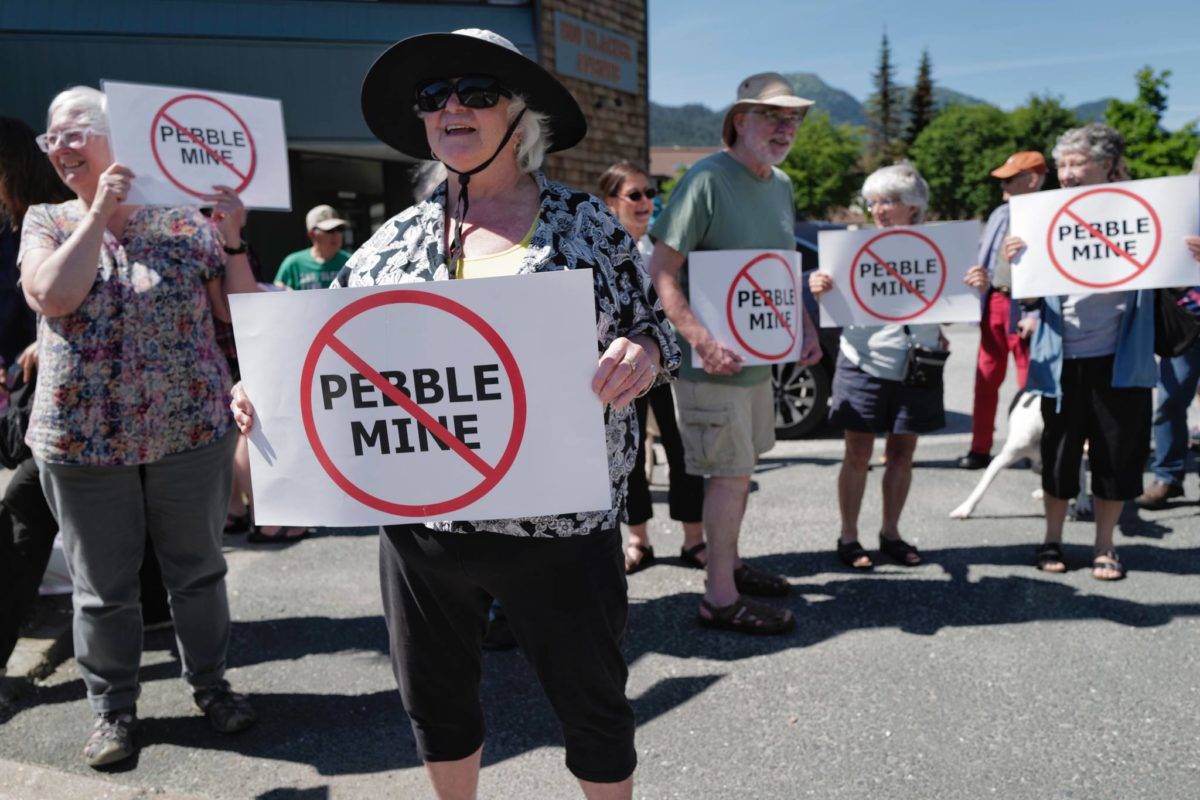
On Nov. 23 I received from Pebble Mine a mailed pamphlet making it sound like the Nondalton Tribal Council and Cunyung Tribal Council helped produce the draft Environmental Impact Statement.
In a letter published Nov. 18 in response to the advertisement that Pebble submitted to Anchorage Daily News on Nov. 6, President George Alexie of the Nondalton Tribal Council and First Chief Thomas Tilden of the Curyung Tribal Council refuted Pebble’s assertion that the permitting process for Pebble’s proposed mine is working.
“This ad gave the impression that our tribal governments support the work that the Amy Corps of Engineers has done on Pebble’s environmental review to date,” the letter stated. “Nothing could be further from the truth. Our tribes have been part of this process from the start. And let us tell you: The process is broken and it shouldn’t be trusted. Pebble did not ask for permission to use logos, and we wouldn’t have granted it if they had.”
Thank you Alexie and Tilden for this letter.
This hearing makes the third time in the last month Pebble has misrepresented these tribes. CEO Tom Collier did it when testifying before a Congressional hearing held on Oct. 23. He claimed they had total support for access from the majority of tribes around Iliamna Lake. Alannah Hurly testified to the fact that they do not. (Her comments about this are at the end of this hearing.) She is executive director of United Tribes of Bristol Bay. You can watch the hearing, Pebble Mine Project: Process and Potential Impacts, on YouTube.
If Pebble would create falsehoods about this, what else would they lie about? The capability of their water treatment plant? The level of toxins their putting back into the lakes, rivers and streams? This is exactly what residents of Likely, British Columbia, are asking of their government with the reopening of the Mount Polley Mine in 2015. Concerned Citizens of Quesnel Lake organized out of fear about if the mine’s wastewaters were even being treated before being discharged into their lake. Here’s their website ccql.ca. In May 2019, the Mount Polley Mine closed again citing financial concerns. I would bet that a lot of the residents are not drinking the water or eating the fish. I just can’t image the hoops these people are having to jump though.
On Nov. 21 the Clarion published an editorial, “We need to make sure mine cleanup plan happens,” by Vice President John Morris Sr. of the Douglas Indian Association, a federally recognized tribe in Juneau. Morris wrote in reference to the Tulsequah Chief Mine, an abandoned transboundary mine on the Canadian side. Six decades is indeed a long time for toxic acid mine drainage to pour into the Tulsequah River. Thank you, Morris, for addressing this issue. He is also a representative to Southeast Alaska Indigenous Transboundary Commission. Look forward to an update from him. I hope to see it happen too. I just hope it’s not too late.
• Vicki Duggin resides in Nikiski. Columns, My Turns and Letters to the Editor represent the view of the author, not the view of the Juneau Empire.
