
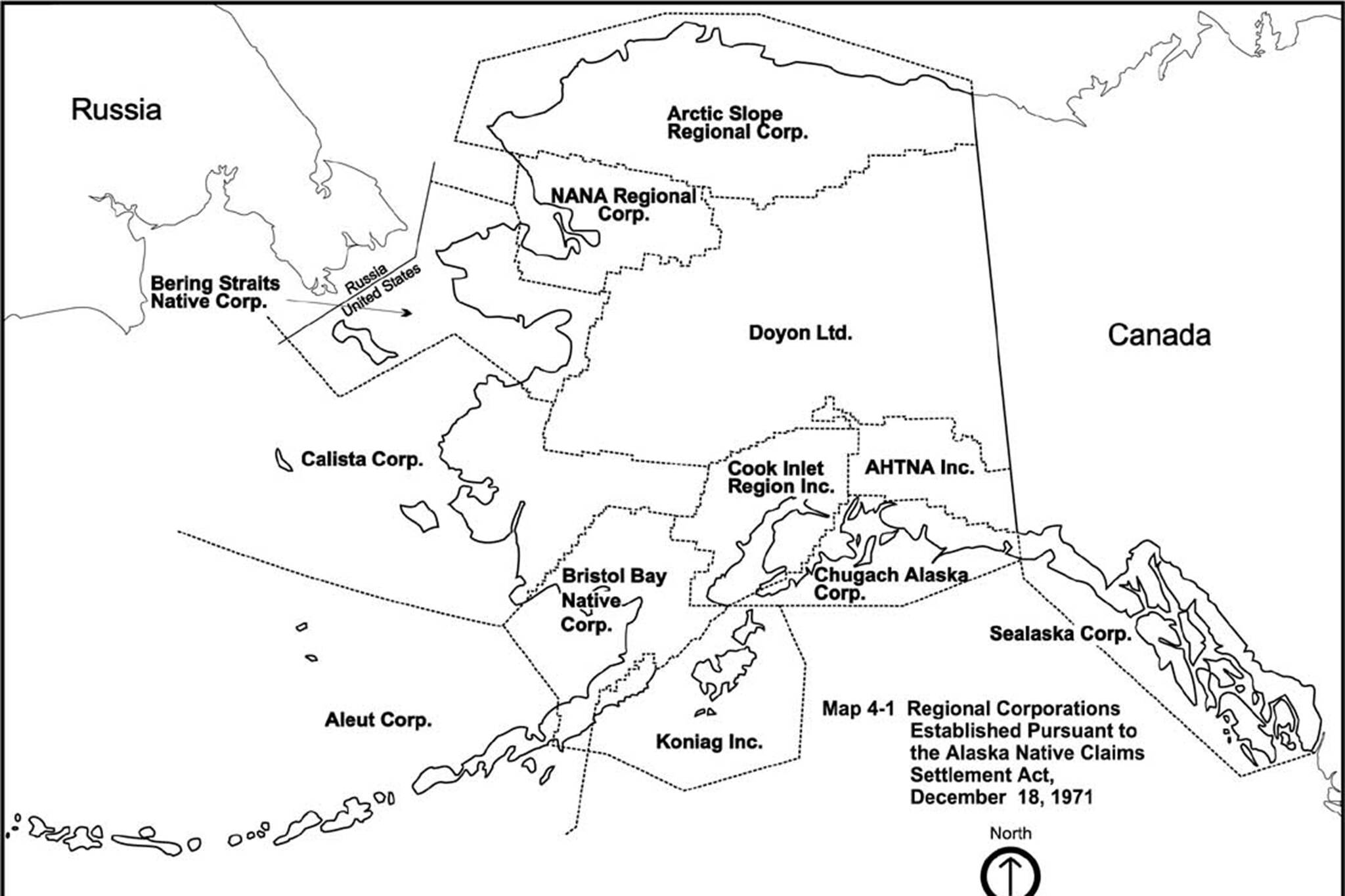
Less than a year ago, Alaskans marked one of the most significant events in our history – the 50th anniversary of passage of the landmark Alaska Native Claims Settlement Act. After decades of fighting for their rights, the 1971 federal law set a new course for Alaska Natives, self-determination and positive economic development.
Today ANCSA fuels the state’s economy through Native regional and village corporations established under the act, where Southeast Alaska corporations and nonprofits play a key role.
To provide future generations insights into this ground-breaking law, the Alaska Historical Society has just completed the first-ever, comprehensive guide to historical sources about ANCSA.
The three-volume, nearly 1,200-page Guide to Sources for the Study of the 1971 Alaska Native Claims Settlement Act identifies documents located in archives, libraries, personal collections and online. It serves as the premier information gateway for historians and other researchers interested in this fascinating history of how the largest land claims settlement in U.S. history became law.
The multi-decade run-up to ANCSA, the David and Goliath-like victory in Congress, and the long-lasting impacts of the Act reflect the importance of this Act.
As Alaska’s only statewide organization dedicated to creative inquiry into our past and sharing information, ideas and resources about our history, the AHS is grateful to partners and financial support from the Rasmuson and Atwood Foundations and the Doyon, Sealaska, Bering Straits, Calista and Koniag Native corporations.
As the guide documents, the story of Alaska Native land claims begins well before passage of ANCSA. With America’s 1867 purchase of Alaska, the federal government for the first time acknowledged responsibility to Alaska Natives. The U.S. began a “trust” responsibility based on the notion that the best course was to encourage Natives to change their lives to live like non-Natives.
Alaska Natives resisted that ill-conceived policy, organizing, researching and fighting in the courts and Congress for legal recognition of claims to the land they had long occupied. The guide unearthed hundreds of sources about these historic developments.
For example, longtime Southeast Native leader Byron Mallott spoke out in 1968 in favor of a “corporate solution” to land claims. During hearings on an early version of the claims act bill that eventually passed Congress, Mallott said: “The corporate provisions … provides for the establishment of village, regional corporations, and a statewide organization owned and operated solely by, and for the betterment of Alaska’s natives—I submit will, if made reality, be one of the most significant development stories in Alaska’s history.”
As we now know, Mallott proved to be correct.
The guide includes a link to the ground-breaking essay by young Native leader Willie Hensley who argued for Native rights within a legal and historical framework that could be defended by both Natives and non-Natives.
The guide also includes an historic 1970 speech by President Richard Nixon
proposing a new approach in the federal treatment of America’s First Peoples, a change from termination to self-determination.
Volume 1 of the guide includes a brief overview essay on the history of ANCSA, a timeline of events leading up to its passage, a list of key participants in the land claims movement, and a detailed inventory of archival collections around Alaska and in the Lower 48.
Volume 2 is an extensive annotated bibliography of published and readily accessible sources. Volume 3 is a resource guide for those who teach Alaska history and features curriculum approaches, key discussion questions and resources for the classroom.
The guide is a fully searchable and navigable electronic document available online. Users can easily navigate within each volume, as well as between volumes. When available, active links to other resources are provided. Contact information for the archives referenced is also included, so researchers can follow-up with more specific questions or make arrangements for a site visit.
The guide is available at https://alaskahistoricalsociety.org/discover-alaska/resources-for-the-study-of-the-1971-alaska-native-claims-settlement-act/. It is also available on Scholarworks, a digital repository for University of Alaska research at: https://scholarworks.alaska.edu/handle/11122/12594/browse?type=dateissued.
• William Schneider is a professor emeritus at the University of Alaska Fairbanks and was director of the ANCSA Guide Project. Columns, My Turns and Letters to the Editor represent the view of the author, not the view of the Juneau Empire. Have something to say? Here’s how to submit a My Turn or letter.
