
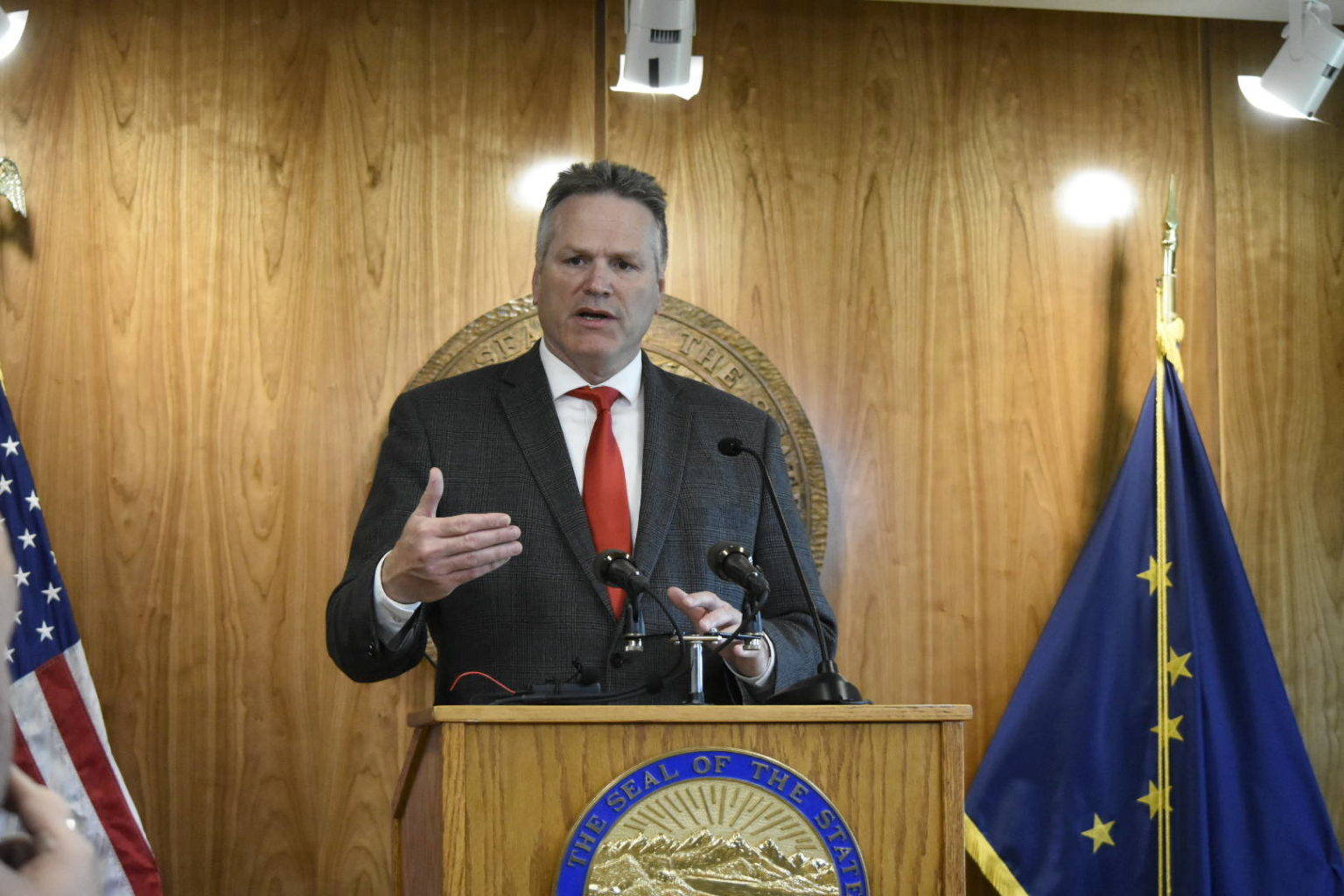
“As we’ve all seen, for too long, politicians haven’t been honest when it comes to the numbers and the seriousness of our fiscal woes” Gov. Mike Dunleavy wrote when he submitted his first state budget proposal in February 2019. Rather than being honest though, he abused the powers of his office as he defined them to cut state spending to the bone.
And he’s trying to fool Alaskans again.
Dunleavy’s latest spending proposal includes funding the Permanent Fund Dividend based on the 50-50 formula he wants enshrined in the constitution. And he claims rising oil prices and production will add enough new revenue in the next few years so that no new taxes will be needed to balance the budget.
Remember, he ran for governor claiming he could do that and apply the 1982 statutory formula to annual PFD forever without imposing new taxes or making drastic budget cuts.
Then in office, he immediately gutted the budgets for the University of Alaska, the Alaska Marine Highway System and the Pioneer Homes. He tried to eliminate the senior benefits and tribal assistance programs. And he explained away his broken campaign promises by claiming they were based on “a far more favorable revenue picture” that suddenly changed.
“In October of 2018, the price of oil was trending at nearly $85 per barrel” he stated in August 2019, “but when we took office in December, oil prices had plummeted to near $55 per barrel, cutting over $1.7 billion in potential revenue in less than three months.”
But as I’ve previously written, oil was selling for $49 per barrel when he declared his candidacy in July 2017. For the next 14 months it averaged $66. It was over $80 after that, but only for three weeks.
What those figures reveal is either Dunleavy naïvely believed oil prices would hold at around $85 per barrel for the next four years. Or he was blatantly dishonest by claiming his draconian budget cuts were necessary only because oil prices unexpectedly plummeted.
There’s a middle possibility — a simple unwillingness to admit he was wrong. In other words, he acted more like a typical politician.
For a moment then, let’s give him the benefit of the doubt. Wouldn’t the forecast of higher oil prices and production be his opportunity to live up to his campaign promises by restoring most of the cuts he made two years ago?
Clearly, he’s not interested in doing that.
Which is why it would be foolish to trust his optimism that the budget can be balanced a year or two after his 50-50 PFD proposal is adopted without new taxes or further cuts. What’s more likely is he’s laying the foundation for when revenue projections fall short. Then he’ll claim it’s justification for putting even more state services on the chopping block.
And if his proposed constitutional amendments are adopted, they’ll give him the power to do it.
Let’s talk about power.
“Too often leaders seem to forget a simple truth” Dunleavy said at the start of his first State of the State speech. “Government gets all of its authority from the people.“
He continued by stating the courts, the Legislature and the governor have no power “except what you, the people of Alaska, give.”
By that rule, Dunleavy lacked the power to take anything away that had the direct, prior consent of the people. But with a stroke of his veto pen in 2019, he completely shut down the Ocean Ranger program approved by a voter initiative in 2006.
Furthermore, being elected governor didn’t translate to the peoples’ consent for the extreme budget cuts he imposed on the University of Alaska, marine highways and other programs. Because even he admits his campaign didn’t prepare voters to expect it would be necessary.
Instead, what Dunleavy sought was consent after the fact via constitutional amendments — a revised spending cap, and no changes to the PFD or taxes without a vote of the people. Because if adopted, no one who succeeds him in office will have the power to even partly undo the cuts he made without asking for and obtaining voter approval first.
Fortunately, the majority of legislators can see right through Dunleavy’s scheme. But to repair the damage he’s already done, we’ll need to replace him with an honest, competent governor.
• Rich Moniak is a Juneau resident and retired civil engineer with more than 25 years of experience working in the public sector. Columns, My Turns and Letters to the Editor represent the view of the author, not the view of the Juneau Empire. Have something to say? Here’s how to submit a My Turn or letter.
