
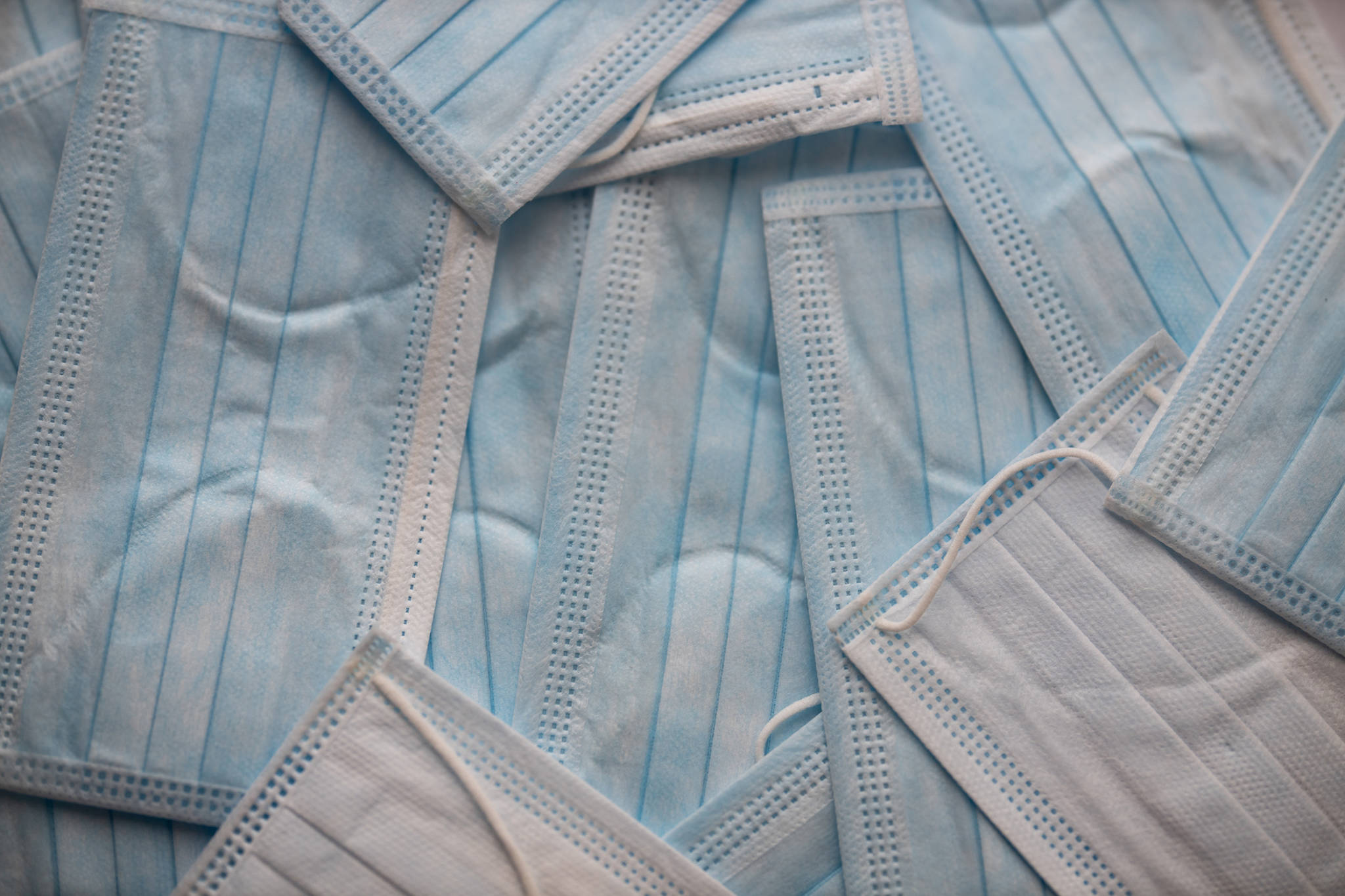
The Juneau School District Board of Education made a wise decision this week. Wearing face masks will be required for students and staff returning to classes next month. Unless the Assembly passes a mandate that everyone else wear masks in public places, students may interpret the rule as “do as I say, not as I do.” And that’s almost always a prescription for trouble.
The push to reopen schools is understandable. But like everything else about COVID-19, the impact of doing so is highly unpredictable. We can’t even look back and say how much the statewide school closures ordered by Gov. Mike Dunleavy in March contributed to minimizing the community spread through May.
That action was the first Dunleavy took. On March 13, the day after first Alaska case was confirmed, he closed them through the end of March. A week later, it was extended to the end of April. And three weeks after that to the rest of the school year.
Nonessential businesses weren’t shut down until March 28. And when those began to reopen in early May, schools remained closed.
By that time, the number of newly confirmed cases had declined to just a few each day. But the total in June was 510. And the first two weeks of July added 600. Combined, that’s 100 times more than when Dunleavy shut everything down.
Some of the increase is due to the number of people who have been tested. There were only 20,000 through the end of April, and 130,000 since then. But knowing there are more active cases only means we have a better idea of the risks of community spread going forward.
The more important concern is the capacity to handle a surge in the number of patients requiring hospital care. Fortunately, that’s not a problem right now. But the numbers are trending in the wrong direction.
“There is a direct correlation between positive case counts in a community and the risk for nursing home outbreaks” Jared Kosin warned this week. “Unchecked case counts will lead to increased hospitalizations and deaths, and we will be brought to a breaking point.”
Kosin is the president and CEO of the Alaska State Hospital and Nursing Home Association. He believes “we are headed right back to lockdown if we do not change.” By that, he means too many people are choosing not to wear masks in public, attend large gatherings and not limit their contact with others as much as possible.
During the spring lockdown, we didn’t have to be concerned with how such behavior affected children in schools. They weren’t there. And they aren’t now. We’d be foolish to think it won’t have an impact when they return next month. Even if the risk is lower for young people and very few get infected, once the few that do are out of the classroom, it’s likely they’ll quickly infect a lot of others. Especially if they become part of the crowd that refuses to wear masks.
What happened at a summer camp in Missouri recently is good case study for how the virus can spread where young people congregate. Kanakuk Kamps’s 31-point safety plan began with recommending campers and staff self-isolate for two weeks before arrival. It included documented health screenings and daily temperature checks. Its social distancing rules prohibited hand touching while saying grace. However, wearing face masks wasn’t required.
The camp was shut down July 2 after more than 40 people tested positive. Within three days, that number doubled.
Like school, summer camps own a prescribed spot on society’s calendar. If we want to regain control of that, then taking every precaution to keep COVID-19 out of the schools makes sense. And what’s deemed necessary for students, teachers and staff should apply to everyone who enters a public place.
Most people in Juneau are responsibly wearing masks. But too many won’t unless it’s mandated. We need that now. Because we won’t know that community transmission is out of hand until it’s too late to keep schools and nonessential businesses from shutting down again.
And that won’t be a pretty picture. Especially for the elected officials who thought voluntarily compliance was the answer.
• Rich Moniak is a Juneau resident and retired civil engineer with more than 25 years of experience working in the public sector. Columns, My Turns and Letters to the Editor represent the view of the author, not the view of the Juneau Empire. Have something to say? Columns, My Turns and Letters to the Editor represent the view of the author, not the view of the Juneau Empire. Have something to say? Here’s how to submit a My Turn or letter.
