
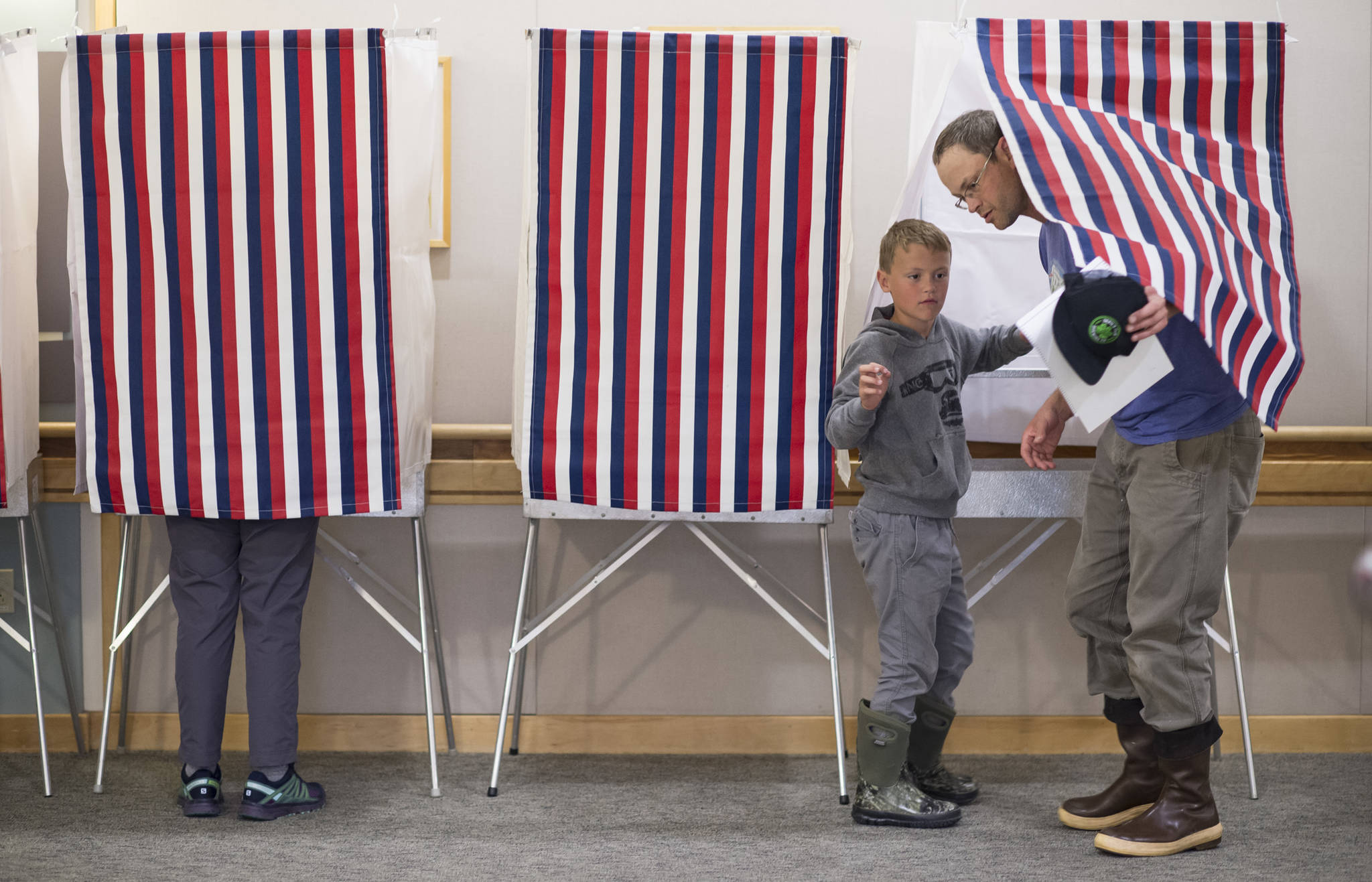
Except for a few close races, the unofficial vote tallies for the 2018 primary election serve as official results. We know which candidates earned a spot on November’s ballot. What we don’t know is why so many Alaskans didn’t care enough to vote. But there are clues from the 2014 primary.
The state’s Division of Elections reported an 18 percent voter turnout on Tuesday. That isn’t the final figure, but it’s not expected to change much. It’s a little higher than the 2016 primary, but significantly down from prior years going all the way back to 2000.
[Voter turnout up from 2016, but still third-lowest]
One explanation, given by a Republican pollster, was that the two leading gubernatorial contenders on the GOP ballot spent very little on mass advertising. That could be why there 40,000 less votes cast on that side compared to 2014. But not for the corresponding 40-plus point drop of votes cast on the Democrat’s ballot.
He also suggested many Anchorage voters expected mail-in ballots like those used in their recent municipal election. But that doesn’t explain why turnout in Juneau dropped about 40 percent too. Especially considering it was the first time in years there was competition for seats in the state House of Representatives.
What was different in 2014 is voters were asked whether or not Senate Bill 21 should be repealed. The oil tax reform law that passed a year earlier was controversial long before it reached the governor’s desk. A petition drive to the repeal it began almost immediately afterwards. More than 45,000 Alaskans signed it. That’s almost half the number who voted on Tuesday.
The highest turnout in recent primaries was 41 percent in 2008. That wasn’t about nominating candidates for governor. And Sen. Ted Stevens and Mark Begich were all but guaranteed to represent their respective party in the race for the U.S. senate.
But there were four voter initiatives on the primary ballot that year. And two likely drove voters to the polls. One would have prohibited the use of aircraft to shoot wolves and grizzly bears. The other would have imposed new water quality standards on large mining operations.
In 2006, primary voters approved a cruise ship head tax. And in 2010, they passed a law forbidding a minor from getting an abortion unless at least one parent had consulted with the doctor. Both times turnout was twice as high as this year.
Not all ballot measures generate a high level of voter interest. An example is the state law requiring voters be asked once every 10 years whether or not a constitutional convention should be convened. Turnout was just 25 percent the last two times the question was on the primary ballot.
What the other figures suggest though is voters are less concerned with inter-party rivalries than defending distinguishable party values. A hotly contested primary might increase turnout to some degree. But since serious challenges to incumbents are rare, a high turnout on both sides isn’t likely unless there’s a controversial question put before the voters.
But no matter which way we slice the primary voting data, turnout is always higher for the general elections. It’s usually around 60 percent. And since the real objective of holding voter initiatives is to get the majority of Alaskans to bless a proposed statute, then they should always be on November’s ballot.
The problem with doing that is it’ll permanently depress voter turnout for the primaries. That runs counter to goal of engaging more voters, which was one of the objectives of the PFD/voter registration initiative approved in November 2014.
The paradox here is if we all agreed on how to govern ourselves, we’d choose our elected officials based on personality, character or accomplishments, then ask them to mind the taxpayers’ store and nothing more. Voting, or not voting, would be inconsequential.
But elections matter. And they matter most when challenged by our disagreements.
If we want more public participation our primary elections, then, as I wrote two weeks ago, put all candidates on a common ballot. Rather than just choosing tribal leaders, the ensuing debate would encompass the full range of governing philosophies. And in this freedom loving country, it’s deciding what role the government should have in our lives that most arouses the voters’ passions.
• Rich Moniak is a Juneau resident and retired civil engineer with more than 25 years of experience working in the public sector. He contributes a weekly “My Turn” to the Juneau Empire. My Turns and Letters to the Editor represent the view of the author, not the view of the Juneau Empire.
