Opinion: Juneau voters’ hard choices — no, yes, no, yes
Published 10:30 pm Wednesday, September 14, 2022


Normally, municipal elections are half-hearted affairs with little to quibble about.
Not so this time.
Ignoring Juneau’s stagnant population and shrinking pool of working families, our local Assembly seems hell-bent on a spending spree that will add significantly to future city operating costs. With four propositions on the upcoming Oct. 4 ballot, Juneau voters have an opportunity to send them a message.
Enough is enough.
The Assembly’s response to lower tax revenues, budget deficits, and cries for increased spending has resulted in a precipitous escalation of commercial and residential property taxes and proposed debt. Serious discussions of expenditure reductions, facility consolidations or closures, elimination of tax exemptions, or initiatives to actually grow the economy are rarely heard.
Examination of the four propositions on the October ballot serve to highlight the current tax and spend attitude of the Assembly. My vote for each is noted.
Proposition 1 – Vote no. Authorizes the issuance of $35 million in general obligation bond debt for paying the cost of construction and equipping of a new City Hall.
This project should be paused and sent back to the drawing board. Including $6 million already appropriated, this project is estimated at $43 million. The cost will likely be higher due to runaway construction costs spiraling up in a period of rapid inflation, lack of skilled construction workers, and supply-chain breakdowns. With commercial real estate vacancy rates on the rise in Juneau, this is arguably the worst possible time to construct a public building of this size.
Additionally, not yet resolved is the amount of office space needed and how it should be configured. Post-COVID, the trend toward working remotely and in more in open flexible office space will continue. It makes sense to wait until inflation abates, costs come down, and the construction workforce reconstitutes itself. Meanwhile, a serious effort to examine the alternative of re-purposing existing government buildings and/or the growing amount of local vacant commercial office space should be undertaken.
Proposition 2 – Vote yes. Authorizes the issuance of $6.6 million in general obligation bond debt for paying the cost of certain park improvements at Adair-Kennedy Memorial Park, a new public use cabin and areawide trail maintenance.
These are needed improvements to Juneau’s recreational infrastructure but should have been routinely included with other priorities funded through the temporary 1% sales tax approved by voters every five years. The Assembly’s failure to include this funding there directly influences my vote for Proposition 3 next.
Proposition 3 — Vote no. Authorizes continuation of collection of a temporary 1% areawide sales tax for an additional five years, effective Oct. 1, 2023, until Sept. 30, 2028.
The inclusion of operating-type expenditures such as $5 million for childcare is problematic. Traditionally this tax has solely funded infrastructure improvements, deferred maintenance and new capital projects. There are worthwhile projects supported by this tax, but the Assembly’s use of this revenue stream to prop up operating costs while borrowing money for projects that should be included is a troubling trend. If turned down by voters, the Assembly has time to re-introduce a modified list of projects to voters for extension before the tax expires.
Proposition 4 – Vote yes. This referendum petition proposes to repeal recently enacted CBJ code requiring disclosure of prices realized in private real estate transactions as well as monetary fines for non-compliance.
Juneau is the only city in Alaska with this requirement. The Assembly laid the groundwork for this repeal effort through a non-transparent, high-handed property tax assessment policy and a bloated budgeting process. Many residents and property owners object to this requirement out of privacy concerns and fear this also opens the door to a municipal tax on all real estate transactions. If repealed, the tax assessor can continue to determine real estate values through traditional means.
The Assembly’s continued refusal to address deficit spending has led to us this point. Taxpayers have every reason to believe this will continue, inevitably leading to further tax hikes and increased debt to subsidize even more extravagant spending.
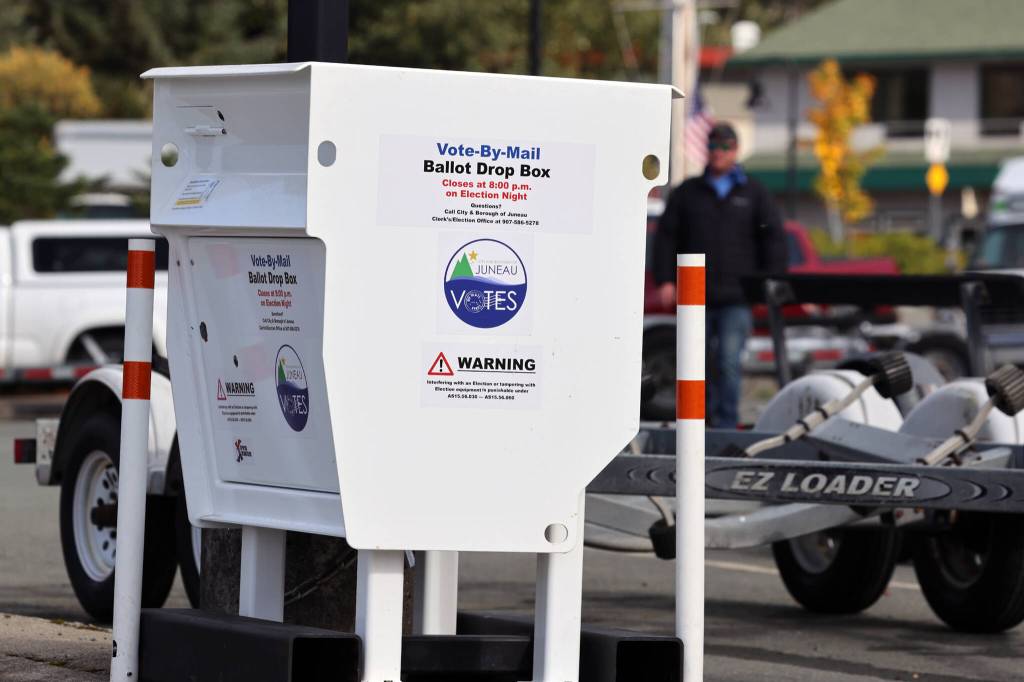
This time, whether voting by mail or in-person, voters have the opportunity to make the hard choices that our elected officials can not or will not make.
• After retiring as the senior vice president in charge of business banking for Key Bank in Alaska, Win Gruening became a regular Opinion Page columnist for the Juneau Empire. He was born and raised in Juneau and graduated from the U.S. Air Force Academy in 1970. He is involved in various local and statewide organizations. Columns, My Turns and Letters to the Editor represent the view of the author, not the view of the Juneau Empire. Have something to say? Here’s how to submit a My Turn or letter.