
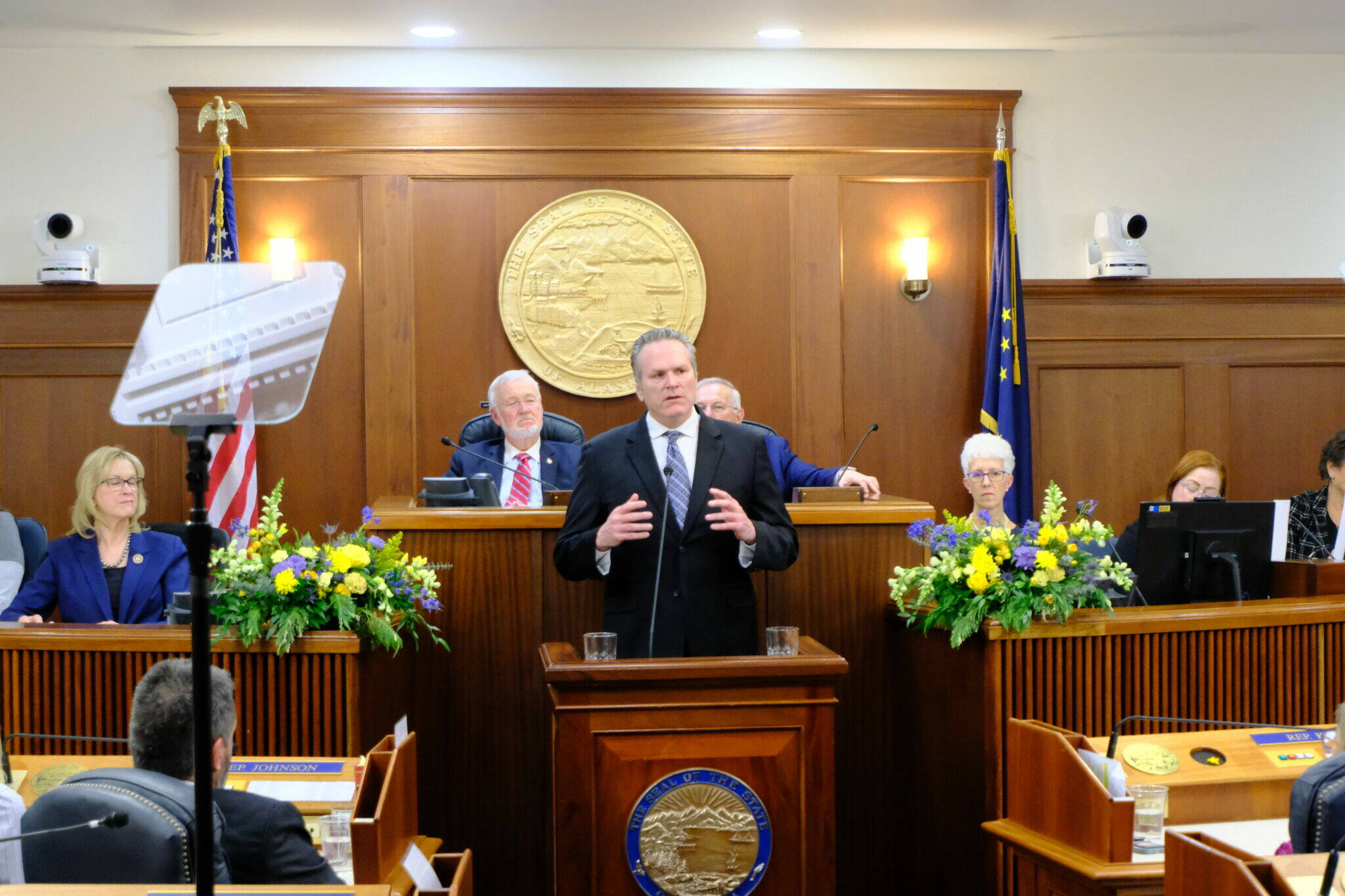
For decades, Alaska has operated under a fiscal and budgeting system unlike any other state, and some could argue any place in the world. It is a system at the mercy of volatility, political discretion, and short-term decision-making.
The outcome has been entirely predictable. Chronic instability, endless political conflict, boom-and-bust budgeting, and leaders who struggle to plan beyond the next swing in oil prices, market performance of the Permanent Fund, or next election.
Alaska’s fiscal regime does not serve the state well. Alaska has no broad-based tax, no binding spending limit, no revenue cap, and no enforceable rules governing what happens with surplus revenues.
It relies heavily on oil prices and allows annual spending to increase, or decrease based on political appetite rather than the availability of future revenue. And the Permanent Fund, intended as a stabilizing force, has increasingly been used to compensate for the absence of fiscal structure.
Budget analysts, national thinktanks, and business media sources have consistently identified Alaska as being very fiscally unstable, with spending spikes during periods of high oil prices, and fiscal crisis when prices fall. This historical approach magnifies the economic downturns rather than cushioning them and leaves both government and the private sector exposed to sudden shocks.
The absence of fiscal rules also promotes short-term political behavior. High-revenue years give elected leaders the freedom to grow programs and hand out money to special interests at the expense of the people. Then during lean years, there is no plan beyond drawing down savings or reducing the dividend to pay for growth. The lack of structure allows current lawmakers to make politically beneficial decisions today without paying the political costs in the future.
Continued use of savings and taking the PFD to cover spending shortfalls also continues to erode public trust. Originally created as a way for all Alaskans to share in the ownership of Alaska’s resources, the PFD has been transformed into a bargaining chip and easy tax on all Alaskans. Predictability has been replaced by uncertainty, reinforcing the perception that rules and laws can be ignored and are subject to political convenience.
It shouldn’t come as a surprise that Alaska’s fiscal framework actively discourages long-term private investment. Businesses and investors value predictability and Alaska’s budgeting process offers little. Uncertainty around spending, taxation, and future fiscal stability makes the state a harder place to commit long-term capital, particularly in energy, mining, and infrastructure.
The system also undermines basic government planning. Agencies cannot reliably plan staffing, maintenance, or capital investments when budgets can swing by billions of dollars from one year to the next. Deferred maintenance accumulates, costs rise, and efficiency declines. Volatility imposes real and lasting costs, even in years when revenues are strong.
A further complication is that economic and population growth in Alaska benefit local communities if they have a broad-based tax, but growth doesn’t increase revenue for the State of Alaska to pay for increased services.
Population growth creates new costs by increasing demand for schools, public safety, healthcare, and infrastructure. Economic diversification improves employment and opportunity but does not stabilize the State budget. When oil prices are flat or declining, population growth becomes a budgetary liability rather than an asset.
This reality is concerning because the State is poised for significant growth driven by large-scale infrastructure and industrial projects. A major natural gas pipeline, large data and AI farms, expanded mining of critical minerals and rare earth elements, and new processing and logistics infrastructure are all realistic prospects.
In other states, this scale of investment would strengthen public finances and reduce long-term fiscal risk. However, under Alaska’s current system, it does the opposite. These projects will bring workers, families, and economic activity but also increased demand for public services and infrastructure. Without a fiscal structure that captures growth in a stable and predictable way, the state will be more financially strained, not less. Alaska’s unique fiscal structure could turn historic opportunity into added instability.
Alaska is uniquely positioned to grow, but unprepared for that growth with our current fiscal regime. This is why my fiscal plan is necessary and must be acted on now.
My plan replaces instability with structure. A spending limit restrains the growth of government. A revenue cap and protecting the PFD from being taken establishes a budget envelope before appropriations begin. Clear, enforceable rules remove the annual political games and restores the Permanent Fund’s intended role as a long-term asset.
Most importantly, my plan realigns incentives so that growth once again becomes an asset. New industries can be welcomed without fear of destabilizing the budget. Population growth can be planned rather than absorbed chaotically. Stability becomes deliberate rather than accidental.
Alaska is unique and we should celebrate that. But uniqueness is not a virtue when it produces instability and conflict. It’s time to get off the fiscal rollercoaster. We must modernize our fiscal framework so that we don’t turn future growth into more uncertainty and instability. We must move from the most volatile budget process in the country to the most predictable. If not now, then when?
Mike Dunleavy is the 12th governor of Alaska.
