
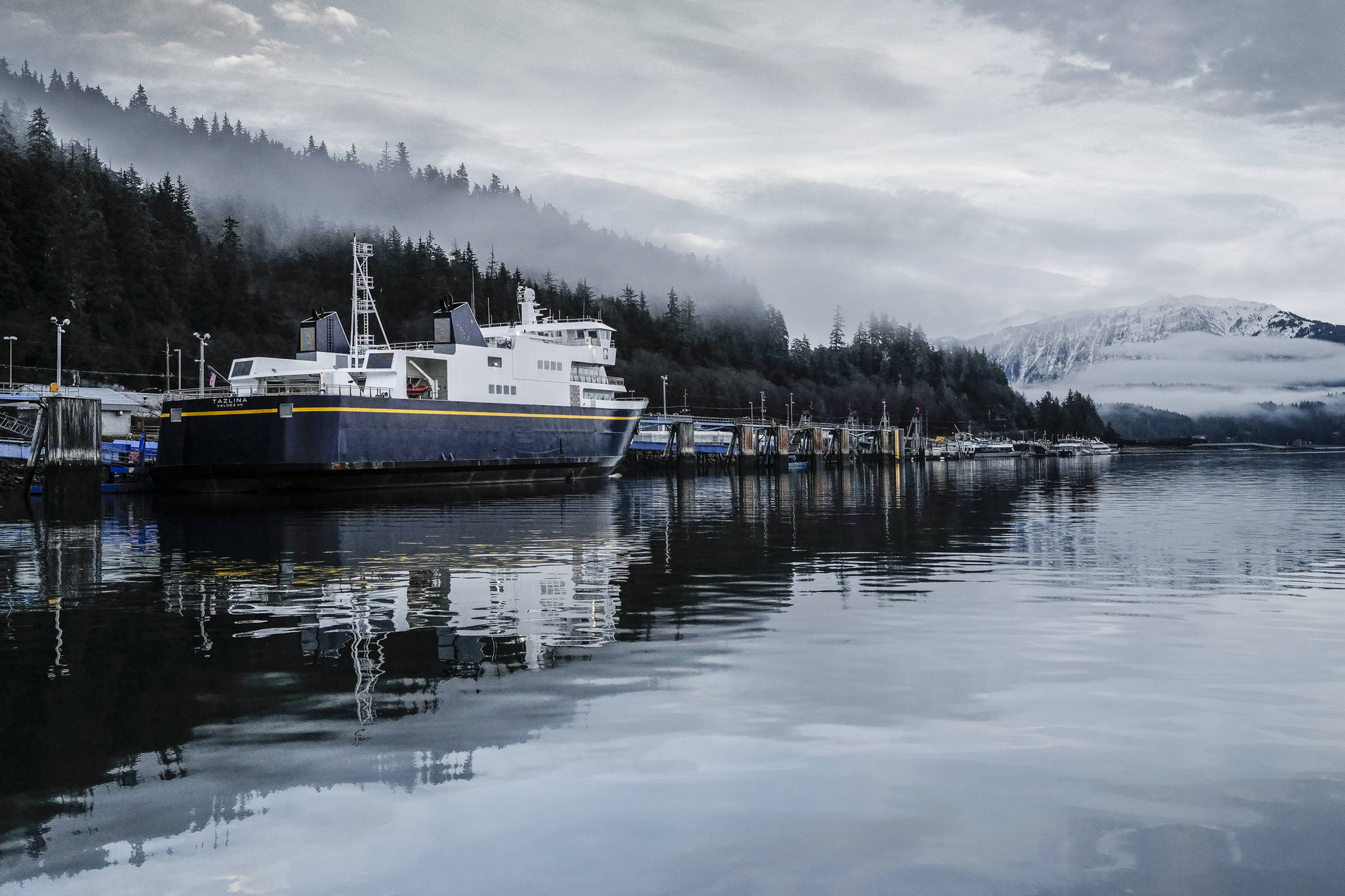
The study commissioned by Gov. Mike Dunleavy concerning future operations of the Alaska Marine Highway System’s is still being finalized for publication.
The delay in releasing the report has generated some angst among ferry critics and advocates alike. But it’s critical that the report is vetted closely, and factual errors and inconsistencies are eliminated before its release.
The report, created under a $250,000 contract to the Anchorage-based firm, Northern Economics, is expected to identify potential reductions of the state’s financial obligation to AMHS but also include analysis of options available for reshaping the system, such as through a public/private partnership.
Many critical of ferry service cuts have characterized the idea of folding AMHS into a public corporation as the cure-all for what ails the ferry system.
[Can a public corporation save the Marine Highway System?]
But it’s wishful thinking to believe that a public corporation, by itself, can do this.
Without systemic changes in the state’s transportation plan, re-creating AMHS as a public corporation is akin to re-arranging the deck chairs on the Titanic.
A Juneau-headquartered organization, Southeast Conference (SEC), has been the most ardent proponent of forming a “ferry authority” overseen by a professional board of directors. According to SEC Executive Director, Robert Venables, such a structure “would be better to control costs … and raise new revenue streams.”
Most recently, however, SEC seems more focused on protesting system cuts and promoting costly modifications to vessels. SEC’s advocacy of retrofitting AMHS’s newest vessels, “Alaska Class Ferries” (ACFs) designed as “dayboats,” with crew quarters would negate operational costs savings essential to the long-term survival of the system.
Ferry service frequency should improve when vessels now undergoing winter maintenance and retrofits come back online. But, blindly restoring service to previous levels without substantial reductions in costs is not a solution. Unless AMHS can continue to reduce its operational costs, adding service, especially on low volume runs, will only drive the subsidy back up.
BC Ferries, by comparison, subsidize their ferries at approximately 25%, half of AMHS’s subsidy after its budget reductions.
Ironically, it was a unanimously endorsed SE Conference regional plan in 1977 that proposed extending roads where possible, eliminating double crews on most vessels and operating primarily day-shuttle ferries. If that original plan had been fully implemented, it’s likely we wouldn’t be in the fix we are today.
What proponents of adding crew quarters won’t acknowledge is that dayboats with single crews can still be used on longer runs by overnighting vessels in a destination port similar to airline operations today.
Ferry advocates’ insistence that Alaska’s “roads don’t make a profit” and reducing ferry service would be like “shutting down the Parks Highway” is a faulty comparison. 99.5% of Alaska’s vehicular traffic occurs on roads and over 80% of the highway operations/maintenance budget is offset by users through gas taxes and other fees.
In contrast, ferries historically have moved less than 1% of vehicular traffic with only 30% of the operational costs paid by users and 70% subsidized by state general funds.
Roads will always be less expensive than ferries. Despite this, SEC has declined to support the Juneau Access Road Project in upper Lynn Canal that would minimize the need for ferries and allow the system to be downsized, thereby reducing costs.
This project, connecting Juneau with Haines and Skagway, remains the best way to accomplish this. And to lessen the burden on the state, why not consider making the proposed Lynn Canal Highway a toll road?
The 2018 Juneau Access EIS estimated potential daily road traffic averaging 810 cars (counting both directions). Annual highway maintenance was estimated at $2.4 million/yr. A toll of around $8 per vehicle would offset this cost and, when added to the Katzehin-Haines shuttle ferry fare, it’s still under $30 each way for vehicle and driver.
That’s the kind of savings that can be realized with a day-shuttle ferry operation.
Whether a public corporation would be willing to support increased road access as well as raising selected fares, privatizing some services, and renegotiating labor contracts to help lower ferry subsidies remains to be seen.
Such a balanced approach could garner broad-based support from the Legislature, the administration and the traveling public.
• Win Gruening retired as the senior vice president in charge of business banking for Key Bank in 2012. He was born and raised in Juneau and is active in community affairs as a 30-plus year member of Juneau Downtown Rotary Club and has been involved in various local and statewide organizations. Columns, My Turns and Letters to the Editor represent the view of the author, not the view of the Juneau Empire.
