
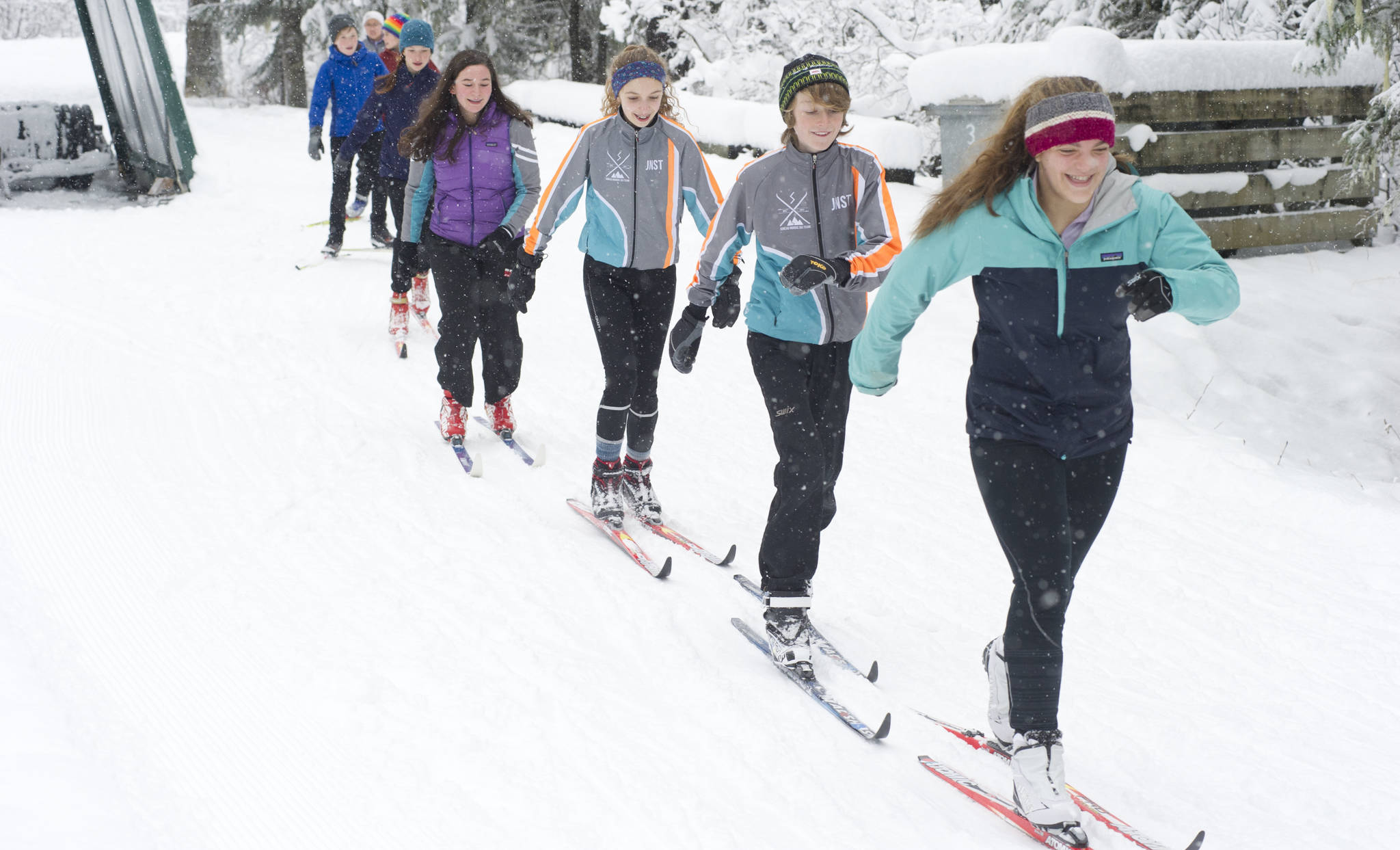
Opinion: It makes sense to develop outdoor recreation

Opinion: It makes sense to develop outdoor recreation

Alaska leads the nation in outdoor participation.

  • Monday, March 2, 2020 11:19am
  • Opinion

Outdoor recreation businesses and enthusiasts around the state were buoyed last month when Sen. Lisa Murkowski told state legislators that Alaska “must invest in new recreation assets statewide.”

State and federal data illustrates the magnitude of the industry in a state that leads the nation in outdoor participation encompassing summer and winter motorized and non-motorized sports, and businesses including sporting goods shops, guides, outfitters, lodge owners and others. Adding up the expenditures from the 81 percent of Alaskans and 61 percent of visitors who enjoy some form of outdoor recreation in Alaska yields $3.2 billion in consumer spending. This creates an economic sector that contributes 4.2 percent of the state’s gross domestic product. Sounds big, yet this means Alaska’s outdoor recreation economy ranks only seventh behind Hawaii, Montana, Maine, Vermont, Wyoming and Florida.

There is growing awareness of the vital role outdoor recreation plays in local economies. Mounting erosion problems at scenic Polychrome Pass on the one-way road into Denali National Park has threatened access for 600,000 visitors and caused managers to sound the alarm. The response was swift, broad and bipartisan. From borough leaders up the chain to legislators, the governor, Alaska’s Congressional delegation, the Department of the Interior, and even the White House, all recognized the importance of Denali to tourism and Alaska’s very brand. In 2018, Denali National Park visitors contributed $602 million in economic impact to gateway communities from tiny Talkeetna and Healy to Fairbanks.

If only these same elected leaders applied the urgency of addressing the maintenance problem on the Denali Park Road to the deferred maintenance backlog on other federal and state public lands. In signing the 2018 Farm Bill, President Trump endorsed new language in the Rural Development Title that calls on Secretary of Agriculture Sonny Perdue to “identify and support opportunities for outdoor recreation-related investments that result in rural economic growth, including outdoor recreation businesses, facilities, infrastructure, planning, and marketing.”

While an isolated rural community is unlikely to attract Fortune 500 corporate headquarters, geographically appropriate development strategies can capitalize on beautiful landscapes and proximity to outdoor recreation with strategies that take advantage of the historic, cultural, and natural resources that already exist in that region. As Headwaters Economics Researcher Megan Lawson summarized, building “place-based strategies with the long-term fiscal and land use policies needed to manage growth can help rural communities find promising development approaches that work for them.”

This week, March 2 – 6, delegates from the Alaska Outdoor Alliance, make the trek to Juneau to share more facts and unique perspectives about the many ways outdoor recreation benefits the state. They will ask state legislators to see the forest through the trees, understand that outdoor recreation is the renewable resource that makes sense to develop for Alaska and take every opportunity to ensure it, too, is open for business.

Lee Hart is the founder of the nonprofit Alaska Outdoor Alliance, dedicated to building the best outdoor economy in the world in Alaska. Columns, My Turns and Letters to the Editor represent the view of the author, not the view of the Juneau Empire.

More in Opinion

Web
Have something to say?

Here’s how to add your voice to the conversation.

Northern sea ice, such as this surrounding the community of Kivalina, has declined dramatically in area and thickness over the last few decades. Photo courtesy Ned Rozell
20 years of Arctic report cards

Twenty years have passed since scientists released the first version of the… Continue reading

Dr. Karissa Niehoff
OPINION: Protecting the purpose

Why funding schools must include student activities.

A sign reading, "Help Save These Historic Homes" is posted in front of a residence on Telephone Hill on Friday Nov. 21, 2025. (Mari Kanagy / Juneau Empire)
OPINION: The Telephone Hill cost is staggering

The Assembly approved $5.5 million to raze Telephone Hill as part of… Continue reading

Win Gruening (courtesy)
OPINION: Eaglecrest’s opportunity to achieve financial independence, if the city allows it

It’s a well-known saying that “timing is everything.” Certainly, this applies to… Continue reading

Gov. Mike Dunleavy gestures during his State of the State address on Jan. 22, 2026. (Photo by Corinne Smith/Alaska Beacon)
OPINION: It’s time to end Alaska’s fiscal experiment

For decades, Alaska has operated under a fiscal and budgeting system unlike… Continue reading

Atticus Hempel stands in a row of his shared garden. (photo by Ari Romberg)
My Turn: What’s your burger worth?

Atticus Hempel reflects on gardening, fishing, hunting, and foraging for food for in Gustavus.

At the Elvey Building, home of UAF’s Geophysical Institute, Carl Benson, far right, and Val Scullion of the GI business office attend a 2014 retirement party with Glenn Shaw. Photo by Ned Rozell
Alaska Science Forum: Carl Benson embodied the far North

Carl Benson’s last winter on Earth featured 32 consecutive days during which… Continue reading

Van Abbott is a long-time resident of Alaska and California. He has held financial management positions in government and private organizations, and is now a full-time opinion writer. He served in the late nineteen-sixties in the Peace Corps as a teacher. (Contributed)
When lying becomes the only qualification

How truth lost its place in the Trump administration.

Jamie Kelter Davis/The New York Times
Masked federal agents arrive to help immigration agents detain immigrants and control protesters in Chicago, June 4, 2025. With the passage of President Trump’s domestic policy law, the Department of Homeland Security is poised to hire thousands of new Immigration and Customs Enforcement (ICE) agents, and double detention space.
OPINION: $85 billion and no answers

How ICE’s expansion threatens law, liberty, and accountability.

Yereth Rosen/Alaska Beacon
The entrance to the Alaska Gasline Development Corp.’s Anchorage office is seen on Aug. 11, 2023. The state-owned AGDC is pushing for a massive project that would ship natural gas south from the North Slope, liquefy it and send it on tankers from Cook Inlet to Asian markets. The AGDC proposal is among many that have been raised since the 1970s to try commercialize the North Slope’s stranded natural gas.
My Turn: Alaskans must proceed with caution on gasline legislation

Alaskans have watched a parade of natural gas pipeline proposals come and… Continue reading

Win Gruening (courtesy)
OPINION: Juneau Assembly members shift priorities in wish list to Legislature

OPINION: Juneau Assembly members shift priorities in wish list to Legislature