
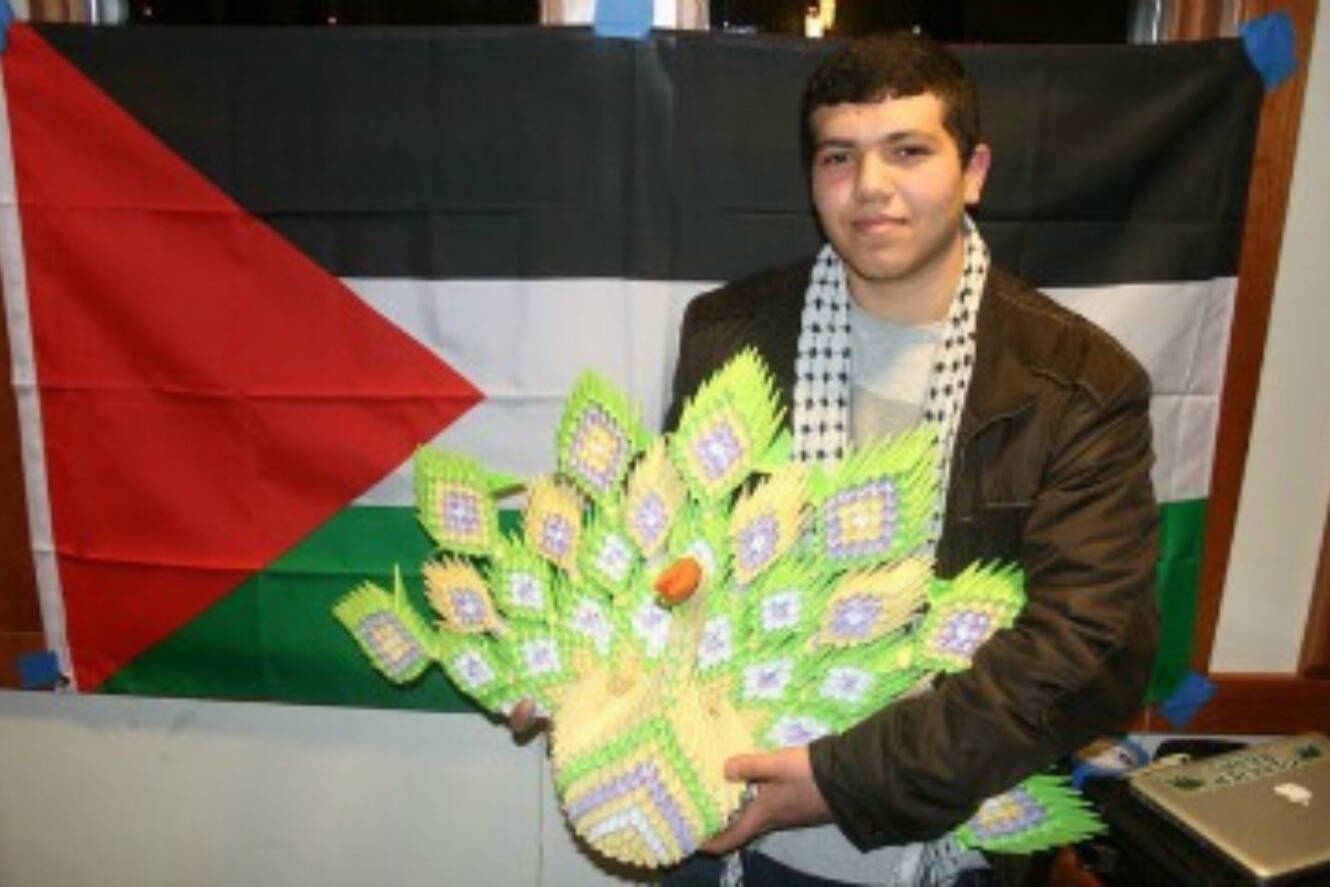
I spent eight years as the community representative for several exchange students from Gaza. Haytham Mohanna was one of them. He attended school in Haines. Last weekend, he called from Prague where he’s nearing completion of a degree in medicine.
But to get there, he and his family first heeded Israeli Defense Forces (IDF) warnings that their neighborhood would be the target of an attack. And after their home was destroyed, his aunt who lives in the U.S. successfully pleaded with our government to help them evacuate to Egypt.
That government that sponsored his exchange year in America and helped his family escape the war is the same government that provided Israel with massive military aid to prosecute it.
It began with the murder of about 1,200 Israeli civilians by Hamas, Gaza’s de facto rulers. As I wrote last month, there’s no intelligent or rational defense for those atrocities. But it’s also unconscionable to defend the widespread death and destruction from Israel’s three-month-long reprisal.
Almost 70% of Gaza’s homes have been destroyed or damaged, according to an analysis by the Wall Street Journal. The Council on Foreign Relations estimates only 1,100 of the two million Gazans fleeing the war zone have been allowed into Egypt. Most are trapped in the 140 square mile enclave.
And about 24,000 Gazans have been killed. In early December, senior IDF officials estimated that two Palestinian civilians had died in the war for every one of the 5,000 Hamas fighters they’d killed. If that ratio hasn’t changed, the civilian death toll is around 16,000.
“I am thankful that we only lost our house,” Haytham wrote in a message to his former host mother in Haines. But Egypt is only a temporary refuge for his parents and younger sister. Its government told them they must leave within 45 days. They’re hoping to be granted asylum in Belgium where his older sister lives. Like Haytham, she’s a YES alumnus who continued her education abroad.
Congress established the YES Program in 2002 with the long-term objective of using student diplomacy to improve the relationship between Americans and people living in predominantly Muslim countries. Like most of those I worked with here, Haytham was an exceptional diplomat.
In November 2013, he won first place in the State Department’s International Education Week contest. The award highlighted a presentation he gave to about 70 residents of Haines, and the origami peace peacock that he crafted and gifted to the school. It’s still on display there.
While attending his going away party months later, I understood why the judges were impressed with the maturity of his presentation about living under Israel’s blockade of Gaza. An American Israeli woman told me that when he finished his talk, he invited her to share her perspective of life in Israel with the audience.
The most memorable exchange that I personally witnessed happened during the weeklong Conference on World Affairs in Boulder, Colorado. He and two other YES students were invited to speak in a high school history class. During the ensuing student Q&A, Haytham’s description of the conflict was challenged by a Jewish girl who expected to serve in the IDF after she graduated.
They got into a heated debate. The teacher effectively moderated it by helping them acknowledge a few important facts. She had never met a Palestinian who lived in the territories. Haytham was unaware if there were any Jewish high school students in Haines. And their genuine life experiences were unique and independent of the politics driving the larger conflict.
If he was with us today, that teachable moment wouldn’t be lost on President Dwight D. Eisenhower.
“I like to believe that people in the long run are going to do more to promote peace than our governments,” he said 65 years ago. “Indeed, I think that people want peace so much that one of these days governments had better get out of the way and let them have it.”
It should begin now with Hamas surrendering, the end of Israel’s bombing, and the withdrawal of its troops. The cost of rebuilding Gaza should be borne by the countries that funded and used the weapons that destroyed it.
After that, Israeli and Palestinian citizens could guide their children toward a better future by insisting their leaders establish a program of student diplomacy modeled on the YES program.
• Rich Moniak is a Juneau resident and retired civil engineer with more than 25 years of experience working in the public sector. Columns, My Turns and Letters to the Editor represent the view of the author, not the view of the Juneau Empire. Have something to say? Here’s how to submit a My Turn or letter.
