
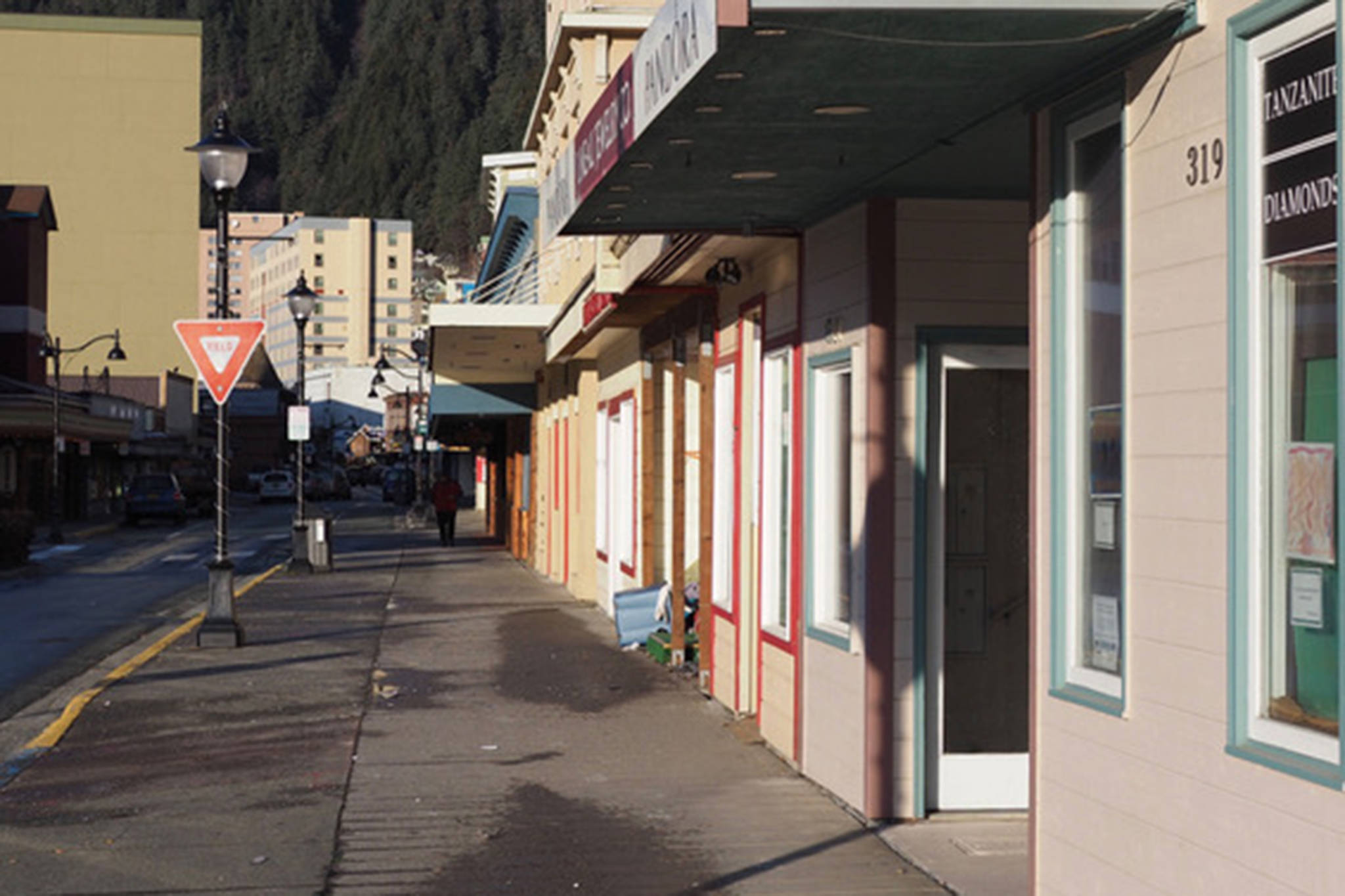
My friends warned me “Don’t walk around downtown at night; it’s not safe.”
I could not believe we were talking about the same town. When I grew up in Juneau, this statement would seem absurd.
Last Thanksgiving when I ferried down from Haines, I found that rumors of Juneau’s deterioration were worse than reported. As I walk by and bear witness, I think of the Orpheum Theater that was replaced with Little Switzerland Jewelry in the ’90s. The theater was a place where locals gathered, and the women who ran it seemed to enjoy the small business. But an independent theater stood no chance of matching the 20-times increase in rent that the jewelry shop offered. During the ’90s, the amount of jewelry and gift shops — boarded up for more than half the year — increased exponentially.
The spate of articles regarding cruise cancellations reveals what we have come to value in our communities. The number of cruise ship passengers, and how much money they bring in. Cruise Lines International Association recently preached the propaganda in this newspaper “Projections showed an anticipated peak season of 52,000 jobs, with a total economic impact of over $4.5 billion.” The statement is grossly misleading, because it clearly refers to the number of jobs and the “total economic impact” but not where the money goes, who sees the profits and who gets exploited.
[Opinion: Cruise industry continues to work toward a safe return to service]
It is no coincidence that our country is at a point where all the wealth is held by billionaires, while the vast majority of people can no longer afford food, housing or medical care. But our news reveals a deeper ugliness: a willful blindness to human suffering. We refuse to face climate destruction and inequality, which are directly connected to the inhumane way the cruise industry operates. The trope that the cruise industry is “re-energizing our economy and supporting the local businesses and people” is a cruel joke when facing the abandoned businesses and homeless people of downtown Juneau.
The trillion-dollar bailouts are benefiting the biggest polluters and profiteers on the planet. Most cruise companies pay no federal taxes, so although they do not support the public, they receive generous handouts from taxpayers. Millions of tourists cruise the inside passage every summer, supposedly generating billions of dollars in “economic impact.” Yet the public ferry service that primarily serves our residents is continuously under siege. The Alaska Marine Highway System is now barely functional and threatened with extinction.
The uncomfortable truth is that conglomerates are the sole beneficiaries of the economy of exploitation. Tourism in Alaska is synonymous with cruises, and our towns have succumbed to the same inequalities that the cruise industry banks on. They maximize profit by destroying networks of mutual aid and solidarity in a community, and then present themselves as the solution to a weak economy. The cruise industry has systematically eviscerated Juneau to the extent that their absence feels like the death of town. Before the cruise industry came, I don’t remember people complaining that there was no vibrancy, no visitors and no excitement in our town. If that feeling is gone, I feel it is because the cruise industry has intentionally eliminated it.
Right now we have the opportunity to reflect on the society we have created, as well as the one we want to live in. A society is the collection of individuals and their choices. This means we are all responsible for the current conditions, culpable in our innocence. It simultaneously means that we must be the force for change. I love Alaska, I want people to visit and I have no doubt they will. But I reject the prevailing system that places greed over humanity.
There will always be crises on the horizon — environmental, political or social. The solutions we create now to deal with this pandemic will be inherently crisis-proof. If we are able to rebuild our region for all who live here, our community will emerge robust and resilient.
• Cadie Buckley is the co-creator of Phytofarming and Unfunded Science. She was born and raised in Juneau and lives in Haines. Columns, My Turns and Letters to the Editor represent the view of the author, not the view of the Juneau Empire.
