
Faced with enormous budget cuts, the University of Alaska Board of Regents (BOR) will consider reorganizing the UA system today.
Two primary choices have emerged. The first is a “one university” model that combines the separately accredited universities. The other is proportional cut across the existing system, letting each university focus on their core strengths.
In theory, the “one university” model looks quite efficient. This plan would have one school of engineering, education, management, arts and sciences, etc., (not two or three as is currently the case). Conceptually, it makes sense.
But, in practice, there are practical problems and pitfalls in the “one university” model. In a recent July 22 BOR meeting, the chancellors of UAS, UAA and UAF all pushed against the idea and leaned towards keeping the current structure, even if scaled back.
The debate is partly over centralized control versus the current more decentralized structure that allows for regional needs and favors using market demand over central planning.
Keeping the current structure can also avoid unintended consequences. Just one those problems might be dubbed the New Coke problem. This is the phenomenon whereby, despite rational data analysis, the brightest of executives can overlook the emotional attachment to a product or service.
This not to equate higher education to a can of soda but explain the process where well intended leaders can overlook emotional factors that are harder to measure.
The term alma mater (Latin for “nourishing mother”) hints at the connection people may have with their universities, and the UA System notes an alumni network of over 100,000.
While the emotional toll may be tough to gauge, “one university” could lead to measurable problems for UA. There could be less alumni giving, decreased willingness by alums to send their kids to UA, and elected leaders may be less supportive of a statewide bureaucracy than, say, their local campus or alma mater.
Restructuring the UA system (and getting accreditation) presents numerous implementation and execution obstacles, short- and long-term. But if the decision is made, UA faces an immediate rebranding nightmare.
Tens of millions has been spent over the decades in print, radio and online to promote and market UAA, UAF, UAS and their many programs. There have been hundreds of college fairs and countless hours of outreach. We’ve produced enough brochures, caps and hoodies to fill a gymnasium. This time and money was spent to be part of the “mindshare” of potential students, to imprint a positive impression of UAA, UAF and UAS in the minds of college bound students, potential lifelong learners, and the state.
And it worked. According to a McDowell Group Report (May 2016), “(N)early all residents see the University of Alaska as important or very important (95%).” And 85% of parents and grandparents of school-age children would encourage their students to attend UA, according to the same study. Alaskans really like the old UA Coke.
Even if we spend tens of millions more promoting the “one university” and run a non-stop PR campaign, most Alaskans alive today will probably still think of UAA, UAF or UAS when it comes to higher education in the state
But the enormous goodwill towards the university is at risk in a “one university” plan that changes the UA formula, eliminating entire colleges in some locations. Hundreds, even thousands, of students could have their academic programs ended in their current form and “taught out,” creating endless angst toward UA.
Loss of goodwill and trust is very important for future students, too, especially when you are asking a young person (or their parents) to pay up to $100K (including room and board) for a four year degree. With the mass uncertainty from a total reorganization, future students could be forgiven for looking elsewhere.
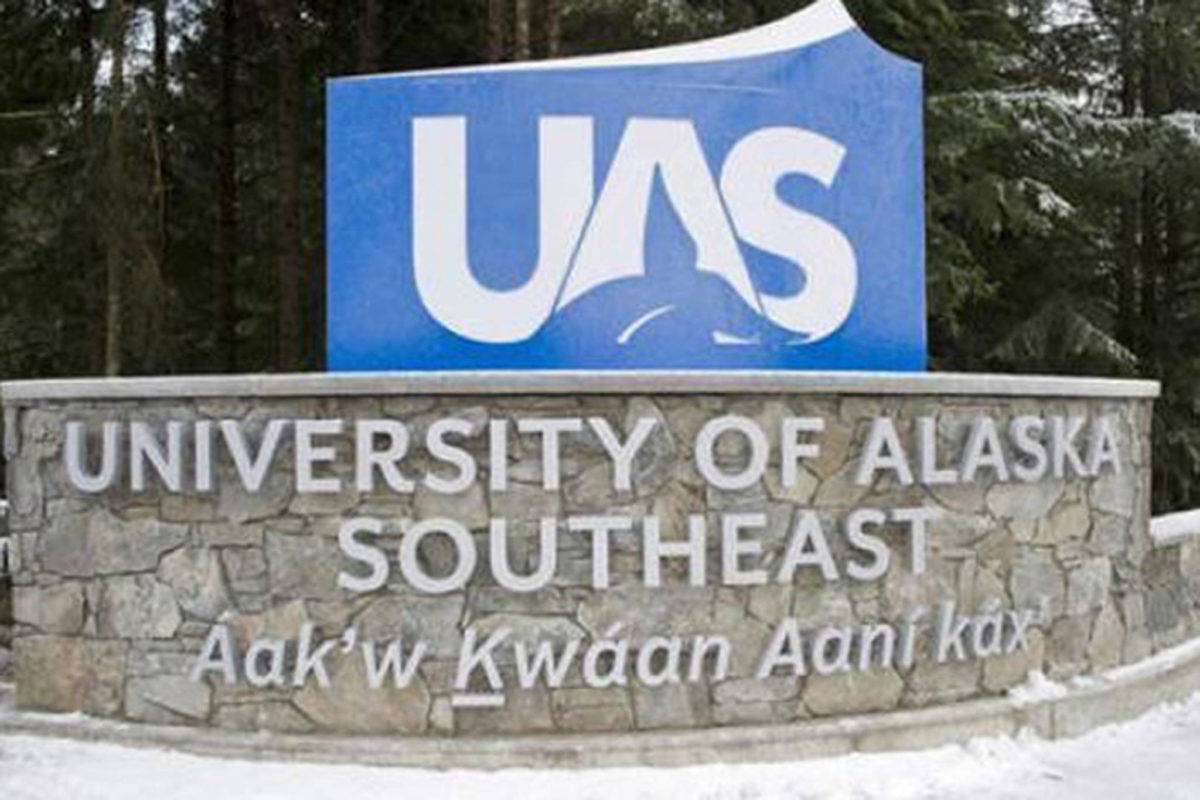
The sign at the entrance of UAS is made of local stone with local labor. It announces the University of Alaska Southeast in English and Tlingit. But it’s hard to say if it will be allowed to stand or have the same meaning if the campus becomes just a satellite location of “one university,” and it will be hard to measure what has been lost.
• Michael Boyer is an Associate Professor at University of Alaska Southeast. My Turns and Letters to the Editor represent the view of the author, not the view of the Juneau Empire.
