
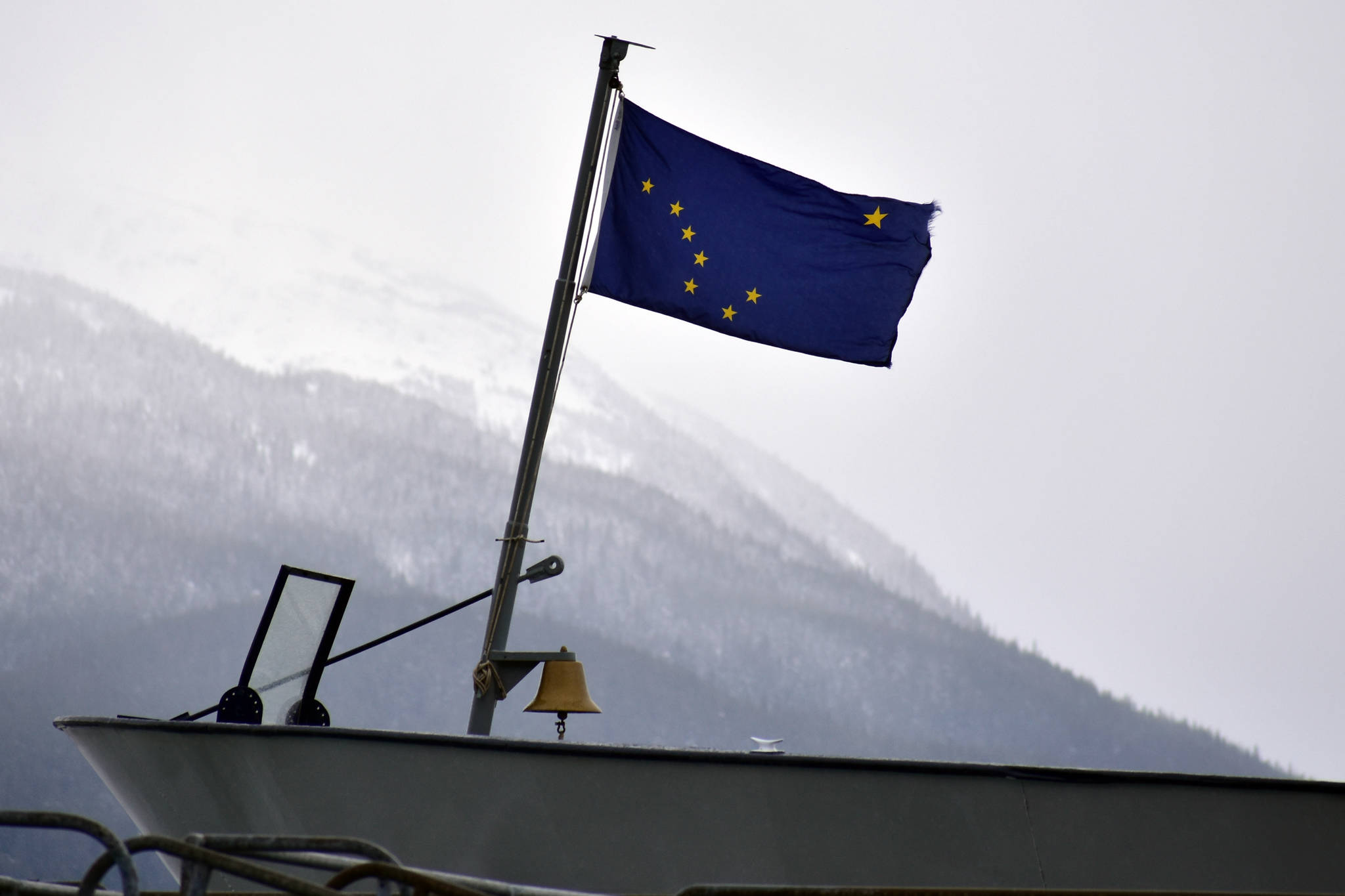
Gov. Mike Dunleavy has reportedly made getting the state’s ferries up and running the top priority of his administration. But given his track record during the past year, that’s like an arsonist explaining he’s fully dedicated to putting out the fire he started.
Before Dunleavy took office, the Alaska Marine Highway System routinely operated 10 ferries that served 33 coastal communities. Because most aren’t connected to the road system, his predecessors ensured the system’s schedules and fleet were reasonably reliable. And that AMHS had adequate resources to readily mitigate disruptions due to unexpected vessel maintenance and breakdowns.
While campaigning for governor, Dunleavy acted as if he understood that. Calling AMHS the “backbone of transportation in Southeast,” he told voters in Ketchikan he didn’t “envision at any time that there would not be a functional, robust ferry service in the Southeast.”
His first budget proposal betrayed that pledge.
Alongside claiming a desire to improve state services was a vision to reform government that included realigning “priorities to meet the needs of a majority of Alaskans.”
When Dunleavy aimed his torch at the AMHS budget, the 10% of Alaskan residents it served by quickly realized they were on the wrong side of that stated policy objective. His proposed cuts would have shut down winter ferry service across the state. And he expressed interest in turning operation of the entire fleet and terminal facilities to private businesses.
The Legislature wasn’t pleased. They mustered enough support to add $20 million to the meager $24 million Dunleavy wanted to spend.
Sen. Bert Stedman, R-Sitka, was one of the leaders of that effort. The main objective, he later explained, was to “keep the system operating at some level for the full fiscal year.” He indicated that the amount of funding they sought was limited by the governor’s veto power.
The additional $20 million wasn’t among the $409 million that Dunleavy vetoed from the first budget they passed. But the $5 million they added afterward didn’t survive. He justified vetoing that by saying he was developing a plan to reshape the system.
When that study was released last month, we learned the administration had directed the consultant team to limit state funding for all the options under consideration to the $24 million from the governor’s original AMHS budget. A subsidy much bigger than that would be required under any scenario that provided a minimum level of service to all communities the system currently serves.
Dunleavy followed up issuing an executive order to establish a working group to consider the analysis and findings of the report. But regardless of where that leads, his overriding message to coastal residents has been consistent. Because AMHS isn’t an essential state service, expect across-the-board reductions in service, and some communities should get used to not seeing a ferry in port all winter.
What changed?
“I come from a business where if your boats don’t work, you don’t work,” Ben Stevens, Dunleavy’s chief of staff, told community leaders gathered at the annual Southeast Conference Mid-Session summit on Monday. “The No. 1 priority of this administration for the Marine Highway System is to get boats operating because they’re not.”
That’s right. The M/V Lituya is the one vessel still sailing. It only provides service between Ketchikan and Metlakatla. The MV Matanuska hasn’t left Juneau since it broke down two weeks ago. A few ferries are undergoing repairs. Dunleavy’s budget put the rest of the fleet out of service for the winter or longer.
That’s why it’s a little late for him to be asking the Legislature to pass a $12.5 million supplemental budget. And even if it helps mitigate the immediate problem, the AMHS budget he proposed for next year is only slightly larger than what was appropriated this year before the supplemental. In other words, his newly discovered priority is as short-term as his fix to the mess he created this year.
The way I see it, Dunleavy has two choices. Paraphrasing Stevens, he can evolve to the reality that AMHS is an essential service which needs sufficient funding to keep its fleet on the water. Or admit to coastal Alaskan voters that he deliberately deceived them in 2018.
• Rich Moniak is a Juneau resident and retired civil engineer with more than 25 years of experience working in the public sector. My Turns and Letters to the Editor represent the view of the author, not the view of the Juneau Empire.
