
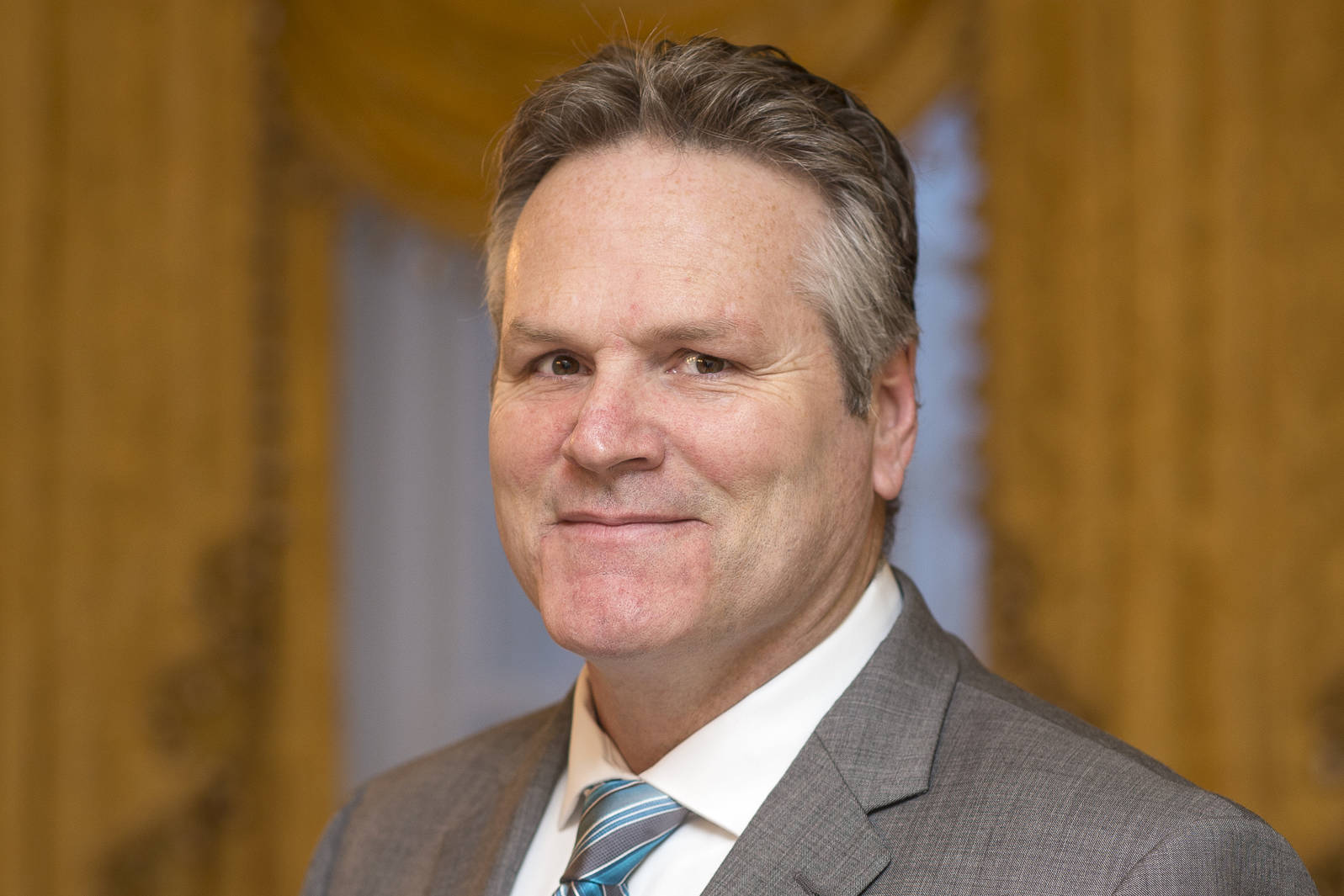
Much of the reaction to Gov. Mike Dunleavy’s proposed budget was more than predictable … it was inevitable and even calculated. Some of it was over-hyped responses that politicians and special interest groups fall back on before mounting a public relations campaign to combat what they perceive as a threat.
Just a few of the public reactions include “playing games with hundreds of thousands of Alaskans’ lives,” “devastates the legacy we’ve inherited,” “outrageous,” “fiscal tyranny, malpractice and folly,” “morally bankrupt” and “declaring war on Alaskans.”
While no budget details were prematurely leaked, the administration made it clear it would deliver a significantly smaller budget.
[Biggest news from the Alaska Legislature, Dunleavy administration]
Since education and social services comprise the bulk of Alaska’s discretionary budget dollars, it shouldn’t have surprised anyone these two components reflected large reductions.
Indeed, Dunleavy’s declaration that budget expenses would equal revenues without additional taxes (or rosy oil price predictions and accounting gimmicks used by prior administrations) was nothing more than following through on his campaign promises.
In early campaign position papers, Dunleavy said: “Some politicians tell us that Alaska’s operating budget has been cut to the bone. This is nonsense. Alaska doesn’t suffer from a problem of too little revenue. Rather we suffer from a bloated government that spends beyond its means. The worst possible response to a struggling private sector is to impose a statewide income tax. We can’t tax our way to prosperity. As governor, I will introduce significantly lower budgets, and I won’t hesitate to use my veto pen to hold the line.”
[Alaska’s radio, TV contribution on the chopping block]
Alaskans convincingly elected Dunleavy (presumably based on his positions), so this budget is exactly what we should have expected.
According to the Alaska Policy Forum, from 1961 to the 1969 $900 million Prudhoe Bay lease sale, the per capita Undesignated General Fund (UGF) budget in Alaska averaged $1,600 per person, updated to 2014 dollars. After the lease sale largesse, it jumped up to $5,000 per capita — the 1975 starting point that many budget-cutting opponents use to convince legislators that today’s budget isn’t that much different. But current budgets have been as much as three times the pre‐oil UGF per capita budget before 1969.
The question Alaskans should be asking themselves now is not why the budget is being cut so drastically, but why it has taken so long to have this conversation. For years we’ve “balanced” our budget with savings and now the state’s savings accounts are almost empty. Waiting any longer would be irresponsible.
[Senators baffled at proposed reductions to public safety]
The other question Alaskans might ask is how best to determine what facilities and level of services are critical enough to be funded by public dollars. The proposed statewide budget reductions will force some of these decisions down to the municipal level — arguably where they should be — closer to the people.
According to the Alaska Municipal League, this cost-shifting to municipalities could be almost half the total proposed cuts. So, while no new taxes may be proposed at the state level, communities could be facing much higher taxes combined with significant service reductions at the local level.
Obviously, the governor’s budget is a starting point for discussion. It needs to pass both legislative houses and survive the scrutiny of concerned Alaskans. Communities will need to weigh in with their legislators to make their case.
[Opinion: No love for Alaska in Dunleavy’s budget]
This will be a painful process that is long overdue. Until the smoke clears, local governments should insist their leaders be fiscally conservative and keep all options open before funding wishlist items or other nonessential programs and services.
Budget-cutting opponents should resist the temptation to throw rhetorical fire bombs. There are many proposed budget items that deserve robust debate. But discussions should be centered around whether changes will add or subtract from core functions of government, and if they are additive, how they will be funded.
If, instead, new taxes are levied first, as many Democrats would prefer, Alaskans are locked into the same problem that has confronted past administrations and legislators: How to divide up available revenue without regard to whether the services being funded are fairly allocated, efficient or critical.
Alaska can be grateful they elected a governor with the courage to choose the former approach instead of the latter.
• Win Gruening retired as the senior vice president in charge of business banking for Key Bank in 2012. He was born and raised in Juneau and graduated from the U.S. Air Force Academy in 1970. He is active in community affairs as a 30-plus year member of Juneau Downtown Rotary Club and has been involved in various local and statewide organizations. He contributes a regular column to the Juneau Empire. My Turns and Letters to the Editor represent the view of the author, not the view of the Juneau Empire.
