
By Verner Wilson III and Varsha Mathrani
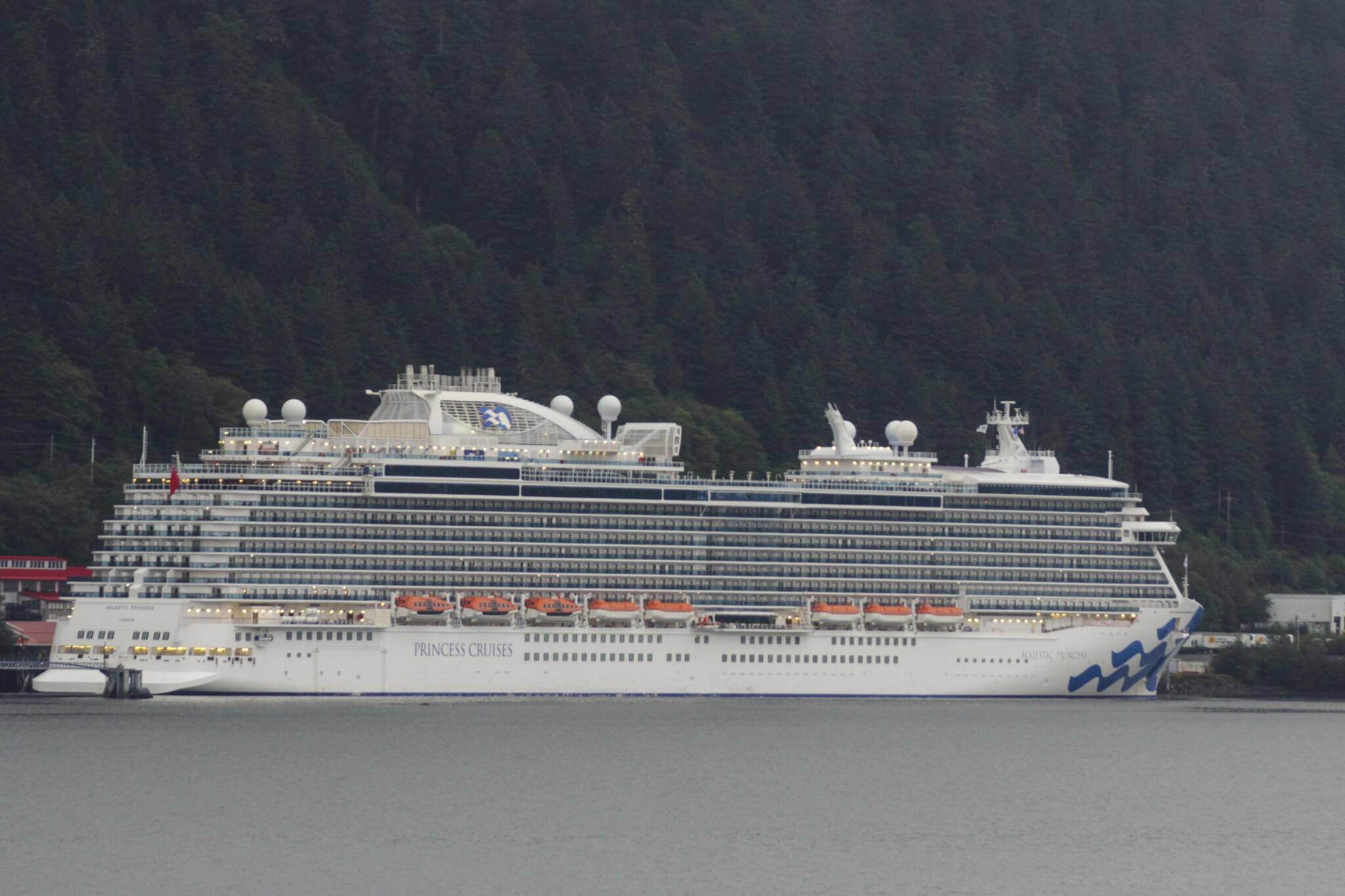
Earlier this year, the United States Senate passed the Alaska Tourism Recovery Act, sponsored by Sens. Lisa Murkowski and Dan Sullivan. It was a needed salutation to lift America and the world out of a dark chapter of the novel coronavirus that has unfortunately killed so many and created a massive crisis that many suffered through but survived. But in recent weeks, 27 people contracted COVID-19, and one later died, from an outbreak on a Carnival cruise ship.
The Centers for Disease Control and Prevention stated in June 2021 that a year into the COVID-19 pandemic, cruise tourists still face a “very high” risk of contracting the disease. Due to the much more infectious delta variant, the CDC also advised older passengers and those with compromised immune systems to skip cruises altogether.
In 2020, hundreds of COVID cases broke out aboard cruise ships, which acted as high-transmission vessels after the industry downplayed the health impacts. In the worst cases, tens of thousands of cruise company employees were stranded on ships that were denied entry to ports around the world as countries tried to protect their own citizens against a virus the industry knowingly help spread.
The cruise industry cannot go back to the way it operated before the pandemic, withholding important information. For Alaska tourism to flourish, the US must protect both domestic and international travelers from potential public health harms.
But this is not the only problem. The cruise industry has a horrible track record for polluting the environment it operates in, like federally protected waters whose pristine beauty they showcase to customers. In 2018, Carnival Corporation was caught dumping more than 25,000 gallons of wastewater into Glacier Bay National Park.
Too many people who host these cruise companies in their beautiful regions suffer because of industry irresponsibility. Every year cruise ships emit air, land and water pollutants into places like Ketchikan, and local residents are left to deal with the mess. Cruise ports are known to impact local communities and their lung health. Juneau reported that they took in more than 3 million pounds of waste from cruise ships in 2019, which went straight to landfills. Coasts are critical ecosystems for Indigenous communities and an important source of seafood, yet wastewater sludge threatens the health of these natural resources.
We all understand the economic benefits of cruises. Many people from around the state depend on cruise tourism for jobs and revenue. But we can never go back to the pre-pandemic standards the industry was accustomed to. We need safeguards to ensure that reckless spread of disease, misinformation and environmental pollution is not allowed again in our beautiful state.
That is why Friends of the Earth US and our partners are calling on Congress and the Biden Administration to enact cruise industry reforms that benefit our communities. We need independent, government mandated observers to ensure cruise consumers are not hurting the air, water, wildlife and environment they depend on.
Alaska’s former Ocean Rangers program, when it was adequately funded, ensured environmental laws were properly enforced by independent eyes equipped to monitor and enforce our environmental laws and reduce corruption. This is what we need at the federal level.
Our beloved Pacific Ocean communities, including millions of Indigenous peoples, depend on healthy coasts and waterways for our well-being, and we need the Biden administration’s help. The U.S. Coast Guard has the jurisdiction and authority to enforce public health and environmental laws, yet so far they have failed to do so. Additionally, the Coast Guard should mandate a robust federal Ocean Rangers program for the 2022 cruise season, modeled after Alaska’s program, which would put needed independent eyes on cruise ships.
Congress can also play its part and pass legislation that ensures proper monitoring and enforcement for cruise companies, so that our health and waters are adequately protected. The pristine beauty found throughout our state and coasts is beyond compare, but decades of inaction from some federal and state agencies have allowed pollution to degrade these ecosystems. We must act now to protect our public health, environment, and future generations for all Alaskans.
• Varsha C. Mathrani has a Master of Public Health degree in environmental health from the University of Michigan-Ann Arbor and a bachelor’s degree in biology from Scripps College/The Claremont Colleges. She was a Fulbright Scholar, an alum of the Semester in Environmental Science at Marine Biological Laboratory’s The Ecosystem Center, former staff of Alaska Community Action on Toxics and current member of Friends of the Earth US. Verner Wilson III has a Master of Environmental Management degree from Yale University. He is currently the Senior Oceans Campaigner for Friends of the Earth US based in Anchorage, where he focuses on protecting the marine environment from shipping pollution and disturbance in the Pacific Northwest and Arctic. Columns, My Turns and Letters to the Editor represent the view of the author, not the view of the Juneau Empire. Have something to say? Here’s how to submit a My Turn or letter.
