
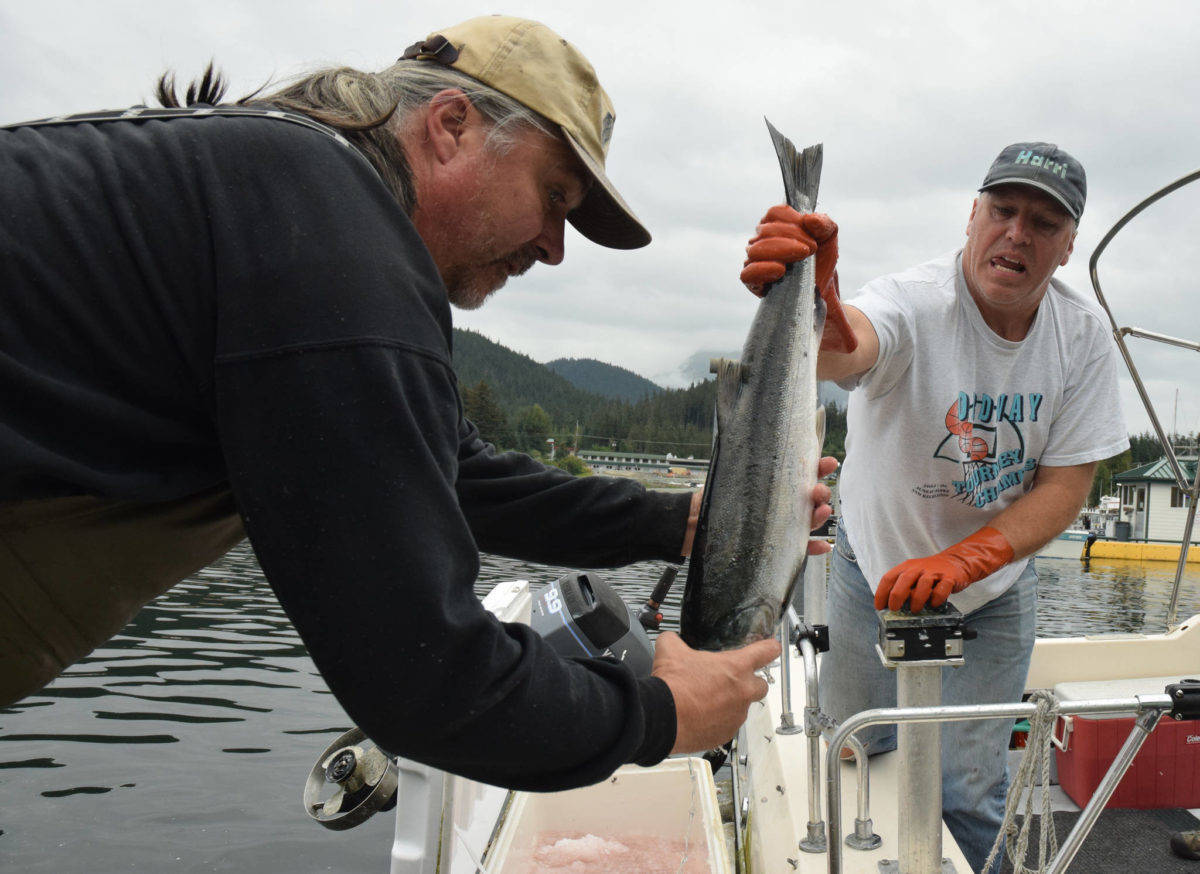
Maybe the answer is fish.
No, not the answer to what’s for dinner tonight. The answer to solving the increasingly acrimonious debate over the amount of this year’s Alaska Permanent Fund Dividend.
Figuring out how to share the investment earnings of the Permanent Fund between community services, such as schools and the university system and state troopers, and with individual Alaskans through the fall dividend payment is a lot like sharing salmon between multiple competing interests.
The commercial fishing industry, sport fishing enthusiasts, charter boat operators and customers, Alaskans reliant on personal-use harvests and subsistence gatherers all want their fair share of salmon.
Contentious as it is, Alaskans manage to share the fish between all the groups. Not always with a smile, but with a focus on sustained yield — not taking more than the salmon runs can withstand. The goal is to let enough fish get past the nets and hooks to spawn and maintain a healthy population.
Management for sustained yield is required by the Alaska Constitution, the same document which so many Alaskans are fond of quoting for justification that they, as individuals, own a share of the state revenue from each barrel of oil that comes out of the ground.
The natural resource section of the constitution, Article VIII, says: “Fish, forests, wildlife, grasslands, and all other replenishable resources belonging to the State shall be utilized, developed, and maintained on the sustained yield principle. …”
If sustained yield — preserving enough salmon for the future — is good enough for the state’s famous seafood that provides a livelihood, lifestyle and culture for so many people, why not think of Permanent Fund earnings the same. Limit the annual withdrawal from the fund to no more than it can sustain — and still grow its returns.
The Alaska Legislature last year wisely set into law just such a limit on annual withdrawals of Permanent Fund earnings. Lawmakers determined that the fund could afford each year to pay out 5.25 percent of its average earnings over the past five years, and still have enough earnings left over to protect the fund from inflation while continuing to grow the account for years to come. And, to be even safer, they decided the 5.25 percent withdrawal would apply only for the first three years, after which it would reset to a 5 percent draw.
Legislators determined that an annual 5 percent draw on the account would be sustainable long term. It could provide for Permanent Fund dividends to Alaskans, school funding and all the other community services our state needs, and still allow the fund to come back each year to make more money, provide more dividends and community services. That’s sustained yield.
But this year, too many Alaskans, and too many elected leaders, are caught up in a politically charged, social media-enabled fury, pushing so hard for an unaffordable dividend in the $3,000 range that they are willing to look at breaking the sustained-yield protective shield and withdrawing additional money from the Permanent Fund.
Overdrawing the account for the sake of an individual benefit this year means that the fund will have less money for the public good in future years. Just like catching too many salmon this summer, damaging future returns.
Overdrawing the Permanent Fund to pay a big fat dividend, rather than an affordable-but-still-sizable check, places the individual benefit ahead of the common good.
It gets us back to fish as the answer. The Alaska Constitutional says: “Wherever occurring in their natural state, fish, wildlife, and waters are reserved to the people for common use.” Legislators should think of the common use and sustained yield principles — those two constitutional mandates — as they vote on a dividend so large that it risks overdrawing the Permanent Fund.
After making the smart, sustainable choice, lawmakers should go out and enjoy a dinner of fresh salmon.
Larry Persily is a longtime Alaska journalist, with breaks for federal, state and municipal jobs in oil and gas and taxes, including deputy commissioner of the Alaska Department of Revenue from 1999-2003. He will be teaching journalism starting this fall at the University of Alaska Anchorage. My Turns and Letters to the Editor represent the view of the author, not the view of the Juneau Empire.
