
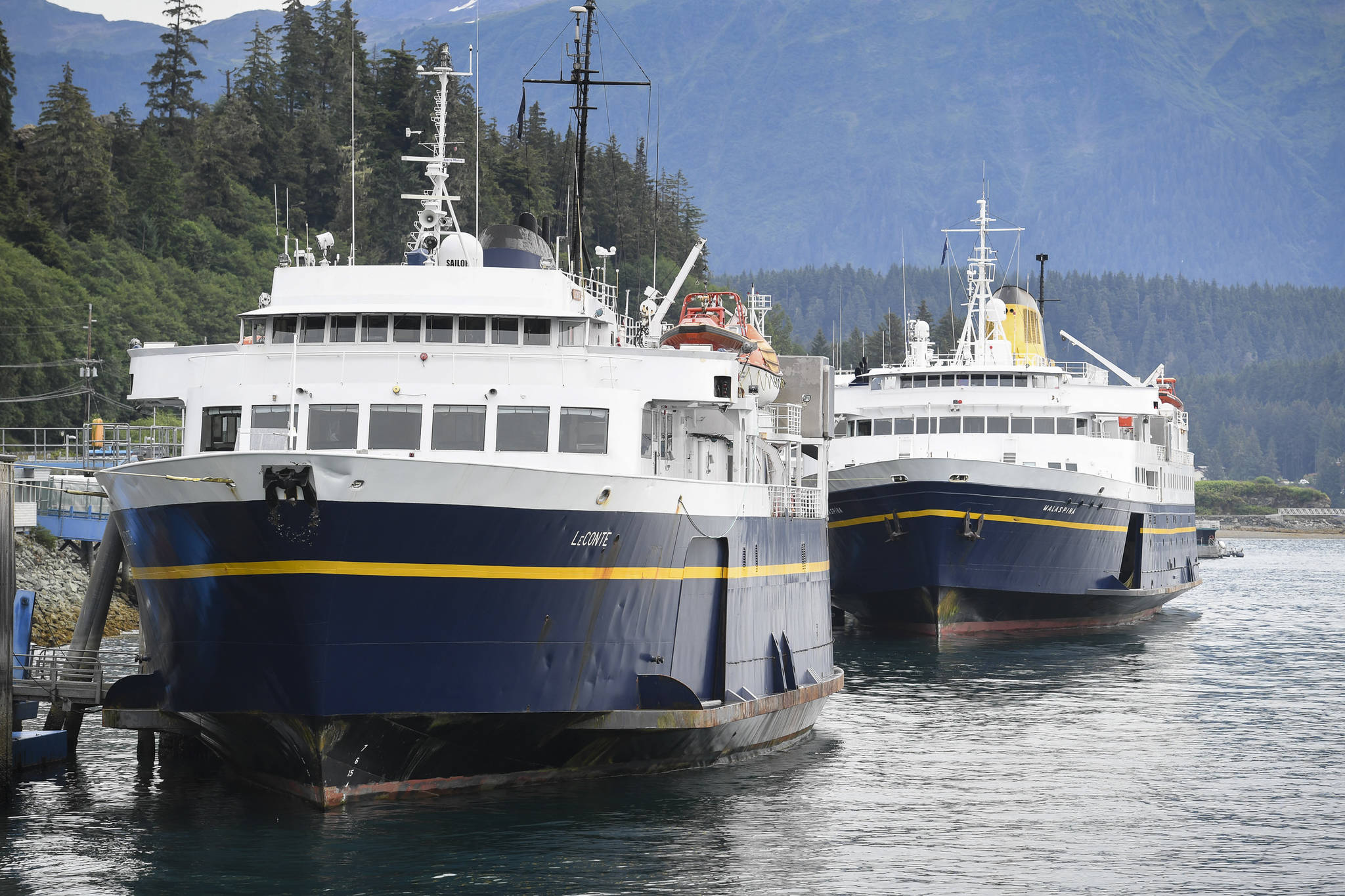
Is it any wonder that the ridership on the Alaska Marine Highway System has dropped? With the budget cut in half since 2012 and the service cut 25%, it would be a bonafide miracle if ridership had risen or even stayed the same.
Department of Transportation Commissioner John MacKinnon was quoted in the Nov. 15 Juneau Empire as saying that the reliability of air service in bad weather is the reason that people are choosing to fly rather than take the ferry. I suspect he meant jets, not the small planes that people use here. Small communities mean small planes. Mr. MacKinnon, people are being forced to fly in order to make commitments because they can’t count on the ferry system anymore. That is why ridership is down.
From its modest beginnings in 1959 with the M/V Chilkat, the Alaska Marine Highway System has been a stellar example of Alaskan ingenuity. In over 50 years of riding the ferries, I have witnessed the changes that have made our once great public transportation system so very inconvenient. The following are a few of them.
Do other readers remember the full color booklets containing a year’s worth of schedules ahead of time so that every household would have one to consult through the year? Those schedules were easy for us to read and made planning a snap, knowing that we could count on transportation being available.
We made reservations easily either in person with conveniently located reservation clerks or on the phone without being put on hold. We were not charged a penalty of up to $100 for changing our reservations either.
The ferries ran more ships to communities during festivals in order to accommodate more passengers. Everybody could count on it. Extra ships were deployed for the Haines Fair, the Little Norway Festival in Petersburg, the Sitka Music Festival and Celebration in Juneau.
Geographical changes make a difference. The ferries used to go to Seattle which is a transportation hub. Bellingham is not. The administrative headquarters was moved from Juneau to Ketchikan. It makes little sense for the administration to be away from the capital city, away from the seat of government.
And the actual needs of the riders? When was the last time you were surveyed about your needs for transportation?
The public ferry system is analogous to a public bus system. As such, the operators are duty bound to assess the needs of the users of the system in order to provide the best service possible. The operators of the ferry system should know when the Cordova swim team travels to compete, when Sitka teachers are planning field trips, when families usually take a trip, when a seafood company ships fish Outside, when workers are coming for the summer, and when people in smaller communities like Angoon come to larger ones to shop. This is the way to design a schedule for the needs of the riders: By asking them when they need to use the system. In that way, the schedule will be convenient for the riders who will then use the system. It is not that complicated. And yet, it has not been done. The AMHS is a vital part of our public transportation and should be treated as such by the Department of Transportation which is responsible for running it.
So yes, these are the reasons ridership is down: budgets cut, services cut, schedules not printed, reservations difficult to make, schedules inconvenient, prices raised and riders’ needs ignored. This has to change. The Alaska Marine Highway System is an essential part of the economy of every community in Southeast and Coastal Alaska. Without a reliable transportation system, people suffer. Communities suffer. And our beloved state is the poorer for it.
• Bridget Smith is a former educator and long-time Alaska Marine Highway System user. Columns, My Turns and Letters to the Editor represent the view of the author, not the view of the Juneau Empire.
