
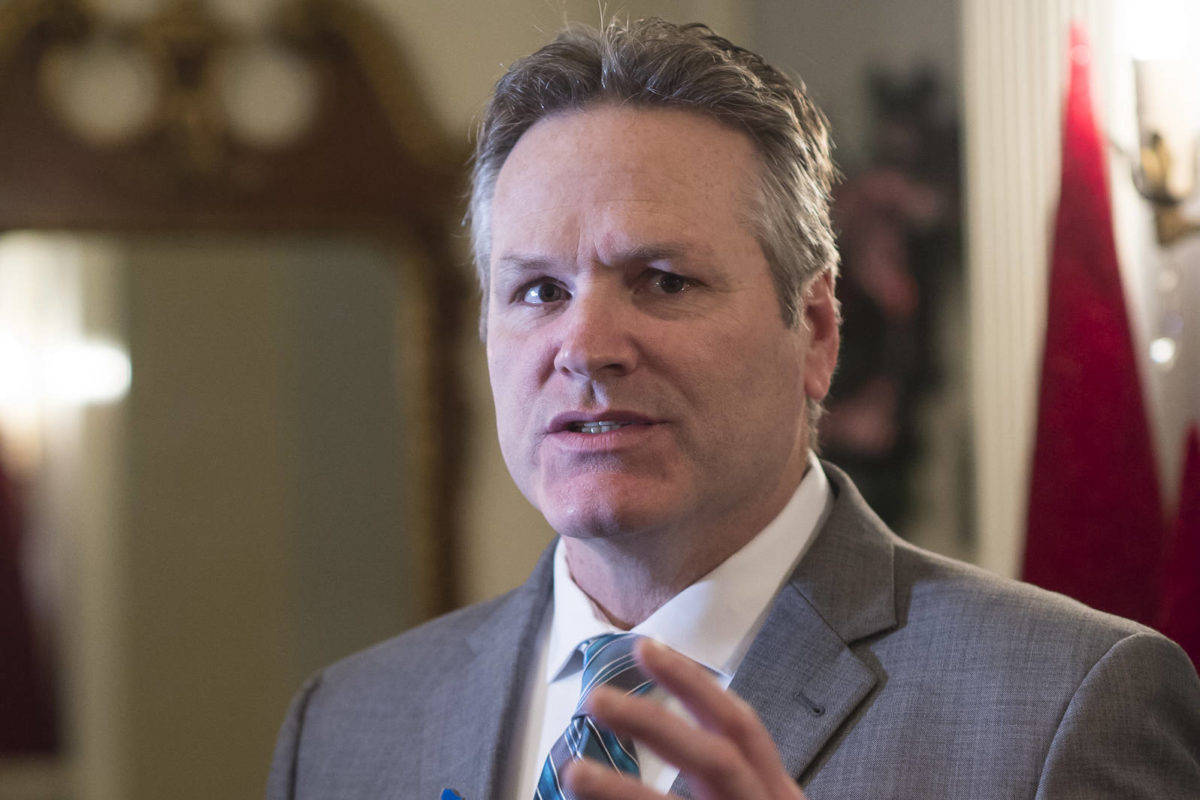
Gov. Mike Dunleavy has accommodated part of Alaska’s fiscal reality. He went along with a little more than half of Legislature’s reversals to the operating budget vetoes he signed at the end of June. And for now, he’s signed off on their funding of a $1,600 Permanent Fund Dividend.
What he has yet to realize is the budget can’t be balanced by cuts alone. And by planning to ask the Legislature to approve a supplemental payment to the PFD, it’s obvious he still thinks the state can afford to pay it based on the statutory formula enacted in 1982.
Both the operating budget and reduced PFD were included in House Bill 2001, which the Legislature passed during their second special session on July 29. Dunleavy immediately responded to the veto reversals by tweeting the $400 million of “add-backs to spending” were “yet another attempt to blow up the size of government.”
That’s an odd way of describing a budget that, even before his vetoes, had reduced state spending by $190 million. Which was on top of deeper cuts enacted while Bill Walker was governor.
What the Legislature sought to establish by reversing 90 percent of his vetoes and capping the PFD was a limit to how much Dunleavy can reduce the size of government based on his narrow view that a balanced budget means state spending must match existing revenue.
In fact, it was the prior Legislature that put the brakes on that ideology. Senate Bill 26, signed into law last year, was their first formal acknowledgement that state government couldn’t get much smaller. It allowed a portion of the investment earnings from Permanent Fund to pay for programs they believed were vitally important to their constituents.
Three of the senators who voted for it — Lt. Governor Kevin Meyer, Pete Kelly and Anna MacKinnon — had until this year been leaders of the senate’s Republican majority. And all three believed deep budget cuts were necessary to identify how big state government should be. Only then they’d ask Alaskans to shoulder new tax burdens.
In February 2016, Meyer, who was the senate president, described “right-sizing government” as “process by which we discover the least amount of government Alaskans are willing to live with and the most government Alaskans are willing to pay for.”
“I’m one vote,” said Kelly, who co-chaired the Senate Finance Committee, a month later, “but I’m not getting into the tax business while I know government is too big.” Then referring to the budget cuts made the prior year, he argued “essentially nothing happened. Government continued to function.” So “we’re going to do it again.”
MacKinnon was the committee’s other co-chair. She defended their approach by defining “the right size of government” as “what 11 senators, 21 representatives and one governor agrees to.”
Two years later, the Senate passed SB 26 by a vote of 13-6. Eight other Republicans supported it. The margin in the House was 23-17.
The Senate majority described SB 26 as covering “essential government expenses.” Paraphrasing MacKinnon and Meyer, it became law because 13 senators, 23 representatives, and the governor agreed on the smallest size of government Alaskans were willing to accept.
To pay for it, they capped the PFD to “a historically average dividend of about $1,000.” And the “no new taxes necessary” kicker that ideologically powered both statements was underlined for emphasis.
But capping the PFD was not revenue neutral. It had the effect of a tax. It wasn’t new though, because a year earlier year the Legislature approved a PFD less than the statutory formula. Alaskans received $1,100 instead of $2,300.
Dunleavy quit the Senate majority between those two historic decisions. “I’ve been the odd man out on the Permanent Fund issue,” he said at the time.
And that’s where he’s choosing to remain.
“I am hoping the people of Alaska get agitated” was his response this week to the smaller PFD. “I am hoping the people of Alaska really get on the phones and really start sending letters to their legislators.”
That’s not the reaction Alaskans had to SB 26. Of the 30 legislators who ran for office just a few months after supporting it, only four were defeated. And that undisputable fact should tell the governor it’s time for him to move on too.
• Rich Moniak is a Juneau resident and retired civil engineer with more than 25 years of experience working in the public sector. He contributes a weekly “My Turn” to the Juneau Empire. My Turns and Letters to the Editor represent the view of the author, not the view of the Juneau Empire.
