
Right now, Alaska’s elected leaders face extremely consequential decisions for our future. If the governor and the legislature won’t pull it together, Alaska’s rural towns will suffer the most.
After years of budgetary cutting, remote communities feel more stranded and squeezed. The list is long: K-12 education, closing public health offices, children’s services stretched thin, behavioral health offices trimmed, trooper and justice roll-backs, university system slashed and Alaska Marine Highway (AMHS) ferries tied up and unfunded. In expressing his concern about the budget impacts to the state’s criminal justice system, Judge Michael MacDonald of the Alaska Supreme Court described it as “… operating on the fringes, barely able to protect against the privation of fundamental rights…” When will the gridlock end, and when will we be reconnected?
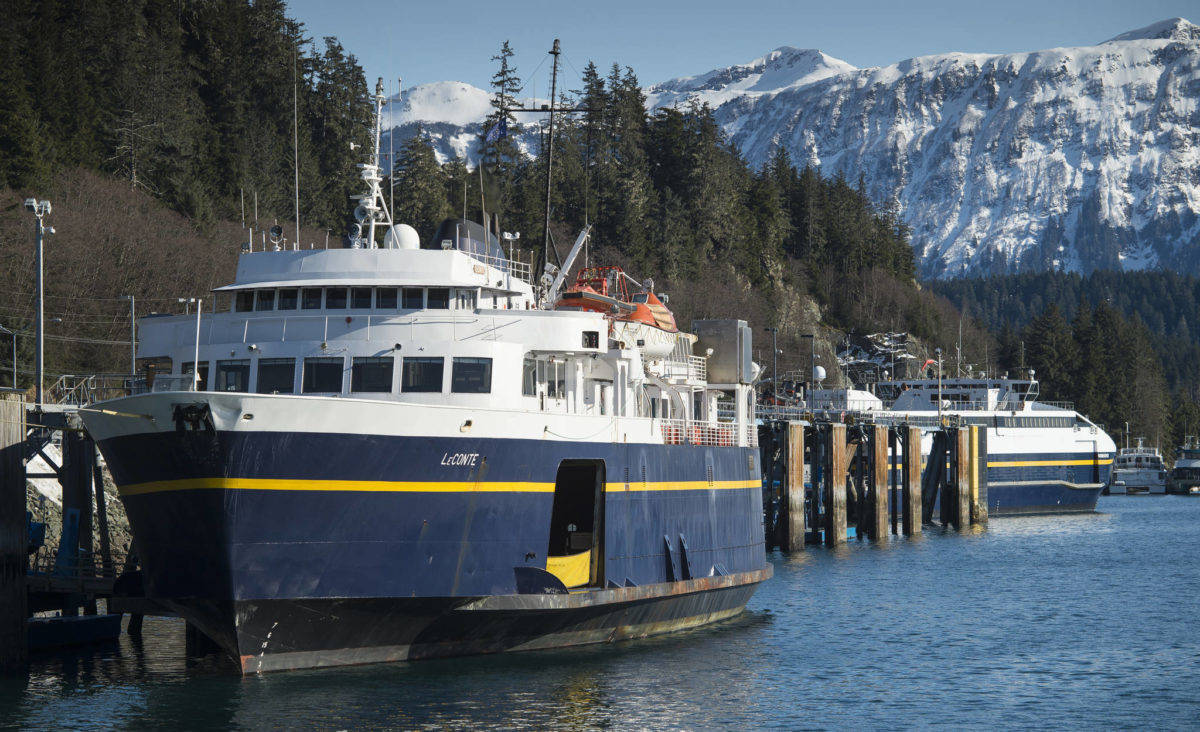
In Prince William Sound and rural Southeast Alaska, the essential marine transportation network we’ve depended on for over 50 years is operating on fumes with vessels standing down, sold-off or under repair. The safe, dependable and well-loved ferry system of yesterday now seems to lurch from one crisis to another. In northern Southeast Alaska — Angoon, Gustavas, Haines, Hoonah, Juneau, Pelican, Skagway and Tenakee Springs — are all impacted by AMHS funding and planning shortfalls. Pelican and Tenakee Springs won’t see a state ferry until May, seven-month-no-service, and Angoon’s situation isn’t much better.
Here’s a personal example of out-of-pocket impacts caused by curtailing the marine highway. In the not distant past, the ferry from Haines through Juneau to Tenakee Springs was one easy ticket, one continuous ride. For about 10-years now, the trip has required two AMHS tickets, plus an overnight in Juneau. Last year, our two-person winter migration — Haines to Tenakee Springs round-trip travel-cost— was about $400. Same trip this year, round-trip cost, with RT air Juneau-Tenakee, and a multi-day, weather-hold nail-biter fit for a John Straley novel — 260% higher. You can do the math. This year we air-freighted a small fraction of the food or gear that once would have road along on a spacious (free) AMHS baggage cart — three boxes of food costing $1.10/pound.
My AMHS travel story is playing out for many hundreds of rural Alaska families right now. The real human cost of the state ratchetting down, on wide ranging responsibilities, can only rarely be measured in cash: health and wellness, children’s services, juvenile and criminal justice, education access, deferred opportunities and so forth. The state lawmakers from rural communities generally understand the threat and, I pray, will fight like hell this year to keep the ship a-right.
While my coastal Alaska watches the ferry system in a budgetary and service falter we still remember the delays and ideological bickering over whether or not to fund a Dunleavy’s Full-Fat PFD. Wow, is that every crazy making to me!
Alaska’s governor and legislature must adjust and leverage more of our unprecedented state wealth to fund governmental, general fund services, period. Alaska’s government must be resourced to assume full legal and constitutional responsibility to provide services to citizens, and not leave rural communities stranded. And we rural Alaskans need to show up and tell our stories and concerns to those in the legislature who don’t understand.
And then there are real taxes. Forty-nine states in the union collect funds from citizens, one way or another, to pay for public services. Admittedly, legalizing taxation and the individual responsibility that goes with paying one’s own way are uniquely unpopular election platforms. To accomplish their critical purposes, however, state services must receive more than talking points and fumes.
Hopefully, this will be the legislative year when the critical course corrections are made to keep the ship of state serving all Alaska, as it is mandated to do. Hopefully without the animus and the gridlock which so profoundly diminishes our opportunities.
Individually and in community we need to show up and keep telling our stories and sharpening our talking points. We want state services to operate effectively and efficiently, but we don’t want to be stranded. Please write, call and show up. Our elected leaders need our personal stories about the impacts of curtailed state services in. Encourage them to make the tough choices to support the future in rural Alaska.
• Burl Sheldon been an Alaska resident since 1988. He resides in Haines but migrates south each winter to Tenakee Springs. He works part-time for the City of Tenakee Springs as their municipal finance officer. Columns, My Turns and Letters to the Editor represent the view of the author, not the view of the Juneau Empire.
