
By Win Gruening
A curious thing happened leading up to the recent Juneau vote-by-mail municipal election. City Clerk Beth McEwen reported that many people who mailed in a ballot contacted the City wanting to change their vote. She didn’t speculate on the cause, but a KTOO news story attributed this to late-breaking developments after ballots were sent to voters.
I think it’s likely that this explains the anomaly and underscores one of the unintended consequences of mail-in voting.
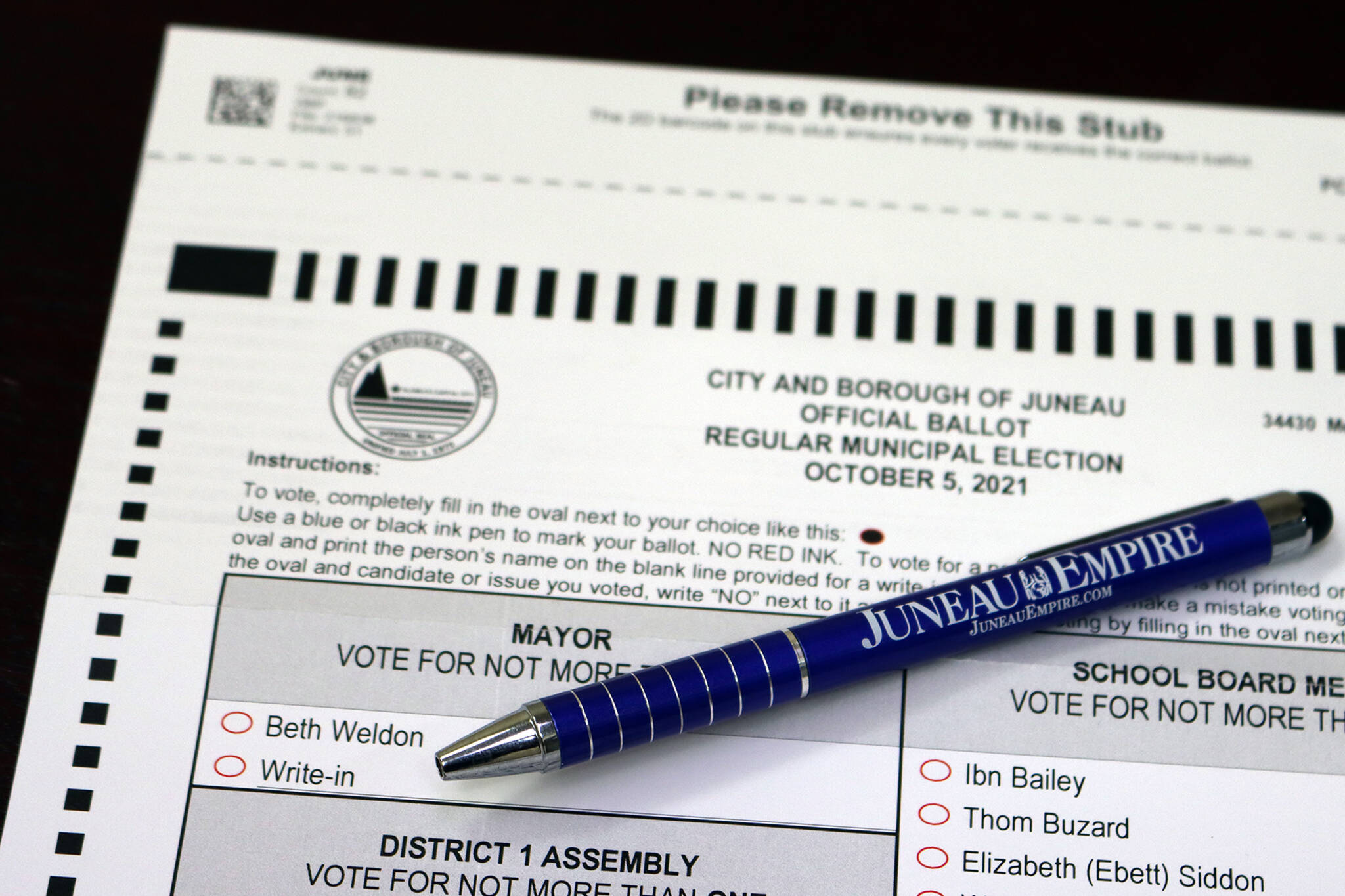
Under Juneau’s new municipal vote-by-mail system, ballots were sent to 27,684 registered Juneau voters on Sept. 14. Assuming voters returned ballots as early as they did in 2020, about 3,000 ballots would have been mailed back in the first week or so. This means many voters submitted their ballot a full two weeks early, well ahead of the official “election day” deadline of Oct. 5.
Yet, during that same week, Will Muldoon launched a write-in campaign for school board. His candidacy was heavily supported as evidenced by a well-orchestrated Letters-to-the-Editor campaign.
Additionally, several news stories surfaced about two other school board candidates — both of whom had protective orders filed against them and one whose record included significant tax liens and foreclosures.
The 3,000-plus voters who had already voted didn’t have the benefit of this vital information. Some regretted their choices and wanted a do-over. Voters, however, are not allowed to change their ballot once submitted.
Paul Gronke , director of the Early Voting Information Center, believes early voting is not a panacea. If used, he says, “The period for casting ballots should not be too long.” Why? Campaigns don’t really ramp up until the final two weeks and voters rarely pay serious attention until the days just prior to the election.
With a “rolling election” that began three weeks early, it’s important to ask if the process is fair to the candidates, fair to the electorate, or actually beneficial to democracy.
There are other reasons to question the wisdom of vote-by-mail.
Voter fraud is a serious subject and, while it has been used too often to justify electoral losses in other states (by both political parties), it should not be dismissed out of hand. There is little documented election fraud in this country, but the irregularities that do exist are often associated with unsolicited mail-in ballots.
In Juneau this year, anecdotal evidence suggests numerous voters received multiple ballots for other people. It’s clear that voter rolls contain plenty of names of people who have moved or are deceased.
Even with an uptick in voter turnout, fewer than half of Juneau’s by-mail; ballots will be returned in any election year. That leaves over 14,000 ballots floating around Juneau post office lobbies and waste baskets and residential garbage cans.
Presumably, voter verification processes are in place. But after Alaska’s Online Voter Registration System was hacked last December, allowing personal information for 100,000 voters to be exposed, how difficult would it be to defeat that system?
At a time when elections can be decided by a few votes and election integrity is critical, why tinker with our voting procedures? Especially when doing so makes it easier to send in fraudulent ballots or for special interests to “harvest ballots,” thereby giving voters even less reason to trust the results.
By the city’s own estimates, the first-year costs for by-mail voting (including new equipment and renovation costs) could approach $1 million. The ongoing operational costs of conducting the election could exceed $200,000 per year, triple the cost of a conventional election where voters can choose to vote in person or request an absentee ballot.
When our elected leaders decreed that local elections would forevermore be conducted via “vote by mail” instead of in-person at local precinct locations, the electorate was denied a complete informed discussion. Copycatting the vote-by-mail plan adopted in Anchorage was easier than engaging the public in a full debate that evaluated the merits and pitfalls of vote-by-mail.
The CBJ Assembly, it seems, has no problem busting the budget once more on a questionable expenditure. Now, whether Juneau’s taxpayers want it or not, they will be stuck with the extra costs of vote-by-mail.
• After retiring as the senior vice president in charge of business banking for Key Bank in Alaska, Win Gruening became a regular Opinion Page columnist for the Juneau Empire. He was born and raised in Juneau and graduated from the U.S. Air Force Academy in 1970. He is involved in various local and statewide organizations and currently serves on the board of the Alaska Policy Forum.
