
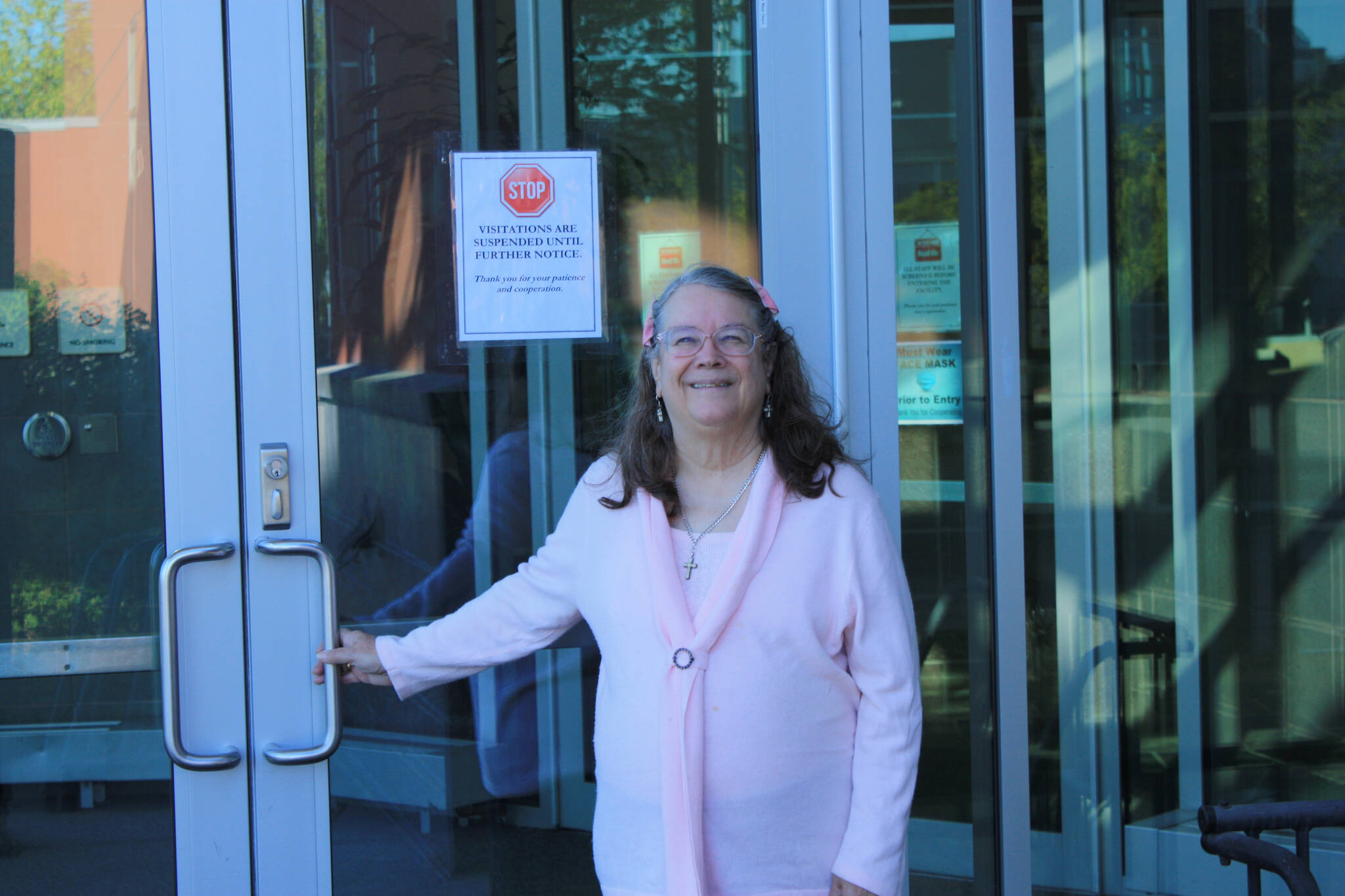
By Faith J. Myers
Gov. Mike Dunleavy’s Administration is trying to convince the legislature to pass House Bill 172 and Senate Bill 124. If the bills pass, they will create over 10 new psychiatric units with added powers around the state. The missing voice is the disabled psychiatric patients and what they endure during treatment.
The alumni of the Alaska Psychiatric Institute number about 80,000. There is a process to being locked in a psychiatric hospital like API. Thousands of people are brought in for a forced psychiatric evaluation around the state each year. A person in charge decides if a person presents a danger to themselves or others. People have described being handcuffed and the callousness of treatment in psychiatric hospitals as being unnecessarily damaging.
It costs about $1,500 to keep a person in a locked psychiatric facility for a day. About the same cost as a top-of the line suite in the Captain Cook Hotel in Anchorage. The difference is the fruit basket, the room service and the soiled bedding is changed daily. Psychiatric patients have become what I consider almost too valuable. There is what I believe to be a strong motivation for many psychiatric facilities to continue treatment as opposed to concentrating on patient recovery.
I spent over seven months locked in acute care psychiatric facilities or units, including API. The number of hours adds up to more than what it took me to get an Associate degree in Early Childhood Education. Every locked psychiatric facility I entered as a patient, I left something of myself behind; something tangible, like initials on the wall or the scraping of fingernails.
Being locked in an acute care psychiatric hospital comes with tradeoffs, there is always a tradeoff. There is the stabilization, but there is also being thrown on the floor by staff, it is called a takedown. There are memories of being held down by four men and having my pants pulled down and then given a shot of anti-psychotic drugs. Followed by being watched through a small window.
In a state that covers 663,300 square miles, mental health care is a strange mixture of art and science. There is no guidebook of best practice that managers of psychiatric facilities must follow. One psychiatric facility may treat patients in a fair manner and another facility may have a history of mistreating patients. In Alaska, for example, there are state laws that protect a patient that is locked in API, but the same laws may not apply to a private psychiatric facility.
Disabled psychiatric patients locked in a psychiatric facility were given a right by state law, AS47.30.847, to file a grievance. The law has its faults. There is no requirement for an appeal process. And no requirement for the complaint to make it past the walls of the psychiatric facility. There are other shortcomings of the law: According to DHSS and others the law only applies to five facilities. That means thousands of psychiatric patients locked in psychiatric facilities are not protected by a state psychiatric grievance law. In my opinion, the state has chosen not to protect all disabled psychiatric patients in the grievance process to save money.
The quality of mental health care and the protection of psychiatric patients came under the control of the state of Alaska on Jan. 1, 1957. I estimate that no less than two million words have been written describing how to transport, evaluate and stabilize a person having a psychotic break. After all those words, psychiatric patients locked in a psychiatric facility have not ended up with a fair grievance procedure and appeal process.
The Department of Health and Social Services and the Alaska Mental Health Trust Authority have played a major role in the direction of mental health care over the last 20 years, including HB172 and SB124. To my knowledge, neither organization has invested the resources to determine if psychiatric patients are protected in the grievance and appeal process. In my experience, there is a concerted effort to provide new treatment for psychiatric patients, but very little effort to provide protection or give patients a voice.
As a person who has undergone forced psychiatric evaluations and spent time in locked psychiatric facilities, I have concerns because there are no necessary patient rights included in HB172 and SB124. Without added patient rights these bills should not pass.
• Faith J. Myers is the author of the book, “Going Crazy in Alaska: A History of Alaska’s Treatment of Psychiatric Patients.” Columns, My Turns and Letters to the Editor represent the view of the author, not the view of the Juneau Empire. Have something to say? Here’s how to submit a My Turn or letter.
