
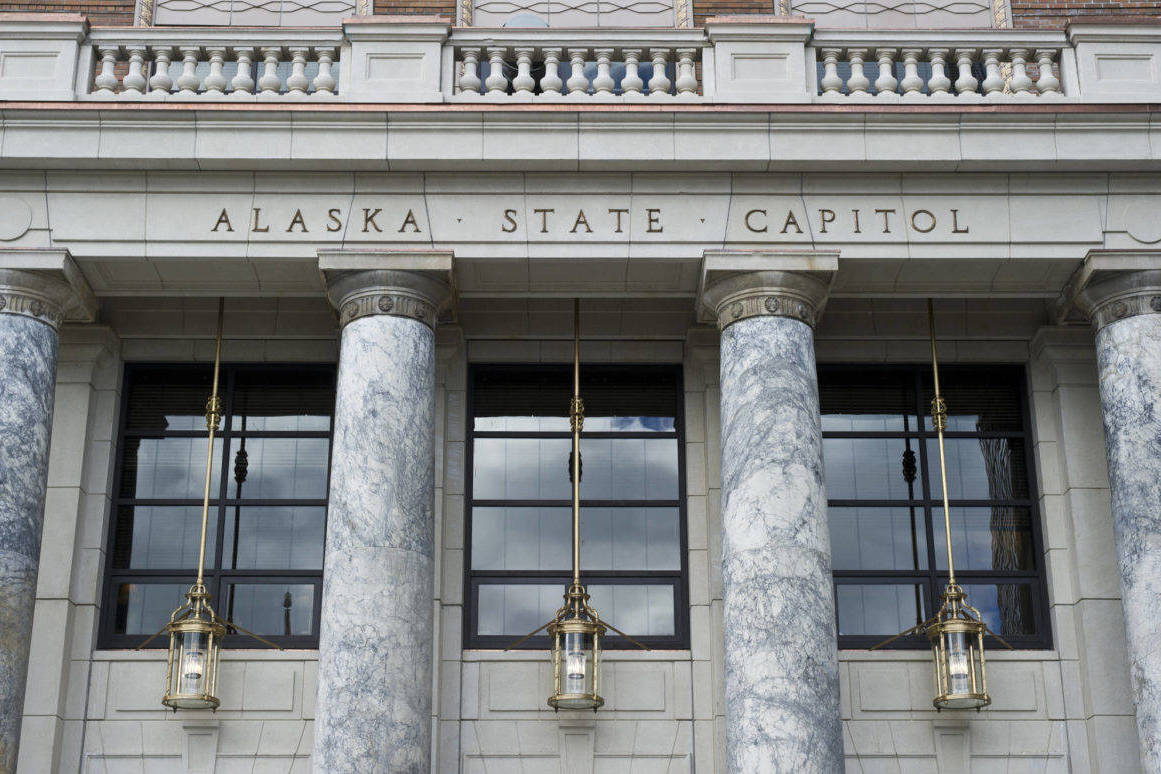
There is a legal battle brewing over education funding. But, it is not a battle over whether education should be funded — both the Legislature and Gov. Mike Dunleavy agree that it should. It is not even over the amount; the governor has introduced a bill to fully fund education and stated he will not veto the funding.
This is a battle over whether the annual budgeting process envisioned by our founders and set forth in the Alaska Constitution requires the Legislature and the governor every year to consider how to spend the revenues available to them and prohibits setting aside future revenues in a future fiscal year. As it stands now, it is the Department of Law’s view that the Legislature has not yet allocated money for the state to fund education in the forthcoming year.
[Opinion: Sen. Murkowski leads bipartisan bill in support of rural, LGBTQ elders]
How did this start? In 2018, the 30th Legislature future appropriated money for education for fiscal year 2020, thereby earmarking money that the state would only receive after fiscal year 2019. What’s wrong with that? It violates the Alaska Constitution.
The Alaska Supreme Court has ruled that the Alaska Constitution mandates an annual budgeting process —“the constitutional framers believed that the legislature would be required to decide funding priorities annually on the merits of the various proposals presented.” According to our court, the Legislature and the governor have a “joint responsibility … to determine the State’s spending priorities on an annual basis.”
Each year, the Legislature can appropriate at their discretion revenues that will be available in the forthcoming fiscal year, but not beyond that. They cannot cut out the future legislature and future governor from exercising their joint responsibility to determine the funding priorities in a future fiscal year.
[Clarkson: This one embarrassing act saved my life]
If the Legislature can appropriate future revenues for future years at the end of one governor’s administration, they can side-step the joint responsibility of the next Legislature and next governor, and by this logic, appropriate all funding for an entire governor’s term. This improperly infringes on the next governor’s line item veto power. But, it also infringes on the next Legislature’s appropriation authority.
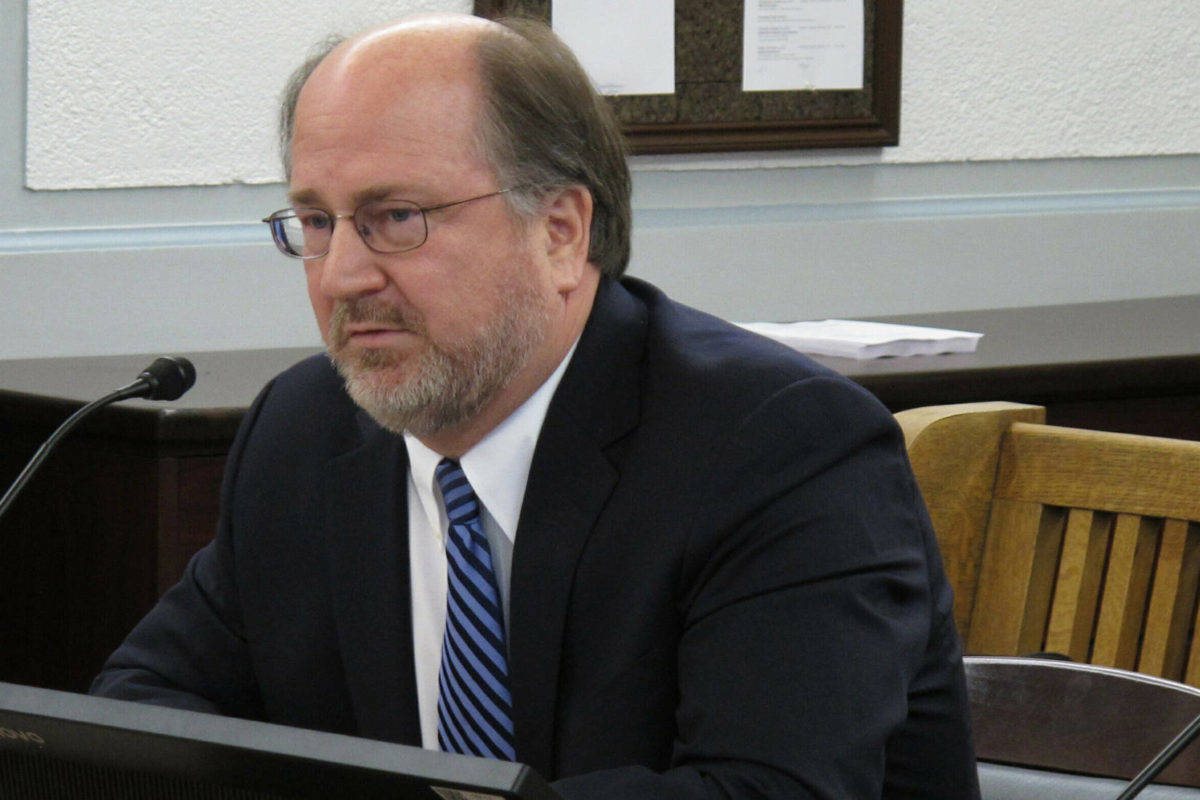
Alaska Attorney General Kevin Clarkson testifies before state senators during a confirmation hearing on Tuesday, Jan. 29, 2019, in Juneau. (Becky Bohrer | Associated Press File)
For example, if a Legislature chose to future appropriate for four years, then the next Legislature would be stuck with that budget, unless it had the political will to amend or repeal it and the governor agrees. If the next governor wanted to maintain the priorities set in place by the prior Legislature, the governor could just veto any amendments by the Legislature. This would leave the next Legislature without the ability to present its own funding priorities to the governor.
This is why our court has described our constitutional process as prohibiting “appropriating a revenue stream for more than the immediately forthcoming fiscal year.” The logic put forth by some in the Legislature that future appropriating is fine because the current Legislature can repeal the previous future appropriation does not pass constitutional muster and ignores the very real political difference between trying to change an existing law and passing a new one.
[Opinion: Let’s teach our kids science, not scare them with half-truths]
There is no guarantee of the necessary political alignment to repeal the appropriation in the next Legislature. And, the Legislature does not get to pass an unconstitutional law just because they could repeal it next year. Our constitution requires an annual budgeting process, period.
Moreover, the Alaska Constitution forbids the dedication of funds for a specific purpose. This prohibition is to “preserve control of and responsibility for state spending in the legislature and the governor,” and to ensure “that the legislature” is “required to decide funding priorities annually on the merits of the various proposals presented.” The anti-dedication clause is violated whenever the legislature attempts to restrict the use of future revenues to a single purpose.
Our court may ultimately get to decide these questions, but in the meantime there is no reason that education should not be funded by this Legislature for the upcoming fiscal year. The Legislature can pass a contingent appropriation while the legal battle ensues. Or, the Legislature could pass the majority of education funding through two appropriations, approximately $1.2 billion, while leaving the smaller part of the 2018 appropriation, $30 million, for the legal battle.
The Legislature has multiple avenues to ensure the governor receives a valid appropriation funding education. If education is not funded this year, it’s on the Legislature, not the governor.
• Kevin Clarkson is the attorney general of the state of Alaska. My Turns and Letters to the Editor represent the view of the author, not the view of the Juneau Empire.
