Opinion: Embrace a future with the full benefits of a healthy Tongass
Published 3:00 am Tuesday, December 10, 2019

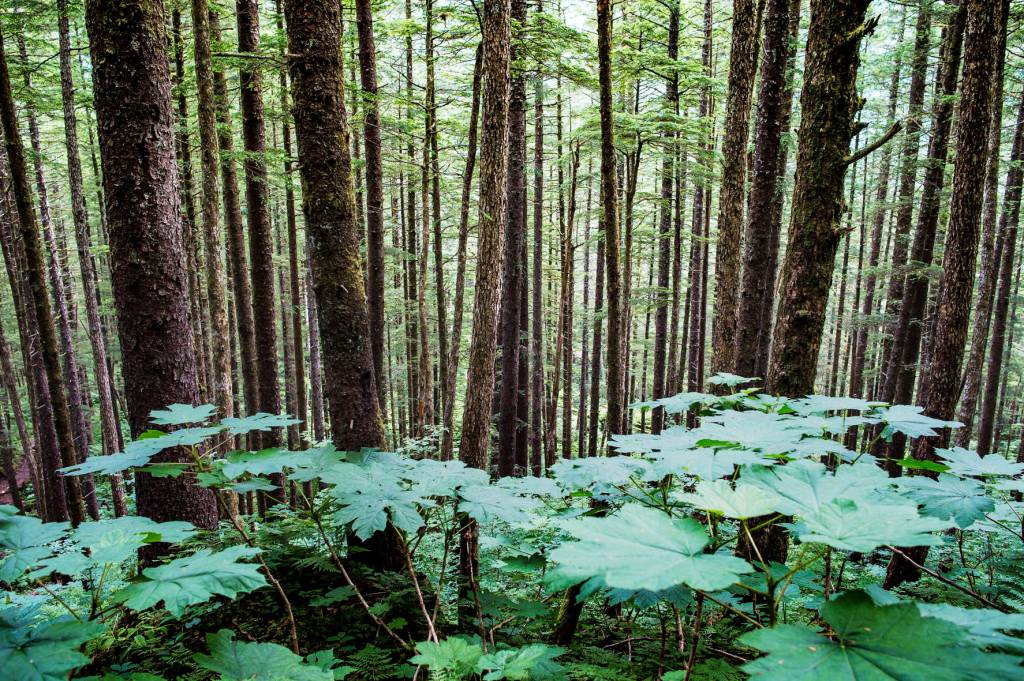


I wrote a My Turn in support of keeping protections for roadless areas on the Tongass that prompted responses from Bert Burkhart and Wayne Nicolls, both of whom seek to expand clear-cut logging of old-growth forest into new and larger parts of the Tongass. Their responses display fundamental differences between how I and they value the Tongass and make clear it’s far past time for an honest debate about the benefits of roadless areas.
Roadless areas often contain our best fish, wildlife, subsistence and recreation resources, which in turn are the basis for our way of life and economy. Testimony at all of the recent public meetings show that Alaskans agree. The economics also bear this out, with fishing and tourism industries accounting for 26% of all local jobs. We rely on roadless areas for salmon to catch, deer to hunt, bears to see, and beautiful scenery to attract visitors. These are our most valuable forest products.
Of course, not every acre of the Tongass is equal. Some places are productive forest that support abundant salmon and wildlife populations. Other places produce lower volume trees, or are rock, ice, muskegs, etc. A recent peer-reviewed paper analyzing Forest Service data found that, while logging had removed 12% of the productive old-growth forest on the Tongass, it had targeted the best areas and reduced “the highest volume of contiguous old growth by 66.5%.” On Prince of Wales Island, where logging has been most intense, “such forests have been reduced by 93.8%.” Roads necessary to support this logging compound the problem. Alarmingly, a recent Forest Service survey of bridges and culverts along roads crossing salmon streams found that “33 percent of those have been determined not to meet State of Alaska fish passage standards.” These are not lies, as others would want you to believe. They are the legacy left to us from decades of unsustainable old-growth logging that high-graded the best and most valuable forest lands and ravaged our salmon streams.
The question for us now is whether we will learn from these mistakes and start fixing the problem, or continue to perpetuate outdated ways of thinking by building new logging roads and clear-cuts into undeveloped portions of the Tongass that leaves an even worse legacy for our kids. If the Roadless Rule is lifted, we must expect clear-cut logging of old-growth forest to expand into new parts of the forest, the costs to taxpayers and massive backlog of road maintenance to balloon further out of control, and the costs to fish and wildlife and the people and businesses that depend on them to compound.
Trout Unlimited has a long history of working collaboratively to support solutions that give everyone a piece of the pie. When the Forest Service first announced it was considering changes to the Roadless Rule in Alaska, Trout Unlimited was among a group of businesses and organizations that reached out to the Forest Service and State of Alaska expressing interest in finding a compromise that retained the core conservation principles of the Roadless Rule while alleviating concerns of its critics, whether real or imagined. Although the Forest Service has made clear that all 58 projects proposed in roadless areas in Alaska have been approved — including mining, energy and community infrastructure projects — we were and are open to seeing if there is a way to make this process better. Unfortunately, it quickly became apparent the old-growth logging industry would accept nothing less than the most extreme option of fully repealing the Roadless Rule on the Tongass. Logging special interests were not satisfied taking one more piece of the pie. They wanted the whole thing.
Roadless areas are some of the most culturally important and economically productive lands on the forest. They are the bread and butter for numerous businesses in the guiding and tourism industries, and the basis for commercial salmon fisheries. The Tongass is our national forest. It is far past time we move on from outdated ways of thinking and embrace a future with the full economic and cultural benefits of a healthy Tongass.
The Forest Service is accepting comments on the Roadless Rule through Dec. 17.
• Austin Williams is the Alaska Director of Law and Policy for Trout Unlimited-Alaska. He has worked on the Tongass for nearly a decade and worked with a network of local supporters and business partners to promote sound management of the Tongass. Columns, My Turns and Letters to the Editor represent the view of the author, not the view of the Juneau Empire.