
The country is awash in “free” money. Two of the fastest growing job positions nationally are grant writers and grant administrators. Many grants target local and state government entities that are looking for ways to subsidize projects that might otherwise be fiscally unfeasible in today’s economy or just plain unpopular with taxpayers.
Many municipalities in Alaska are currently exploring ways to cash in on the many grants available through a myriad of programs related to infrastructure, climate change, and education.
But is the money really “free?”
Projects, products, and services that are funded wholly or primarily through grants often are not subjected to the kind of hard analysis and objective vetting that are accorded similar projects that are chiefly funded through public tax dollars. After all, it’s free, right?
Often ignored are the long-term costs of operating and maintaining buildings and equipment, costs that can sometimes exceed whatever benefit is derived from the original subsidized purchase price. “Free money” can also fuel a temptation to try new and untested products, or experiment with a rapidly evolving technology not yet evaluated under all kinds of conditions and uses.
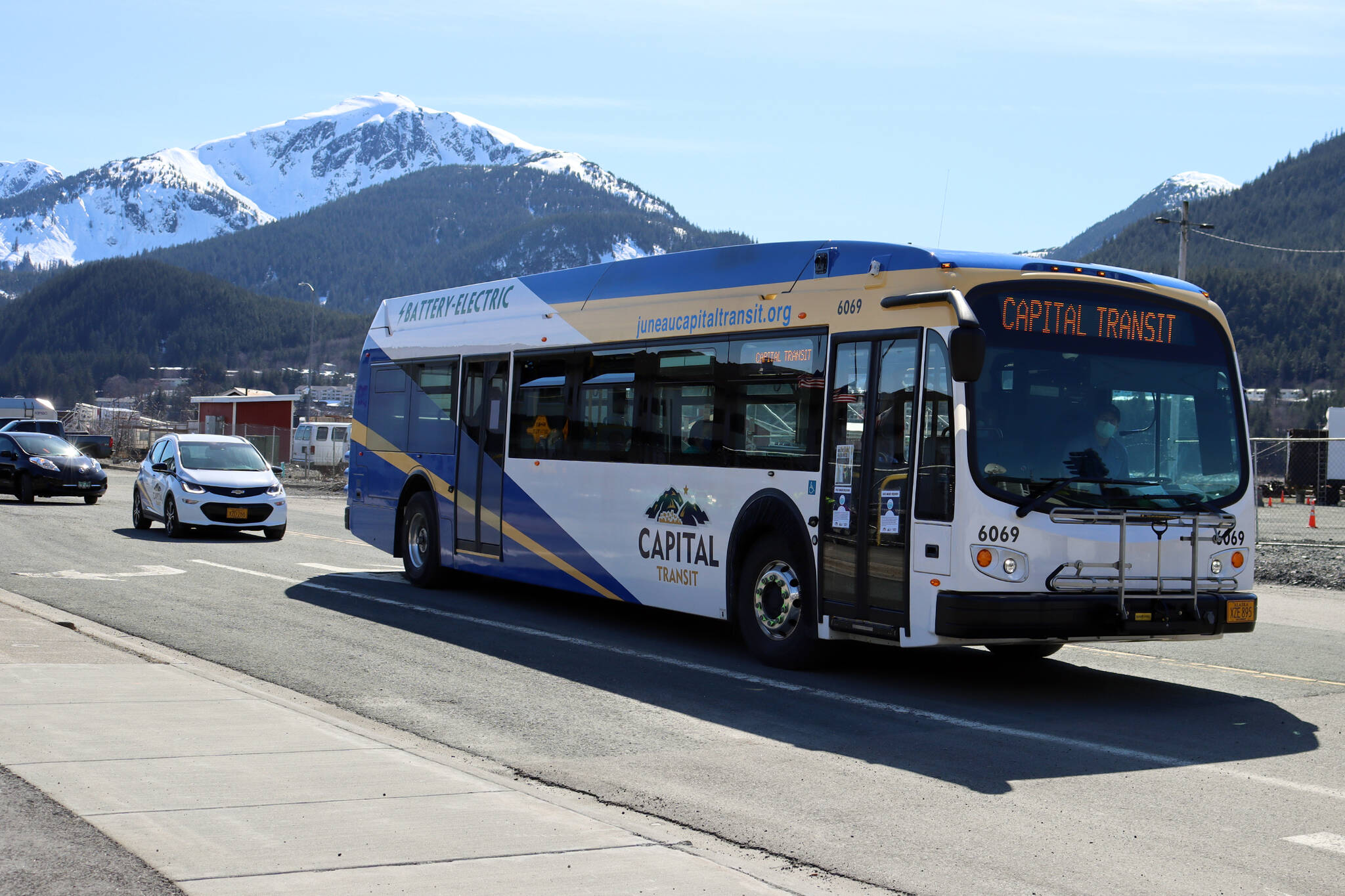
This brings to mind the glowing stories in the media about the current rush of cities around the country to acquire battery electric buses as part of a larger goal to achieve reductions in their community’s carbon footprint.
The community of Juneau is no exception.
Juneau’s first municipally operated battery electric bus was put into service in April 2021. Funded by a grant, the 40-foot bus, manufactured by Proterra, soon experienced problems and couldn’t hold battery charges long enough to complete an entire route during cold winter weather. Since then, other mechanical problems required the bus to be removed from service several times.
The BEB was down for approximately six weeks from last Thanksgiving to after New Year’s Day due to powertrain and wiring harness problems.
City officials say they are still committed to electrifying Juneau’s entire 18-bus fleet. They intend to investigate other manufacturers and consult with cities in colder climates to learn more about electric bus performance before agreeing to purchase additional vehicles.
However, a cursory Google search revealed that Proterra buses have been having issues for years.
The Duluth Monitor reported that the Duluth Transit Authority had purchased seven buses (at $900,000 apiece) from Proterra using a $6.3 million grant. The DTA and Proterra engineers spent two years designing a bus for this pilot project that would operate in Duluth’s cold climate and steep topography.
After delivery in August 2018, all seven buses were pulled from service after only two months for issues similar to those experienced in Juneau.
Foothill Transit, based in weather-friendly West Covina, California, had 13 idled Proterra battery-electric buses out of 32 in its fleet. At one point, the agency indicated up to 67% of its electric buses were not operating during 2019 and 2020.
There are similar stories involving Proterra buses in Los Angeles and Philadelphia.
Yet, somehow, Juneau officials chose Proterra for their first electric bus.
Apparently, supply was limited and, of course, the bus was “free”.
Admittedly, BEB’s have promise. They claim to enjoy four times the fuel efficiency of diesel buses, lower maintenance costs, and zero carbon emissions (if you ignore the optional diesel heaters sometimes used in cold climates). Grants are mandatory because BEB’s can cost 75% more than a diesel bus in addition to the associated costs of charging equipment.
But they must work to be of any value at all.
Juneau has grants pending now that will fund seven additional buses and is in the process of choosing a manufacturer. One possibility is Gillig, the company that manufactures the city’s current fleet of diesel buses. This could be advantageous as there would be maintenance similarities between the two kinds of buses.
But Gillig’s electric battery buses are relatively new to the market and, as of the beginning of this year, only about 100 had been delivered. Is that enough experience to assure city officials of the kind of reliability and cost savings that are promised?
Or does it even matter since they are free?
• After retiring as the senior vice president in charge of business banking for Key Bank in Alaska, Win Gruening became a regular Opinion Page columnist for the Juneau Empire. He was born and raised in Juneau and graduated from the U.S. Air Force Academy in 1970. He is involved in various local and statewide organizations. Columns, My Turns and Letters to the Editor represent the view of the author, not the view of the Juneau Empire. Have something to say? Here’s how to submit a My Turn or letter.
