
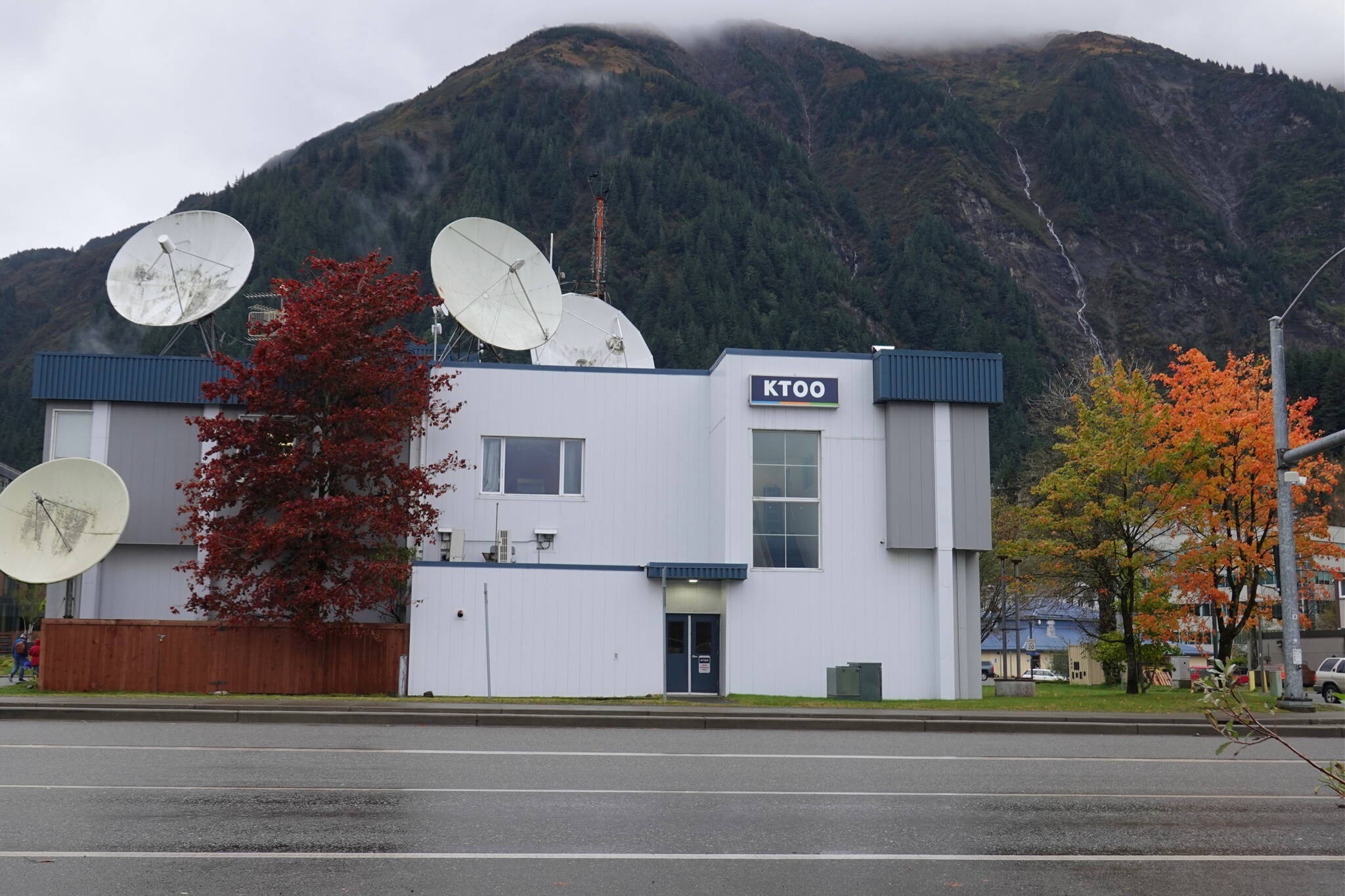
The KTOO public broadcasting building is photographed in Juneau, Alaska. (Laurie Craig / Juneau Empire)

The KTOO public broadcasting building is photographed in Juneau, Alaska. (Laurie Craig / Juneau Empire)

Opinion: Begich and Sullivan failed to represent Alaskans

  • By Larry Persily Wrangell Sentinel
  • Wednesday, July 23, 2025 11:30am
  • Opinion

Certainly, Alaska’s three-member congressional delegation by themselves cannot stop every bad idea pushed by the Trump administration. It takes a majority of the House and Senate to block a presidential action, but a majority of both chambers seem more scared about their reelection chances and President Donald Trump’s social media postings than anything else.

However, the all-Republican Alaska trio could at least make a sincere, honest effort to speak out against the most harmful actions promoted by the president, particularly when his agenda is contrary to the well-being of Alaskans.

Sens. Lisa Murkowski and Dan Sullivan and U.S. Rep. Nick Begich had the opportunity last week to say no to Trump’s proposal to rescind two years worth of federal funding for public radio and TV in this country.

The measure before Congress yanked roughly $30 million from public radio in Alaska. That’s no small number: Of the 27 public radio stations in the state, 11 receive more than half their budget from the federal Corporation for Public Broadcasting. In Wrangell, federal funding covers close to half of KSTK’s annual budget.

This is not a trim, it’s a hatchet job.

The Senate approved the big recissions package the president wanted, undoing public radio funding along with about $7 billion in foreign aid. Murkowski was not one of the 51 Republican senators to vote yes. She was a loud no.

“My colleagues are targeting NPR (National Public Radio) but will wind up hurting — and, over time, closing down — local radio stations that provide essential news, alerts and educational programming in Alaska and across the country.”

Sullivan, who often mimics the president’s misleading and dishonest rhetoric, didn’t say anything. His spokesperson said the senator had warned public media that their “biased reporting” could cost them money. But he’s doing what he can to help Alaska stations, the spokesperson said.

Voting against the recissions package would have been a big help, but that option just wasn’t on Sullivan’s dial.

Begich’s justification for approving the president’s request was so full of static that you wonder if he even knows how to operate a radio.

In a written statement, the freshman member of Congress said technology has advanced and Alaskans have embraced cellphones and satellite communications. Public radio is not as important as it was, he said.

Maybe Begich lives in a different world where cell and internet service never go down, leaving radio as the best — the only — means of communicating during public emergencies, other than shouting out open windows or driving around town with a bullhorn.

Maybe Begich just cares more about Trump’s favor and fame than he cares about his constituents. He needs to check his antenna.

Larry Persily is a longtime Alaska journalist, with breaks for federal, state and municipal public policy work in Alaska and Washington, D.C. He lives in Anchorage and is publisher of the Wrangell Sentinel weekly newspaper.

More in Opinion

Web
Have something to say?

Here’s how to add your voice to the conversation.

Northern sea ice, such as this surrounding the community of Kivalina, has declined dramatically in area and thickness over the last few decades. Photo courtesy Ned Rozell
20 years of Arctic report cards

Twenty years have passed since scientists released the first version of the… Continue reading

Dr. Karissa Niehoff
OPINION: Protecting the purpose

Why funding schools must include student activities.

A sign reading, "Help Save These Historic Homes" is posted in front of a residence on Telephone Hill on Friday Nov. 21, 2025. (Mari Kanagy / Juneau Empire)
OPINION: The Telephone Hill cost is staggering

The Assembly approved $5.5 million to raze Telephone Hill as part of… Continue reading

Win Gruening (courtesy)
OPINION: Eaglecrest’s opportunity to achieve financial independence, if the city allows it

It’s a well-known saying that “timing is everything.” Certainly, this applies to… Continue reading

Gov. Mike Dunleavy gestures during his State of the State address on Jan. 22, 2026. (Photo by Corinne Smith/Alaska Beacon)
OPINION: It’s time to end Alaska’s fiscal experiment

For decades, Alaska has operated under a fiscal and budgeting system unlike… Continue reading

Atticus Hempel stands in a row of his shared garden. (photo by Ari Romberg)
My Turn: What’s your burger worth?

Atticus Hempel reflects on gardening, fishing, hunting, and foraging for food for in Gustavus.

At the Elvey Building, home of UAF’s Geophysical Institute, Carl Benson, far right, and Val Scullion of the GI business office attend a 2014 retirement party with Glenn Shaw. Photo by Ned Rozell
Alaska Science Forum: Carl Benson embodied the far North

Carl Benson’s last winter on Earth featured 32 consecutive days during which… Continue reading

Van Abbott is a long-time resident of Alaska and California. He has held financial management positions in government and private organizations, and is now a full-time opinion writer. He served in the late nineteen-sixties in the Peace Corps as a teacher. (Contributed)
When lying becomes the only qualification

How truth lost its place in the Trump administration.

Jamie Kelter Davis/The New York Times
Masked federal agents arrive to help immigration agents detain immigrants and control protesters in Chicago, June 4, 2025. With the passage of President Trump’s domestic policy law, the Department of Homeland Security is poised to hire thousands of new Immigration and Customs Enforcement (ICE) agents, and double detention space.
OPINION: $85 billion and no answers

How ICE’s expansion threatens law, liberty, and accountability.

Yereth Rosen/Alaska Beacon
The entrance to the Alaska Gasline Development Corp.’s Anchorage office is seen on Aug. 11, 2023. The state-owned AGDC is pushing for a massive project that would ship natural gas south from the North Slope, liquefy it and send it on tankers from Cook Inlet to Asian markets. The AGDC proposal is among many that have been raised since the 1970s to try commercialize the North Slope’s stranded natural gas.
My Turn: Alaskans must proceed with caution on gasline legislation

Alaskans have watched a parade of natural gas pipeline proposals come and… Continue reading

Win Gruening (courtesy)
OPINION: Juneau Assembly members shift priorities in wish list to Legislature

OPINION: Juneau Assembly members shift priorities in wish list to Legislature