
By Win Gruening
Following months of racial unrest and protests, the country is struggling with Black Lives Matter claims that America is awash in systemic racism.
There may be benefits to a broad examination of government policies that could perpetuate negative impacts on minorities.
But the question is: How much change is warranted and what is the best way to accomplish it?
The “systemic racism” narrative is promoted so widely that it is taken as undeniably true. Businesses and local and state government agencies spend upwards of $10,000 an hour for tutorials on how to eliminate their own purported systemic, institutional racism. Schools and colleges have tripped over themselves denouncing white privilege and systemic racism.
It’s become accepted fact that racism accounts for most disparities among races, whether in educational achievement, employment rates, income gaps, crime rates, policing policies, or health. Individual behavior, family structure, and cultural attitudes are dismissed as factors. If you argue that they are, you risk being accused of being racist.
It is universally acknowledged that our country, like many countries, has a history of slavery and racism. Today, instances of racism regrettably still exist. What seems not to be acknowledged is the progress our country has made in securing voting rights, improving educational opportunities and promoting economic advancement for minority Americans.
Today, 131 members of Congress are Black, Hispanic, Asian or Native American. African American college-graduation rates have quadrupled over the past six decades. The United States remains the place millions of emigrating “people of color” choose when looking for opportunity.
[Opinion: 1st Amendment rights apparently only apply to the left]
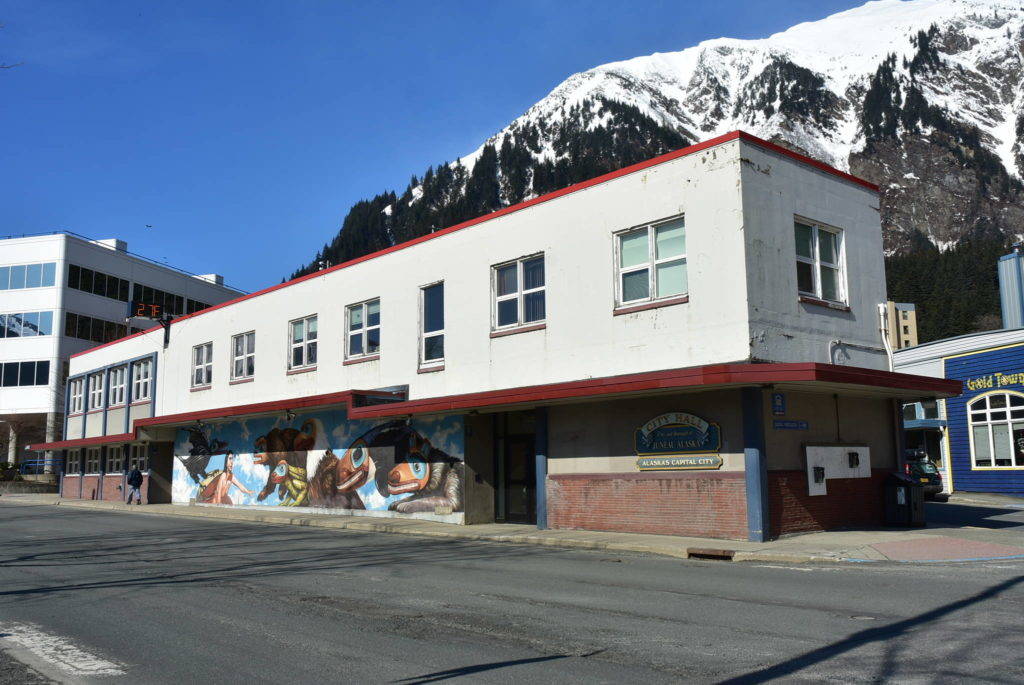
In Juneau, after four meetings of the municipal Human Rights Commission with public participation, a draft ordinance establishing a new Systemic Racism Review Committee was forwarded to the Assembly for action.
During discussions, one Assembly member commented that the ordinance was addressing a “massive problem we are trying to solve.”
After minor changes, the ordinance was set for public hearing on Aug. 24.
It would establish an appointed seven-member committee responsible for reviewing all assembly ordinances and resolutions that may contain a “systemic racism policy or implication.” The committee would also be responsible for recommending a cure.
Thus far, no Assembly or city staff member has identified a single concrete example of systemic racism in Juneau.
The ordinance, which is both vague and unlimited in scope, doesn’t either.
The term “systemic racism” is not clearly defined other than an act, practice, or policy that would have a “significant discriminatory impact on a protected group.”
Defining the committee’s mission this way, there will be no need to prove a policy or act is racist — only that there is disparate impact. This would be de facto evidence that racism exists.
The SRRC would have wide latitude to delve into virtually all facets of city government including the budget, hiring practices, housing policies, homelessness issues, education curriculum and policing practices, to name just a few.
The anticipated workload for the SRRC was deemed so burdensome, the Assembly discussed hiring a consultant and requested that staff draft an ordinance to provide $50,000 in initial funding.
[Opinion: Projects like a Lynn Canal Highway will help Alaska get back on its feet]
Aside from the bureaucratic overload and financial drain this SRRC would create, the potential recommendations that could be forthcoming should be of concern.
Indeed, a draft resolution accompanying the ordinance from the Human Rights Commission says in part, that with the “execution of George Floyd, one case of endless cases…the City and Borough of Juneau (CBJ) must face the unique and local history of racism”. The HRC further suggests that the CBJ must embrace the 10 demands of local Black leadership which include expansive powers of oversight of our police department and schools.
To vest this much power and public authority in a group of unelected committee members would be extraordinary and unprecedented.
Juneau’s current Human Rights Commission, with some modifications, has the ability to solicit and receive public testimony and make recommendations to the Assembly about policies and practices that may have racial implications.
Should creating an additional expensive layer of bureaucracy with an undefined goal of eliminating “systemic racism” be a priority now?
Or rather, should our city leaders be focusing on improving our faltering economy, thereby improving opportunity and quality of life for everyone?
• Win Gruening retired as the senior vice president in charge of business banking for Key Bank in 2012. He was born and raised in Juneau and is active in community affairs as a 30-plus year member of Juneau Downtown Rotary Club and has been involved in various local and statewide organizations. Columns, My Turns and Letters to the Editor represent the view of the author, not the view of the Juneau Empire. Have something to say? Here’s how to submit a My Turn or letter.
