
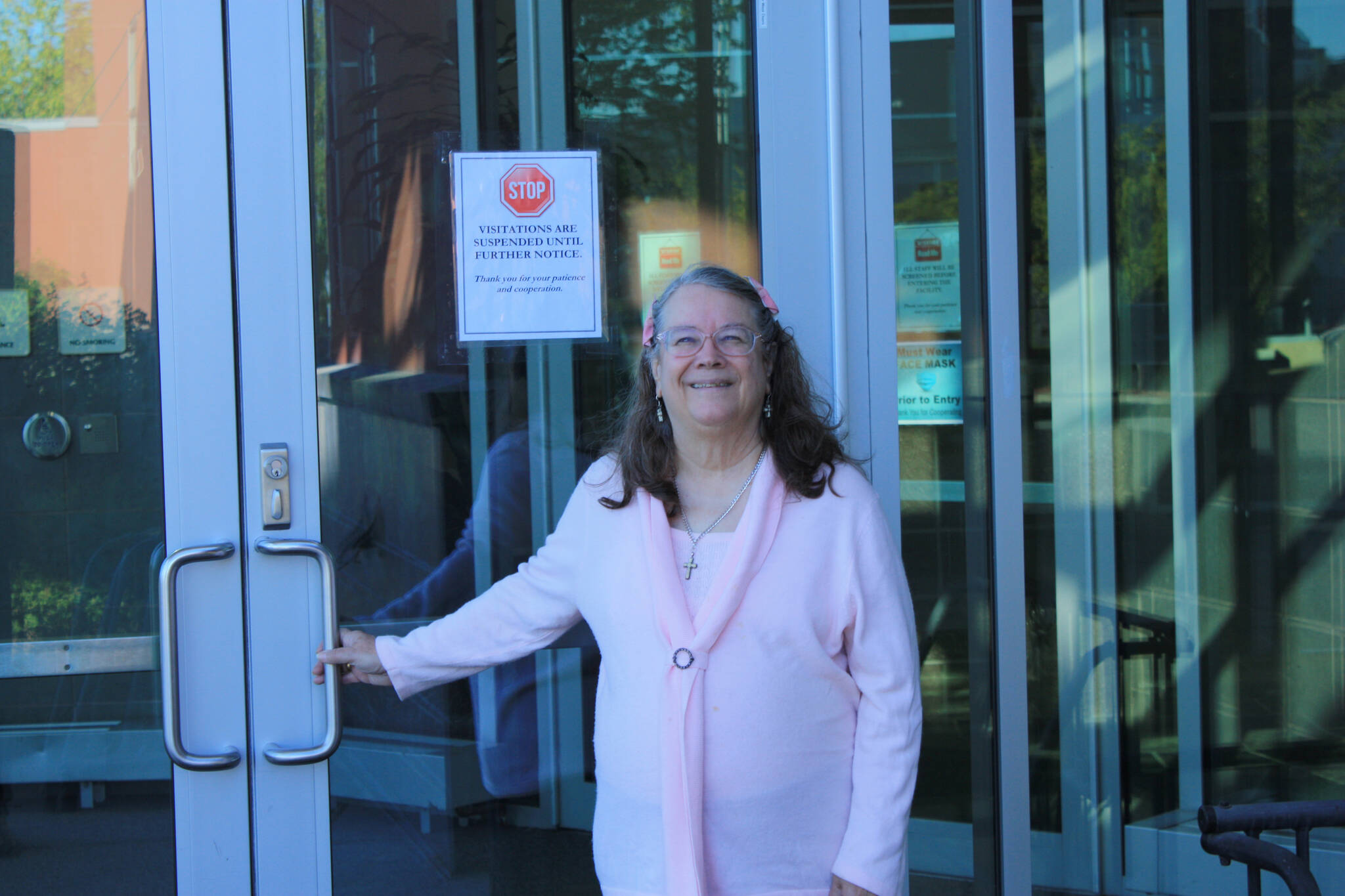
By Faith J. Myers
In 1904, the U.S. Department of the Interior awarded Morningside Hospital in Portland, Oregon, a federal contract for the providing of care for Alaskans with a disability. The price that was settled on in the contract was $1 a day per patient. With one dollar, the hospital was expected to provide medical care, clothes, therapy, food and a bed.
From 1904 to 1968, many Alaska Natives and others were shipped from Alaska to the private psychiatric facility, Morningside, and basically forgotten. In total approximately 3,500 Alaskans made the journey. Of the people that died during treatment, very few were returned to Alaska for burial by their family and most were buried in Oregon.
After 1904, the cost of caring for Alaska’s disabled did not remain at a dollar a day per patient. But the cost remained low because the private hospital, Morningside, did not expect or receive many concerns or questions from the federal government, and later, the state of Alaska about patient rights, quality of care or patient outcomes. At one point the owners of Morningside were accused of hoarding money that was meant for patient care, but there were no charges filed.
Today in Alaska, there are approximately 10,000 people that rotate in and out of acute care psychiatric facilities or units each year. Alaska has over a hundred-year history of farming psychiatric patient care out to private facilities without knowing the number and type of patient complaints and injuries or traumatic events. Even though the cost of patient care has risen from a dollar a day to about $1,500, there is still that ingrained habit of the state not setting a specific standard of patient care or protection for people with a disability in private psychiatric facilities.
The Department of Health and Social Services has the authority to turn the powers and duties of the Department over to private psychiatric facilities. In an opinion dated January 26th, 2015, the Legislative Legal Services made the following statement: “A delegation may result in the authority of a mental health treatment facility to essentially regulate itself, for departmental purposes, in the care and treatment of mental health patients.” In my opinion, very little has changed concerning psychiatric patient protection and state oversight in the last 118 years.
Most organizations providing mental health care or grant money, including DHSS, advertise locked psychiatric hospitals or units as a place for healing. But independent researchers have painted a mixed review. In 2003, a South Carolina study by Karen J. Cusack and others, pointed out that 47% of the patients locked in a psychiatric facility experience trauma that may cause or exacerbate post-traumatic stress disorder. The events most likely to cause patient distress: sexual or physical assaults, staff name-calling, use of physical force, and experiencing unwanted sexual advances.
Investigative reporter Nellie Bly in 1887 referenced in an article that patients at Blackwell’s Island Women’s Insane Asylum endured corporal punishment: patients would be slapped in the face, fingers twisted, pinched, sat upon and locked in closets. It was just 17 years later that Alaska residents were sent to Morningside Hospital in Portland, Oregon. Corporal punishment has been widely used in psychiatric facilities. It was not until 1984 that psychiatric patients in Alaska were given a right by state law to be free from corporal punishment. Critics of the law point out there is no description of corporal punishment.
With my past struggle with mental illness, I am thankful I was not born in a different time. A hundred years ago, there would have been a strong possibility that I would have been taken into custody, charged with the crime of being “an insane person at large.” And after a brief trial, I could have been shipped from Alaska to Morningside Hospital for an indefinite stay.
Each new generation professes to have the answers. But Alaska is only one minute past Morningside. Psychiatric patients are still farmed out to private psychiatric facilities. The state still does not set a patient standard of care or the patient grievance and appeal process. The cost of patient care has gone up to the point where patients should be eating with gold spoons. Instead, patients do not have fair rights, protections or quality of care that give the best opportunity for dignity and recovery.
There are lessons to be learned from the past and Morningside Hospital. Over 100 years ago, is a point in history far enough away that most of us can look at it objectively. Alaska mental health care today should be nothing like Morningside, but regrettably there are too many similarities.
• Faith J. Myers is the author of the book, “Going Crazy in Alaska: A History of Alaska’s Treatment of Psychiatric Patients.” My Turns and Letters to the Editor represent the view of the author, not the view of the Juneau Empire. Have something to say? Here’s how to submit a My Turn or letter.
