
For Amanda Arra of Juneau, the Israeli-Palestinian conflict is a family concern. Two years ago, she and her husband, Nathan Bishop, hosted a high school exchange student from Gaza. Now they’re hoping to find enough money to help Mahmoud Abu Aisha and his brother, Ahmed, continue their studies at Cairo University in Egypt.
“Mahmoud lived in our home and became a part of our family,” Amanda wrote. “I would like to help him and his brother stay in school so that they can find good jobs after they graduate and hopefully immigrate to a country where they will have a future.”
What was on her mind but not in the message is that returning to Gaza isn’t safe.
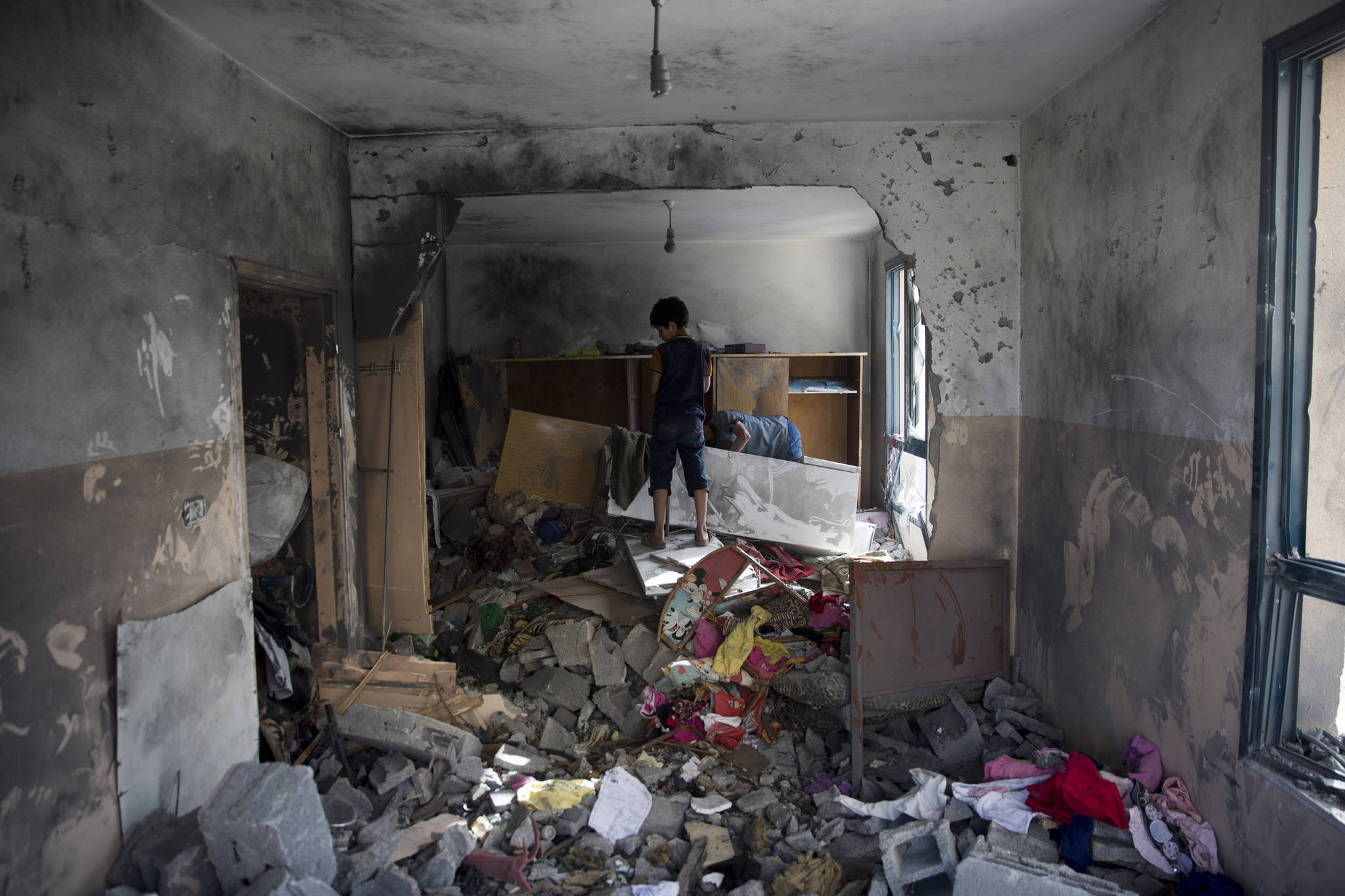
“Gaza militants fire 250 rockets, and Israel responds with airstrikes,” a New York Times headline blared last weekend. The cease fire which took effect the next day came too late for the four Israeli and 13 Palestinians killed by the resurgence of violence.
The headline angered one prominent Palestinian-American. “When will the world stop dehumanizing our Palestinian people who just want to be free?” Rep. Rashida Tlaib, D-Michigan, tweeted. “Headlines like this & framing it in this way just feeds into the continued lack of responsibility on Israel who unjustly oppress & target Palestinian children and families.”
[Opinion: University of Alaska is fully committed to the student experience]
Whether accurate or not, headlines rarely, if ever, humanize anyone in the armed conflicts between other peoples. Tlaib’s 274-character perspective didn’t do it either. The comments it elicited prove the human folly of debating such serious issues on any social media platform.
On the other hand, I’d be foolish to argue that Amanda’s story is anything more than an anecdotal glimpse of the human spirit.
As a local coordinator of the Kennedy-Luger Youth Exchange and Study (YES) program, I helped bring Mahmoud to Juneau. Created in 2002, YES’s grand ambition was to improve the relationship between Americans and people from predominantly Muslim countries.
When Amanda applied to host in 2016, she hoped their son, an only child, would benefit from the short-term sibling relationship and cultural exchange.
The boys became best friends. And the experience expanded her sense of family in ways she could never have anticipated.
Ahmed entered the picture from an international high school in Armenia. He’d received several scholarships from U.S. colleges. After all were withdrawn because of the Muslim travel ban signed by President Donald Trump, Amanda and Nathan offered to sponsor him if he attended the University of Alaska Southeast. He was accepted in January. But that hope was dashed by UAS budget uncertainty.
[Opinion: The politics of waste in Lynn Canal]
And during a Christmas visit with the family in Juneau, Amanda’s sister Melissa developed a strong bond with Mahmoud. She’d been planning to see the brothers in Egypt this month. It was while discussing her trip with them a few weeks ago that she learned their father had suffered a major a heart attack in January.
Mahmoud and Ahmed’s parents had already taken out a loan for tuition and rent. With their father unable to work, the family can’t qualify to borrow more or afford the expenses themselves. Being foreign students in a country with high unemployment makes finding jobs unrealistic. It was almost certain they’d be returning to Gaza before Melissa arrived.
“They didn’t want us to know,” Amanda told me, explaining the brothers were embarrassed about their family situation. “They cried when I said we’d do whatever was necessary for them to stay in school.”
The relationship between the two families is certainly unique. But the predicament faced by the brothers is not.
Gaza is the most densely populated place in the world. Unemployment hovers near 40 percent. But it’s the lack of freedom and security that makes parents hope their children never return from their studies abroad.
Israel has occupied the Palestinian territories since 1967. In 2005, it withdrew the military and civilian settlements from Gaza but retained control of the borders. Restrictions increased in 2006 after Hamas, which the U.S. formally designates a terrorist organization, won the Palestinian elections. Wars in 2009, 2012 and 2014 killed between 1,100 and 2,600 Palestinian civilians.
One can question that oversimplified history of the conflict.
But the humanity of Mahmoud and his Gazan family is real. As is the heart of the Juneau couple who grew to love him like a son.
• Rich Moniak is a Juneau resident and retired civil engineer with more than 25 years of experience working in the public sector. He contributes a weekly “My Turn” to the Juneau Empire. My Turns and Letters to the Editor represent the view of the author, not the view of the Juneau Empire.
