
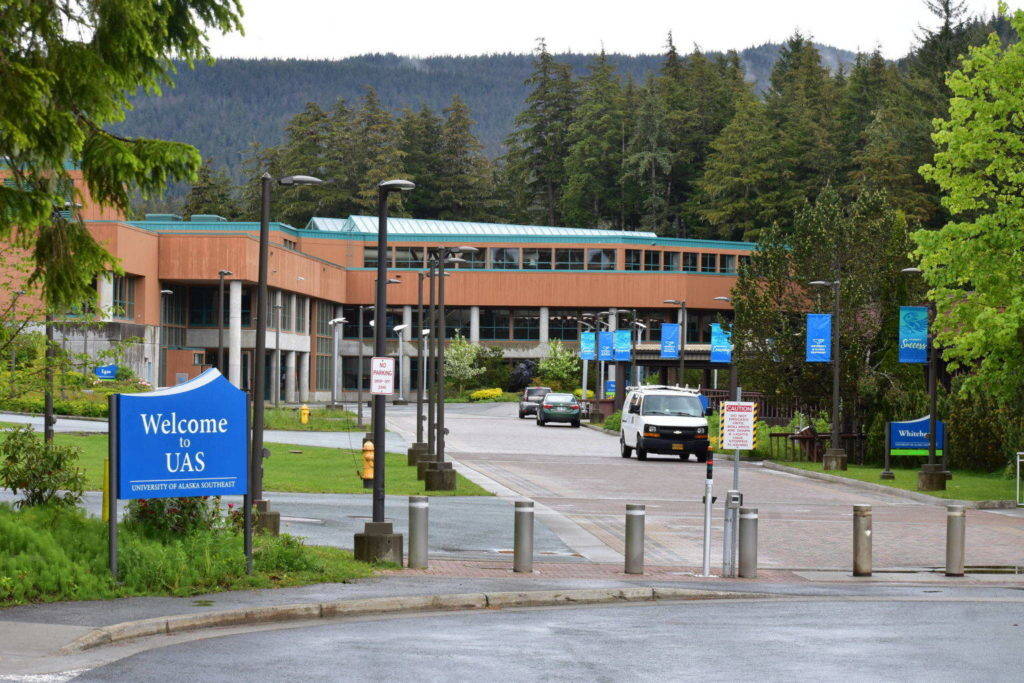
The University of Alaska’s serious budget challenges have led to discussions about a merger of the University of Alaska Fairbanks and University of Alaska Southeast. On June 4, UA Board of Regents moved to consider this merger as the only substantive structural option to save the university money. The merger was also championed in a recent op-ed by Brad Moran, dean of UAF’s College of Fisheries and Ocean Sciences, as the best option for fisheries and ocean sciences in the state. However, the focus on such a merger is short-sighted and unlikely to achieve projected budget savings. UAS comprises just 7.6% of the UA’s state appropriation, and the dubious estimate of a $15 million savings from a merger would come only by cutting over 60% of UAS’ state funding. This would mean gutting some of the most successful academic programs in Alaska and turning UAS campuses into much-diminished “distance education centers.”
Alaska can do better. UAS has built some of the best academic programs nationally in fisheries and marine science. In the last two years UAS’ Juneau-based Marine Biology program has been ranked as a Top 10 U.S. Marine Biology program (College Magazine) and Top 5 in value (College Values). UAS draws students equally from Southeast, the rest of Alaska, and beyond Alaska. Its success is partly due to the unrivaled marine research and education opportunities that lie just offshore from UAS facilities. But it is mainly the product of a dedicated faculty, administration, and staff that have worked collectively for three decades to build a high quality program with student experience and success as its top priority. Hence UAS marine and fisheries programs have grown significantly. Indeed, the success of the recently-created joint UAS-UAF undergraduate fisheries degree is largely built upon the nationally-recognized success of UAS’s marine program. The impetus to develop this joint degree came from UAS, with UAF’s eventually agreeing to collaborate. UAS graduates have consistently gone on to earn advanced degrees and to find gainful employment in Alaska’s marine sector.
UAS’ strong marine and fisheries programs are but two shining examples of the programs offered at our university. UAS has a strong partnership with Sealaska Heritage Institute in advancing Northwest Coast Arts, Tlingit, Haida, and Tsimshian languages, and Alaska Native teacher preparation. Faculty teaching in these programs are nationally renowned for as experts in their fields. Interdisciplinary programs at UAS provide students with the opportunity to engage in rigorous academic experiences that will serve them well in the 21st Century.
The Northwest Commission on Colleges and Universities recently awarded UAS five commendations including recognition and inclusion of Alaska Native languages, arts, and history in its offerings, and making the university a place of cultural safety and equity. The Commission hailed UAS for Its efforts and commitment to student retention and student success and for optimizing distance education opportunities across a vast geographical area, and for
providing students with experiential learning opportunities in a variety of community-based settings and integrating its three campuses into one regional university with shared vision and values.
The suggestion that a merger of UAS with UAF would benefit fisheries and ocean sciences ignores these distinctive values of a UAS education. While we value our collaboration with UAF — especially in research — it is already being pursued without a merger, with UAS and UAF as partners. This collaborative partnership model offers the best chance of success.. Mergers are always pitched as “efficient” but in fact can produce new problems and few savings, as previous UA studies have found. UA may need to restructure, but, if so, the Board of Regents examine cost savings across the entire system based on an assets and needs approach. This will show that UAS’ quality programs, emphasis on student success, and sound fiscal management make it part of the budget solution, not an institution that should be absorbed by a distant sister university.
• Thomas F. Thornton is the dean of arts and sciences for University of Alaska Southeast. Columns, My Turns and Letters to the Editor represent the view of the author, not the view of the Juneau Empire. Have something to say? Here’s how to submit a My Turn or letter.
