
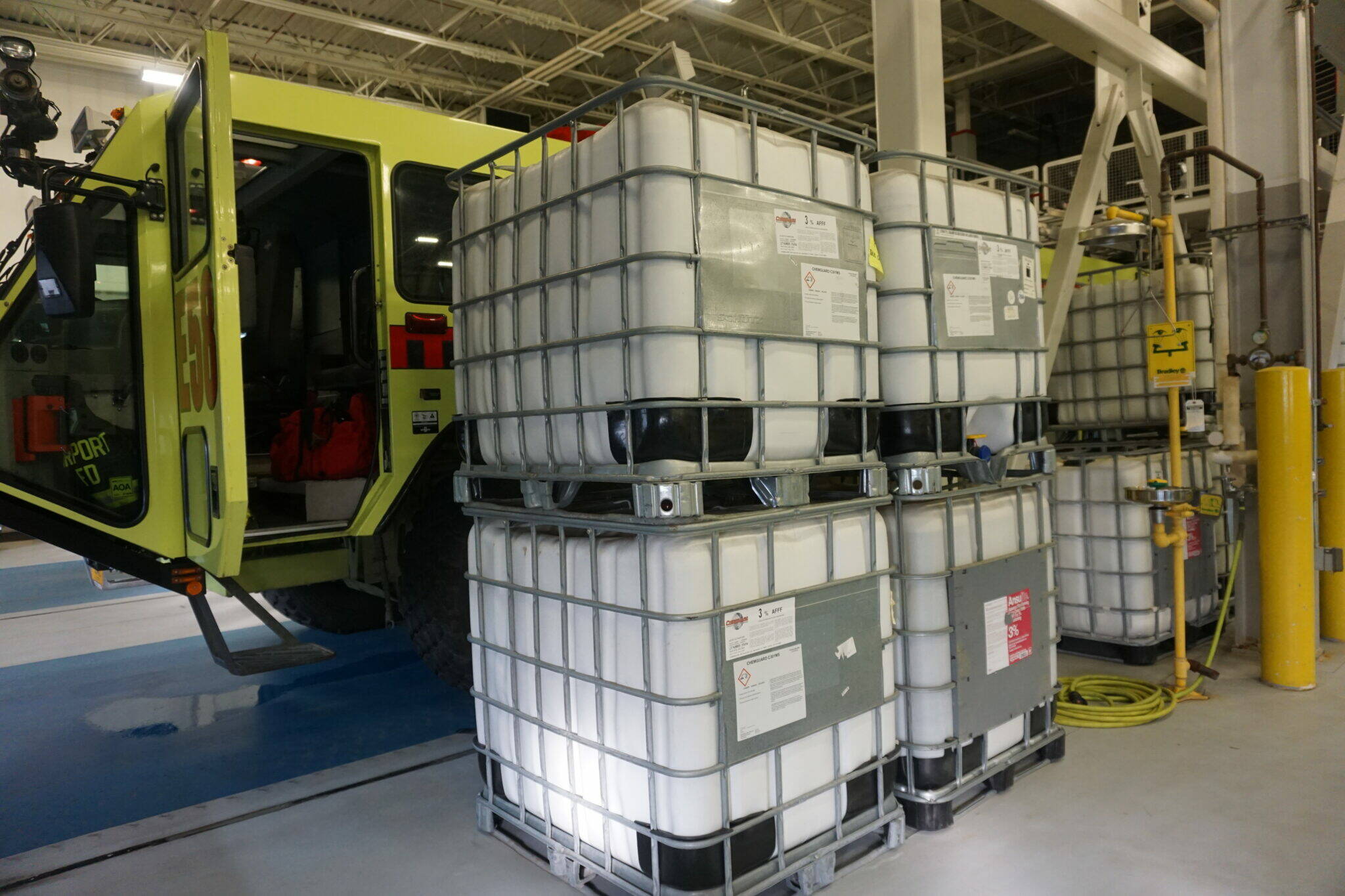
Perfluoroalkyl and polyfluoroalkyl substances, also known as PFAS, are man-made synthetic chemicals with substantial fire and water-resistant properties. While many PFAS reached consumer goods markets because of these characteristics, several countries and U.S. states now ban their use due to their undisputed link with several human diseases.
One industry where these chemicals have been difficult to replace is firefighting services. To date, there are limited alternatives that can comply with current firefighting standards, making PFAS-based equipment and firefighting foams the only solution.
In this context, the PFAS Alternatives Act 2023 aims to improve the speed of research and development on PFAS-free equipment, as well as provide funding for training firefighters in using these new materials.
Alaska Fire Service
The Alaska Fire Service manages and responds to fire emergencies on over 586,000 square miles of land for a population of 730,000 people. As the service frequently deals with wildfires, an important component of this service is its aviation force, comprised of several water-scooping and smokejumper airplanes, helicopters, and air attack airplanes.
Firefighting foams based on PFAS have been used extensively in combating wildfires, which thus left many areas polluted with PFAS. In 2024, Alaska Senate Bill 67 set a total replacement of PFAS-based firefighting foams by early 2025, and increased PFAS decontamination in affected areas.
At present, this project is still in development and a reimbursement program has been developed to assist small villages with PFAS removal.
However, despite current efforts, Senate Bill 67 does not include any mandate on firefighting gear. Subsequently, firefighters in Alaska are still exposed to PFAS daily, raising significant concerns about their future health.
PFAS Alternatives Act
The PFAS Alternatives Act was introduced on July 20, 2023, by Congresswoman Debbie Dingell, D-Michigan, and co-sponsored by a bipartisan group including Rep. Brian Fitzpatrick, R-Pennsylvania. The scope of the act is to reduce firefighters’ exposure to PFAS and prompt research for the development of safer alternatives.
As stipulated by this act, from fiscal years 2024 to 2028, the government is set to provide $25 million for research, development, and testing of new PFAS-free turnout gear. An additional $2 million per year is set to be dedicated to training programs that would enable the efficient and safe use of any newly developed equipment.
Two main institutions would be in charge of managing projects under this act. Firstly, the U.S. Fire Administration, as part of the Federal Emergency Management Agency , will be responsible for overseeing the grant distribution to eligible entities. Secondly, the Environmental Protection Agency will be tasked with providing scientific guidance on PFAS-free alternatives and collaborating with manufacturers, researchers, and other stakeholders to identify and test safer substitutes.
Although the act is a much-needed change for protecting firefighter health, it does not provide direct funding for fire departments to purchase any new equipment developed, nor does it set a specific timeline for phasing out existing PFAS-containing gear.
Risks to Firefighters’ Health
PFAS cannot be naturally eliminated from the body. As a result, there is no safe exposure limit as these substances tend to accumulate over time with repeated exposure and cause disease. To date, several types of cancers, endocrine dysfunctions, and cardiovascular issues have been linked with PFAS.
Research into PFAS exposure and firefighters’ health demonstrates that in these populations, the risks of testicular, prostate, thyroid, and kidney cancer are significantly increased. Moreover, additional data demonstrates that compared to the general public, firefighters have concerningly high levels of PFAS in their blood.
This comes as no surprise. Recently, a study conducted by the National Institute of Standards and Technology on firefighting gear from 20 U.S.-based producers reported a total of 2,000 micrograms of PFAS per kilogram in this equipment. By contrast, the Environmental Protection Agency sets the safety limit for PFAS in drinking water at just four parts per trillion.
Hence, considering that firefighters use this equipment every single day, their health risks following PFAS exposure are substantially increased when compared to the general public or other emergency response professional groups.
Containment and Decontamination
Containing the PFAS issue indubitably requires these substances to stop being used and spread across the environment. Decontamination efforts far exceed the funds allocated through the PFAS Alternatives Act, being estimated at over $106 trillion, which exceeds the total global GDP. To this cost, the health expenses should be considered, estimated at several billions for the US alone.
In these circumstances, in recent years, people have begun to take legal action against PFAS pollutants, resulting in several companies paying billions in damages to individuals. With increased evidence of links between PFAS and human disease, firefighting gear manufacturers may be next. This implies that, in the long run, focusing on alternatives may be cheaper than paying damages.
• Jonathan Sharp serves as the chief executive officer for the Environmental Litigation Group PC, located in Birmingham, Alabama. In his professional role, Jonathan provides legal support for people impacted by toxic exposure. This article originally appeared online at alaskabeacon.com. Alaska Beacon, an affiliate of States Newsroom, is an independent, nonpartisan news organization focused on connecting Alaskans to their state government.
