
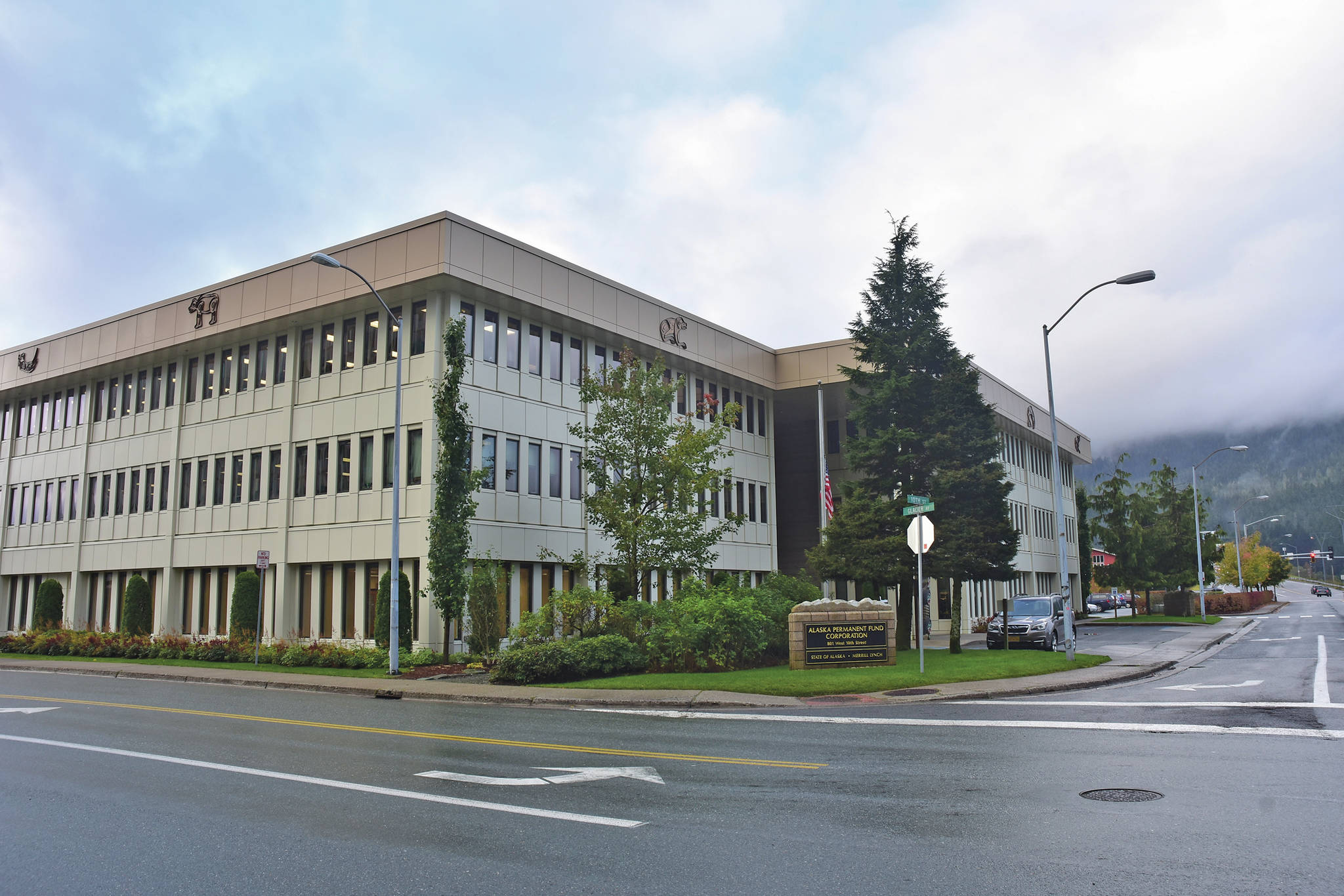
With the state relying on the Alaska Permanent Fund’s realized earnings for more than 70% of its unrestricted general funds, the Alaska Permanent Fund Corporation’s Board of Trustees is keenly focused on the fund’s ability to provide both enduring intergenerational equity and reliable income-generation.
This paradigm brings its own set of risks and rewards, and as the fund’s stewards, it is our job to equip the fund for success for decades to come. To that end, we asked Dr. Malan Rietveld, a leading expert in sovereign wealth funds, to analyze our peer funds in the U.S. and worldwide to determine why some flourish and some flounder. Based on this work, we published Trustees Paper Volume 9, identifying five lessons critical to any sovereign wealth fund’s intergenerational success.
Lesson No. 1: Mission Clarity
We learned through the experiences of others that mission clarity is key to intergenerational success. The legacy of the Permanent Fund is that it was enshrined in our constitution in such a way as to benefit all generations of Alaskans. Let us ensure that we hold a long-term vision for the fund that focuses on the best practices for prudent investment management.
Lesson No. 2: The Importance of Rules
Successful saving and spending policies need to be embedded in a system of rules that provide policy guidance and direction to balance stabilization, savings, and income-generation functions. Well-designed rules for transfers into, out of, and between the fund accounts promote sustainability and stability across volatile commodity and market cycles and allow APFC to best structure the investment portfolio.
Lesson No. 3: Successful Enforcement of Saving Rules
The constitutional amendment establishing the Alaska Permanent Fund requires at least 25% of the state’s mineral revenues be deposited into the Principal. In FY20, royalty deposits into the Principal totaled $319 million, significantly below the $844 million when oil prices were above $120/barrel. Additionally, the Legislature has inflation-proofed the principal to maintain its real value and has bolstered it through special appropriations.
Lesson No. 4: Designing a POMV Spending Rule
In 2018, Alaska’s Legislature adopted a percent of market value spending rule that aligns with best practices of peer institutions and limits draws from the Earnings Reserve Account to 5% starting in fiscal year 2022. The POMV draw is based on the Fund’s average market value rather than the fund’s investment income. Using a 5-year average market value has a smoothing effect and provides a stable annual draw. During debate over the legislation, it was recognized that although the draw was viewed to be sustainable in the long-term, in some years, the Fund’s earnings may exceed the draw and in other years, may not. However, on balance, the POMV spending rule that is in place should be consistent with preserving the current value of the fund for all generations of Alaskans.
Lesson No.5: Reforming the ERA
Given the two-account structure of the Fund that allows expenditures only from the Fund’s net income, it is possible that the ERA balance may become insufficient to support the POMV draw during prolonged periods of low portfolio income and unrealized capital losses. A study performed by the Fund indicated a 50/50 chance that the ERA could not make the POMV draw in one or more years over the next two decades. Reforms could be implemented to mitigate this risk, including enhanced rules governing the ERA. Concepts are analyzed and outlined in the paper for further policy consideration.
Conclusion:
Successful sovereign wealth funds operate within rules-based systems that allow them to perform a combination of saving, stabilization, and income-generation functions. The latter role has come into sharper focus as income from the Fund increasingly supports the State budget in an era of lower oil revenues. Fortunately, we already have in place most of the critical building blocks to ensure a sustainable balance between these functions. As Trustees, we will continue to suggest ways to preserve the Alaska Permanent Fund’s success for decades and centuries to come. Trustees Paper Volume 9, “The Role of Sovereign Wealth Funds in Saving, Stabilization, and Generating Income,” is posted in the Report Archive/Trustees’ Papers at apfc.org.
• Alaska Permanent Fund Corporation’s Board of Trustees include William G. Moran, chair; Steve Rieger, vice chair; Corri Feige; Lucinda Mahoney; Craig Richards; and Ethan Schutt. Columns, My Turns and Letters to the Editor represent the view of the author, not the view of the Juneau Empire. Have something to say? Here’s how to submit a My Turn or letter.
