
Editor’s note: The following is an account of a fictional conversation.
Recently I had a conversation with an American in her late 20s about current events in our country. Let’s call her Rebecca for literary purposes.
“What is freedom?” Rebecca asked.
“Well, perhaps in the context of my experiences in the former Soviet Union, in order to understand and appreciate what freedom is, let me share with you some instances of a lack of freedom or no personal freedom at all that I encountered in a society with a totalitarian, socialist regime,” I suggested.
Rebecca nodded in her consent and looked at me attentively.
“Many topics of our discussions — especially related to politics, creative writing and dissident literature — were forbidden and harshly punishable by Soviet authorities. Indeed, everyone realized the danger of our involvement in these freedom – spirited activities. A complete compliance to the Marxist-Leninist ideology was firmly seated in all public institutions, including schools, academic and research institutions, military, governments, arts, sports, music, etc. There were no exceptions.”
“So, people could not express their own political and ideological views?” asked Rebecca with obvious curiosity.
“Occasionally they could, but consequences would be very grim for them,” I responded. “For example, one of my classmates at the Kiev Pedagogical Institute in Ukraine wrote an essay in which he suggested that economically, politically, and socially Ukraine could be better off as an independent and sovereign country, separate from the former Soviet Union. As a result of his writing and open-minded thoughts, he was expelled from the Institute in no time, virtually next day.”
Rebecca’s mouth was open in “O” shape as I shared this story with her.
“I thought that scientific research is about discovering the factual truth and natural laws,” commented Rebecca.
“Yes, of course, you are correct,” I concurred. “But it is only true when the science is not a ‘servant’ of the political and ideological elites or progressive activists; as it is evident in today’s radical far-left and neo-Marxist reality in our country and around the world,” I responded.
“Indeed, freedom of speech was suppressed and dissent was punished in the former Soviet Union,” I declared. “Independent political activities were not tolerated, whether these involved participation in the labor unions, private entities, religious institutions, or opposition political groups.
“The Soviet totalitarian government (e.g. KGB—Committee for State Security and MVD—Internal Police) blocked Western media and radio broadcasts, employing sophisticated (for its time) electronic devices called ‘zaglushki’ (blockers)—setting up tall antennas designed to intercept and block Western radio transmissions unwelcome and ‘offensive’ to the socialist regime. Many courageous people, however, secretly and at a great personal risk for themselves and their families, constructed a self-made radios consisting of an antenna (i.e. long wire) attached to a long-wave radio and connected to a tall tree or building in order to catch forbidden transmissions that were coming from the Voice of America, BBC, and other Western news agencies in Russian language for the Russian audience.”
“So, it was a censorship and social environment similar to today’s North Korea, Cuba, or Venezuela,” Rebecca remarked.
“Yes, just about,” I concurred.
“Well, when for the very first time you experienced freedom, a real freedom?” Rebecca asked.
“When I first arrived in the West, my very first day in Vienna, Austria on March 16, 1977,” I answered without hesitation. “Then, for the first time in my adult life, I observed on the streets so many cars of different colors and models: blue, yellow, red, green, black, white — a complete prism of rainbow. In my former socialist country, that I had left just a day before, the cars were mostly black, white and navy and there were only few domestic models — Volga, Mosckvich, Zhiguli.”
“During my first days in the West, I walked the streets of Vienna, enjoying street musicians, freely performing classical, jazz, pop, rhythm and blues music. I also enjoyed street artists, mastering their skills openly and without any fear of being arrested for their artistic expressions. People were polite, smiling and looked friendly and happy. Everything and everyone around me in Vienna, smelled, sound and looked free. Yes, I could smell, see, hear and feel freedom; and, finally, I was free.”
“America was my next destination to freedom, liberty and prosperity,” I told her.
When I finished my stories, Rebecca was silent and thoughtful.
I sincerely believe that there is a hope for all Rebecca-like Americans — a hope of striving for freedom with respect to speech and expression, a hope for personal liberty, and a hope for living a life of dignity.
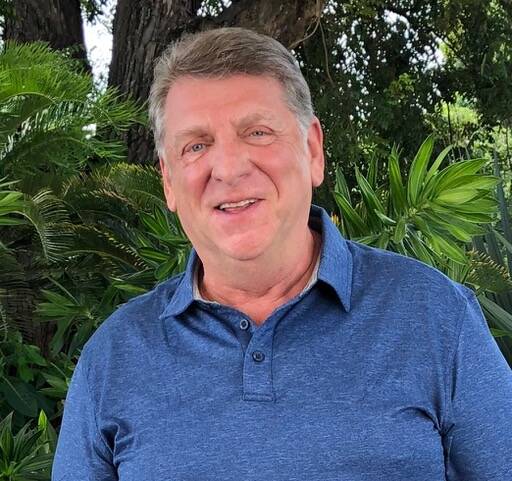
• Alexander B. Dolitsky is a Juneau resident who was born and raised in Kiev in the former Soviet Union, and a longtime researcher and author about Russian topics. He published a “Soviet Life” column for the Juneau Empire during the 1980s.
