
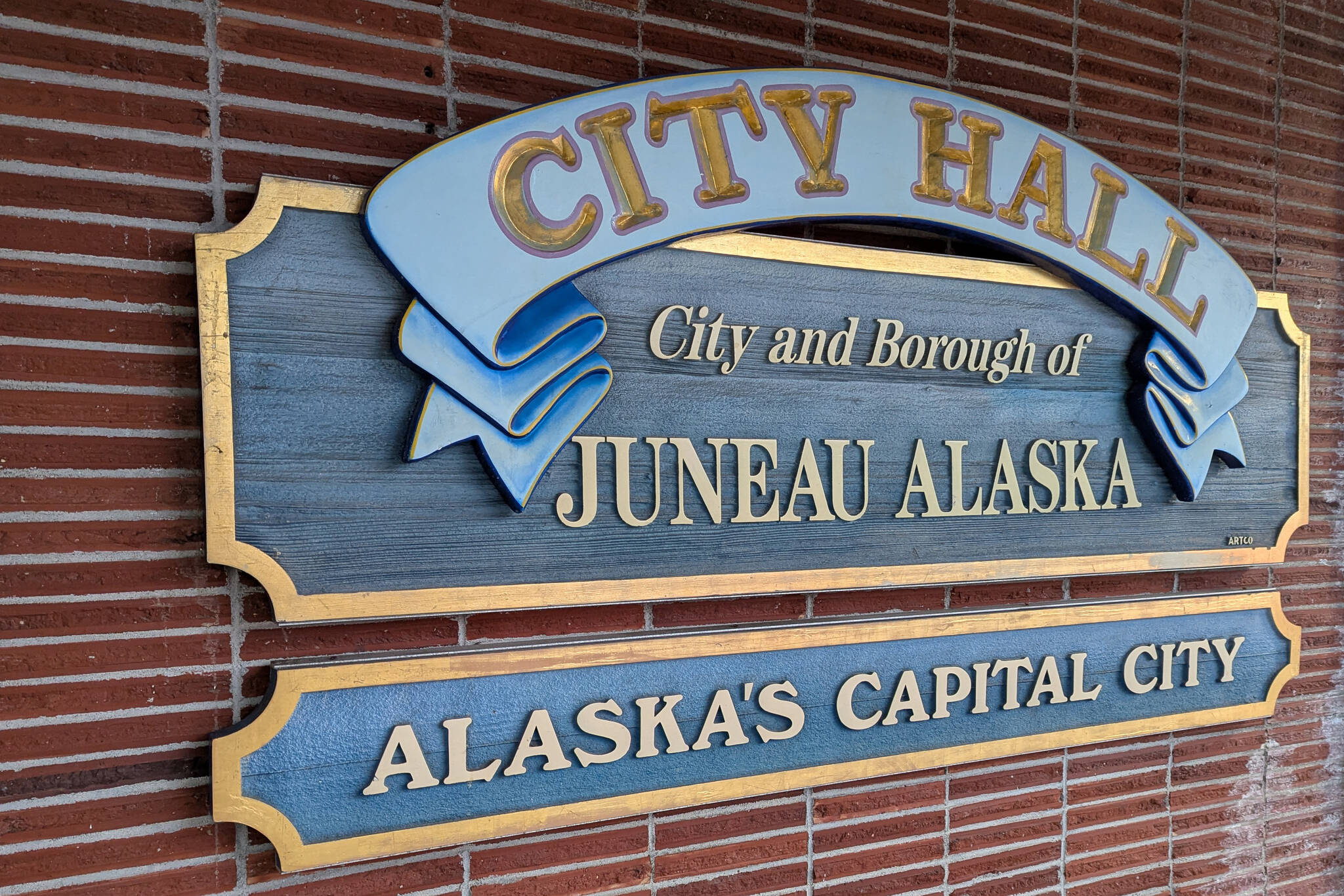
This October, Juneau voters will have the chance to make some of the most consequential changes to our city government since Juneau and Douglas merged to form a borough in 1970.
The ballot will ask voters three questions that seek to change how Juneau collects the money needed for public services. These are foundational questions that fundamentally impact how we come together as a community to solve problems, build roads, educate our children, deliver utilities, respond to disasters and make Juneau an attractive (and affordable) place to live.
Two of the ballot propositions, if considered together, offer a bold proposal to shift the financial burden of maintaining critical city services away from working families and instead draw more local benefit from Juneau’s economic base, our tourism industry. We strongly encourage voters to preserve the character of our community by voting YES on both Proposition 2 and 3.
Voting YES on both Proposition 2 and Proposition 3 would reduce the cost of living in Juneau by exempting food and utilities from city sales tax and implementing a seasonal sales tax that changes the current 5% sales tax rate to 3% in the winter and 7.5% in the summer. These changes, as a whole, would create a progressive tax structure that most benefits our lower-income residents and ensure that we preserve the parks, pools, libraries, and other services that make Juneau such a vibrant community. In total, we estimate these changes would save Juneau residents on average about $400 per person every year.
We would argue that voting YES on either Proposition 2 or 3 without voting YES on the other could be catastrophic for Juneau and its residents. Voting YES on Proposition 2 without voting YES on Proposition 3 would result in an enormous reduction in city revenue that would lead to significant cuts to many of the things that we know Juneauites love about our community. Voting YES on Proposition 3 without voting YES on Proposition 2 would unnecessarily increase taxes and city revenue.
In the event you are hesitant about a seasonal sales tax or exemptions to food and utilities — there is still a safe option for you. Voting no on both Proposition 2 and Proposition 3 would maintain the status-quo in terms of taxation and city services.
Proposition 1 similarly proposes a significant change in how our city operates. It would reduce the cap on the property tax rate, known as the mill rate, to 9 mills from 12. In terms of tax savings, they will be minimal for most residents; we estimate that the average homeowner would save $6.83 and the average renter $0.67 per month under this proposal. The real “affordability” benefit will be for our wealthiest residents and large commercial land owners. In addition to being a tax break for the wealthy, this proposition would result in immediate city service reductions, force the city to take on costly debt for maintenance and construction projects and limit the city’s ability to respond nimbly to emergent community needs in a time of great state and federal uncertainty. We hope you join us in voting NO on Proposition 1.
As the Assembly Finance chair and a seasoned public and private sector finance professional, respectively, we’ve spent countless hours poring over the city budget and revenue collections. As Assembly members, we hear from Juneau residents almost every day about the type of community they want to live in. We share the “Affordable Juneau” coalition’s view that affordability is a crucial issue in Juneau — but we do not believe that the extreme financial austerity they tout and their proposed approach to taxation reflect the values of the community that we represent. We hear loud calls to explore solutions to Juneau’s problems, not calls to cease operations or cut services.
While every ballot asks for your input in the future of our community, this October you will be asked to vote on two very different paths for Juneau. We ask that you enter the ballot box with a mind towards preserving a community that promotes growth and vibrancy with the tools to respond to adversity. Please join us in voting YES on 2 and 3 and NO on 1.
Christine Woll has served on the City and Borough of Juneau Assembly since 2020 and is the Assembly Finance chair. Neil Steininger has served on the Assembly since 2024 and previously served as the director of the Office of Management and Budget for the State of Alaska.
